
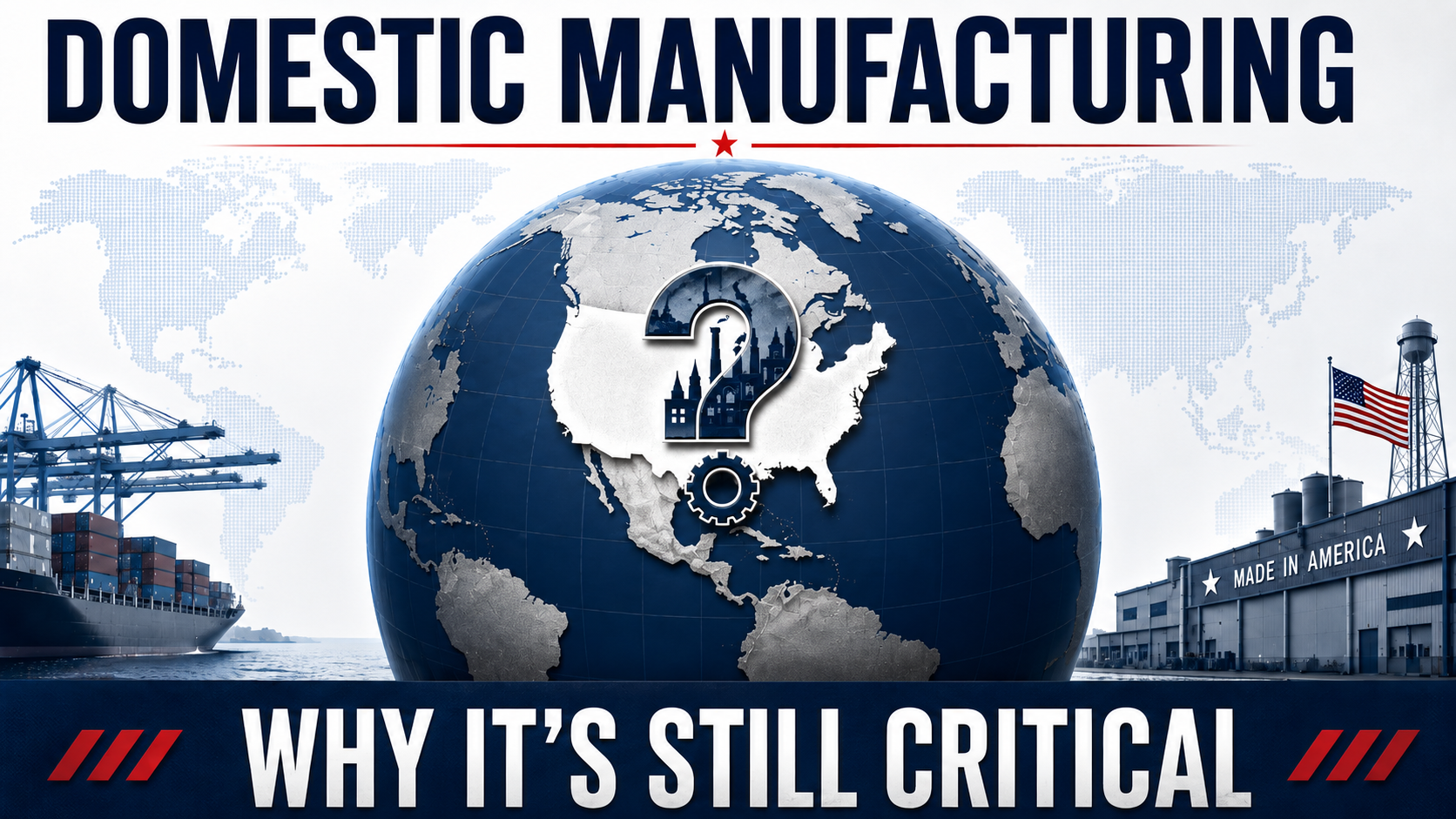
Why Domestic Tooling and Prototype Fabrication Still Matter
Low-cost overseas tooling can be tempting. When a quote comes in dramatically cheaper than domestic options, it is easy to pull the trigger. For mature, well-documented products with proven designs, overseas sourcing can make sense.
But tooling and prototype fabrication are not ordinary purchases. They are the bridge that turns an idea, old part, sketch, scan, or rough model into something that can actually be manufactured. That distinction matters.
A tool, whether a mold, fixture, foundry pattern, core box, or prototype, carries far more than geometry. It contains design decisions, material choices, tolerances, manufacturing assumptions, and process knowledge. When those decisions are wrong or unclear, the cheapest option often becomes the most expensive.
Domestic tooling and prototype fabrication remain critical because they deliver what is increasingly hard to replace: control, clear communication, speed, accountability, and practical recourse when things do not go as planned.
Tooling Is Not Just a Purchase Order
Many customers believe they are simply buying a physical object: a mold, a fixture, a pattern, a prototype, or a machined part. In reality, they are buying a chain of manufacturing decisions.
A skilled domestic supplier does more than replicate a CAD file. They evaluate whether the design is manufacturable, whether tolerances are realistic, how the part should be inspected, and what could go wrong in production. That judgment and experience often prevent costly mistakes before they happen.
A cheap tool that must be rebuilt or reworked is not a bargain. It is usually the first payment on an expensive lesson.
Reverse Engineering Requires Trust
Reverse engineering old castings, worn parts, broken fixtures, or legacy tooling involves more than capturing geometry. It often includes functional logic, fit requirements, undocumented changes, wear patterns, failure modes, and proprietary process knowledge.
This kind of work demands high trust. When sensitive information crosses borders, customers, especially small and mid-sized companies, can have limited recourse if files are mishandled, copied, or poorly documented. While legal protections exist, enforcement is often slow, costly, and uncertain.
The question is not only “Can they make it cheaper?” but “What happens if something goes wrong?”
The Hidden Risk of Product Clones on Worldwide Internet Marketplaces
Outsourcing production carries another risk beyond the first order. Once a product succeeds in the market, similar versions can appear quickly on worldwide internet marketplaces under different names. Sometimes this stems from the broader manufacturing ecosystem rather than a single supplier.
By sharing tooling strategies, materials, assembly methods, packaging details, and market validation with overseas partners, companies, particularly smaller ones, can unintentionally arm their future competitors. Small businesses and inventors rarely have the resources to fight copycat products across international supply chains and online marketplaces.
Domestic tooling and prototyping reduce this exposure during the vulnerable early stages of development. Keeping prototypes, reverse engineering work, fixtures, patterns, molds, and tooling development closer to home gives the customer more control over who sees the design, how revisions are handled, and what happens if something goes wrong.
“Cheap” Often Becomes Expensive
A low quote can quickly turn costly when:
- dimensions or tolerances are misunderstood
- material choices are inappropriate
- communication is slow
- revisions take weeks
- shipping delays pile up
- the tool does not work with your actual production process
- first-article parts fail to fit
- documentation is incomplete
- you are forced to pay a local shop to fix the problem anyway
The quote is not the cost. The real cost is getting a working, reliable tool into production.
Domestic Prototyping Supports Real Product Development
Domestic capability is especially important for startups, inventors, repair shops, machine shops, and small manufacturers who often begin with imperfect inputs: a sketch, broken part, old casting, rough CAD model, or 3D scan.
Early-stage work requires rapid iteration, fit checks, design changes, material testing, and manufacturability feedback. These steps are difficult and expensive when stretched across long supply chains and time zones.
Without accessible domestic prototyping, many good ideas never reach production, not because the product was unviable, but because the path to manufacturing was too slow, costly, and disconnected.
Injection Molding Shows the Problem Clearly
Polymer injection molding is a good example of why domestic prototyping and tooling support still matter.
A customer may think they simply need a plastic part made, but a moldable part requires more than geometry. Wall thickness, draft, gate location, parting line, ejector strategy, material selection, shrink, and tolerance expectations all affect whether the mold will work.
In the United States, injection mold tooling can be difficult to source affordably, especially for small companies or first-time product developers. Many shops are built around mature production work, not early-stage iteration. That leaves a gap between prototype and production.
When that gap exists, customers may send immature designs to the cheapest toolmaker they can find. If the tool is built around an unproven design, the result can be a mold that technically exists but does not make the right part, cannot be revised easily, or costs more to fix than expected.
That is exactly where cheap becomes expensive.
When Overseas Sourcing Makes Sense
Overseas sourcing is not inherently bad. It can be a smart strategy when:
- the design is fully mature and well-documented
- the supplier is proven and trusted
- tolerances and requirements are clearly defined
- production volumes justify the complexity
- the company has strong domestic validation processes
The danger lies in using overseas sourcing too early, before the design and process are properly understood.
The Real Manufacturing On-Ramp
Prototype shops, patternmakers, toolmakers, and small foundries are more than vendors. They serve as the essential on-ramp to manufacturing. They help customers figure out what can actually be made, what should be changed, and what process makes the most sense.
A country that loses affordable domestic prototyping capacity will struggle to innovate in manufacturing.
Conclusion
Domestic tooling and prototype fabrication still matter because manufacturing is not just about making parts as cheaply as possible. It is about creating a reliable, controllable path from idea to production.
For early-stage development, reverse engineering, legacy parts, critical tooling, and iterative prototyping, keeping work closer to home provides control that is difficult to replicate overseas.
Cheap can be useful, but it can also become the most expensive mistake of a project.
At Jaeger Technology Group LLC, we help bridge the gap between digital design, 3D scanning, reverse engineering, prototype fabrication, and practical production tooling. Whether you need a foundry pattern, fixture, replacement part, prototype, or manufacturing support, our goal is simple: help you get it right before committing to expensive mistakes.
About the Author: jaegertechgroup.com

STAY IN THE LOOP
Subscribe to our free newsletter.
Leave A Comment
Designing Drone Parts for Vibration, Impact, and Real-World Flight Loads A drone part can look perfect on the bench and still fail
Beyond ESP32 and Raspberry Pi: Designing Electronics for Real Products Development boards are one of the best tools available for product development.
From MVP to Market: How Consumer Electronics Become Real Products A working MVP is an important milestone. It proves that the idea
Designing Products for Serviceability, Maintenance, and Field Repair A product can work perfectly on the day it is delivered and still be