
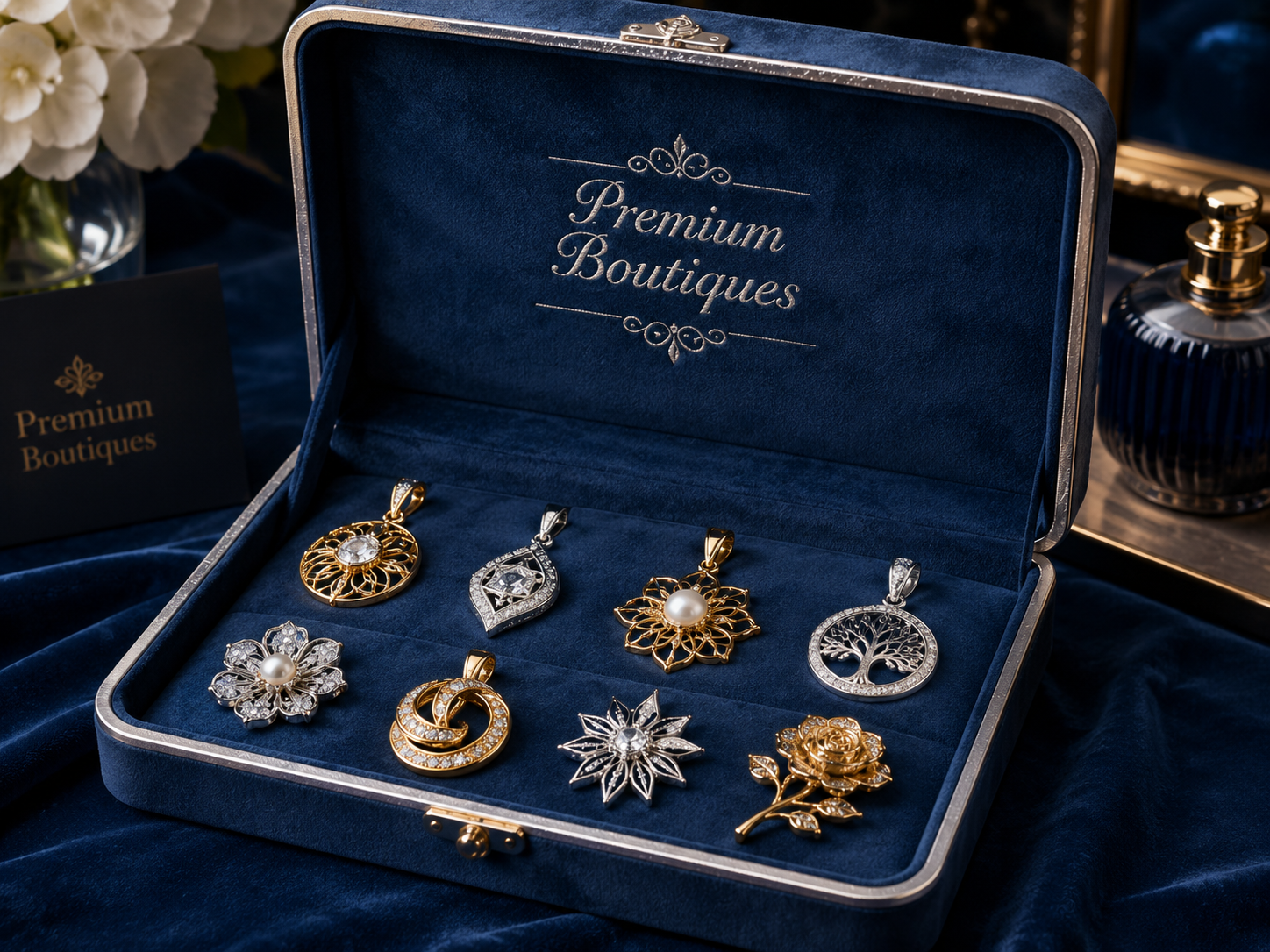
From Product Idea to Cast Metal: Developing a Custom Jewelry Collection Through Digital Design, 3D Printing, and Investment Casting
Developing a new product line is rarely as simple as creating one attractive object.
A successful collection needs a recognizable identity, a repeatable design language, practical manufacturing methods, and enough flexibility to grow beyond the first group of products. Each item should feel distinct, but the collection must still look as though every piece belongs to the same brand.
Jaeger Technology Group is currently supporting a customer through this process by helping develop a new line of custom costume jewelry and decorative accessories. The project combines product strategy, industrial design, digital modeling, additive manufacturing, prototyping, and traditional investment casting.
Although the individual designs and customer identity remain confidential, the overall development process provides an excellent example of how modern manufacturing tools can help transform an early product concept into a scalable physical collection.
The objective is not simply to design a single pendant, charm, or decorative piece. The objective is to create a reusable product platform that can support multiple designs, themes, sizes, and future product categories.
That distinction is important.
A single product may generate an initial sale. A carefully designed product system can support an entire business.
Starting With the Customer’s Vision
The customer came to the project with a general vision for a product line that would feel distinctive, recognizable, and adaptable. The products needed to have visual appeal, but they also needed to be practical enough to manufacture, reproduce, package, market, and expand.
As with many early-stage product concepts, some of the initial ideas were clearly defined while others still needed to be explored.
This is normal.
Customers often understand the emotional response they want a product to create before they understand its exact dimensions, materials, geometry, weight, attachment method, or manufacturing process. They may know that a collection should feel elegant, bold, playful, nostalgic, modern, regional, luxurious, or personal, but those ideas still have to be translated into manufacturable objects.
That translation is one of the areas where Jaeger Technology Group provides the most value.
We help customers move from broad ideas to practical design decisions.
This includes asking questions such as:
- What should make the collection recognizable?
- Which features should remain consistent across the product line?
- Which elements should be interchangeable?
- Will the products be worn, displayed, attached, collected, or given as gifts?
- How will they be packaged?
- How much should each piece weigh?
- What types of chains, pins, posts, rings, clasps, or connectors may be needed?
- How detailed can the surface be without creating casting problems?
- Which features should be permanent, and which should be customizable?
- How can future designs be added without starting the development process over?
These questions influence both the appearance of the product and the economics of producing it.
Designing a Collection Instead of an Isolated Product
One of the central ideas behind this project is the development of reusable base designs.
Rather than treating every piece as an entirely separate project, we are creating a common design foundation that can be adapted to multiple products. Decorative themes, symbols, animals, flowers, letters, tags, emblems, and other identifying elements can be incorporated into the system while preserving a consistent overall appearance.
This allows the customer to build variety without sacrificing brand recognition.
For example, a common product base might support several different decorative centerpieces. A standardized attachment point could be used across multiple charms. A circular emblem might be adapted for a pendant, bracelet, earring, lapel pin, keychain, bag accessory, or decorative tag.
The customer gains a library of compatible design elements rather than a disconnected group of individual models.
This approach offers several advantages.
First, it reduces future development time. Once dimensions, proportions, wall thicknesses, attachment features, and manufacturing allowances have been established, later products can build on that work.
Second, it creates consistency. Customers are more likely to recognize a product line when the pieces share common visual cues.
Third, it creates purchasing and merchandising opportunities. A customer who purchases one item may later purchase a related item featuring a different design, symbol, or theme.
Finally, it gives the business room to test the market. The customer does not have to commit immediately to a large inventory of every possible design. A smaller initial collection can be launched, evaluated, and expanded based on actual customer response.
Translating Artistic Concepts Into Manufacturable Geometry
A drawing or visual concept is not automatically ready for manufacturing.
Physical products require decisions about scale, thickness, strength, balance, orientation, surface finish, parting strategy, attachment features, and production tolerances. Jewelry and decorative accessories present additional challenges because the parts are often small, highly detailed, and intended to be viewed closely.
A feature that looks attractive in a large digital rendering may become too delicate when reduced to the size of a charm. Fine lettering may become difficult to cast or polish. A narrow connector may look elegant but fail under normal handling. Deep recessed details may trap investment material or become difficult to finish.
Digital design allows us to evaluate these risks before the customer invests in tooling or production inventory.
During the modeling process, we can adjust:
- Overall product dimensions
- Thickness and weight
- Edge radii
- Letter depth
- Relief height
- Surface transitions
- Attachment points
- Bail and ring geometry
- Symmetry
- Balance
- Draft and release considerations
- Casting allowances
- Polishing allowances
- Areas likely to require additional support or finishing
These adjustments are often subtle, but they determine whether a product merely looks good on a computer screen or performs successfully as a manufactured object.
The goal is to preserve the artistic intent while improving the design’s ability to survive printing, molding, casting, finishing, assembly, packaging, shipping, and everyday use.
Using 3D Printing to Accelerate Product Development
Before digital manufacturing became widely accessible, a customer might have needed to commission a hand-carved master, create a mold, produce samples, and then repeat much of the process whenever a design needed revision.
That process could be slow and expensive, particularly for a new collection that had not yet been tested in the market.
3D printing changes the economics of early product development.
Once a digital model is prepared, a physical prototype can be produced without creating permanent tooling. The prototype can then be inspected, measured, handled, photographed, presented to potential buyers, or compared with related designs.
This is particularly valuable for jewelry and accessories because scale can be deceptive on a computer monitor. A part may appear appropriately proportioned in a digital rendering but feel too large, too small, too heavy, or too delicate when held in the hand.
A physical prototype answers questions that images cannot.
Does the product feel substantial?
Is the lettering readable?
Does the attachment point look integrated or added as an afterthought?
Are the raised details prominent enough?
Are there areas that may snag on clothing?
Will the product hang correctly?
Does the item have the visual presence the customer expected?
These questions can be answered before metal production begins.
Rapid Iteration Without Premature Tooling
The ability to revise a design is one of the greatest advantages of combining digital modeling with 3D printing.
If a prototype reveals that a feature is too thin, the model can be modified. If a decorative element looks crowded, spacing can be adjusted. If a pendant hangs at the wrong angle, the attachment geometry can be repositioned.
A revised prototype can then be produced and evaluated.
This iterative process allows the customer to make informed decisions before committing to a larger production run.
It also supports experimentation.
Several design variations can be produced with different proportions, textures, logos, letter styles, or decorative elements. The customer can compare them side by side rather than trying to choose based solely on digital images.
In some cases, the prototype itself may be used to support customer interviews, photography, packaging studies, or early marketing. A physical sample can generate better feedback than an abstract description.
The customer can learn which concepts attract attention before committing significant capital to metal inventory.
Prototyping for Appearance and Prototyping for Production
Not every prototype serves the same purpose.
An appearance prototype is intended primarily to communicate shape, size, and styling. It may be produced in a standard polymer and finished to resemble a final product.
A production-oriented prototype is evaluated more critically. It must represent the geometry that will eventually be manufactured, including wall thicknesses, attachment features, transitions, recesses, and casting considerations.
For this project, the prototyping process supports both objectives.
Initial prototypes allow the customer to review the collection as a group. They help evaluate how the designs relate to one another and whether the overall visual direction is appropriate.
Later prototypes become more closely aligned with the investment casting process.
This progression helps prevent a common product development mistake: approving an attractive concept before determining whether it can be manufactured efficiently.
At Jaeger Technology Group, manufacturing considerations are introduced early. This does not mean limiting creativity. It means directing creativity toward designs that can become viable products.
Preparing the Designs for Investment Casting
After the customer approves the prototypes, the final products are planned for investment casting.
Investment casting is a well-established manufacturing process capable of producing intricate metal components with excellent detail. The process is used for products ranging from jewelry and decorative hardware to aerospace components, medical devices, industrial parts, and precision mechanical assemblies.
In simplified terms, the process begins with a pattern that represents the final part. The pattern is incorporated into a casting assembly, surrounded by a ceramic investment material, and removed to create a cavity. Molten metal is then poured into that cavity. After the metal solidifies, the investment material is broken away and the casting is cleaned, separated, finished, and polished.
The process is particularly well suited for small products with complex surface detail.
However, successful investment casting depends heavily on the quality of the original design.
Very thin sections may not fill properly. Sharp internal corners may create stress concentrations. Inconsistent thickness can contribute to shrinkage or distortion. Deep recesses can complicate finishing. Attachment points must be strong enough to survive normal use.
Our role is to help prepare the digital models with these realities in mind before they are submitted to the casting supplier.
The final casting company may also provide recommendations based on its specific equipment, preferred alloys, gating methods, minimum order quantities, and finishing capabilities. Product development is collaborative, and the best results usually come from clear communication between the designer, customer, prototype manufacturer, and production foundry.
Combining Modern and Traditional Manufacturing
This project is a strong example of how modern digital tools can complement traditional metalworking processes.
3D printing does not replace investment casting. It improves the path leading to it.
Digital modeling allows the product to be developed with precision. Additive manufacturing allows prototypes and casting patterns to be produced without conventional tooling. Investment casting then provides the final metal component with the detail, feel, durability, and finish expected from a commercial jewelry product.
Each process is used where it provides the most value.
This hybrid approach is increasingly common across manufacturing.
The same general workflow can be used for:
- Jewelry
- Belt buckles
- Awards
- Medallions
- Decorative hardware
- Branded emblems
- Collectibles
- Corporate gifts
- Museum reproductions
- Historic replicas
- Fashion accessories
- Keychains
- Bag charms
- Custom promotional products
- Small mechanical components
- Limited-edition products
The scale, materials, and finishing requirements may change, but the development logic remains similar.
Start with the customer’s need. Create a digital design. Produce and evaluate physical prototypes. Refine the design. Prepare it for production. Select the appropriate final manufacturing process.
Protecting Flexibility During the Initial Launch
For a new product line, one of the largest risks is overcommitting to inventory before market demand has been established.
Traditional manufacturing often rewards large production quantities with lower unit costs. However, ordering too much inventory too early can create storage costs, cash-flow pressure, and obsolete products.
A digitally developed collection gives the customer more options.
The customer can launch with a focused initial group of products and retain the digital models for future production. Additional themes can be introduced later. Existing products can be resized or modified. New attachments or product formats can be developed using the same underlying design language.
This creates a controlled path to growth.
Instead of attempting to predict every customer preference at the beginning, the business can gather real-world sales information.
Which designs sell most frequently?
Which products receive the most attention online?
Are customers buying for themselves or as gifts?
Do buyers prefer subtle branding or prominent emblems?
Are certain themes associated with particular seasons, events, organizations, or markets?
The answers can guide the next round of product development.
This is one reason we view the current collection as a starting point rather than a fixed endpoint.
Building Intellectual and Manufacturing Assets
The physical products are only one outcome of the project.
The customer is also developing a set of digital and manufacturing assets.
These may include:
- Three-dimensional product models
- Prototype files
- Approved dimensions
- Standardized design elements
- Reusable attachment geometry
- Product renderings
- Manufacturing notes
- Casting-ready models
- Packaging dimensions
- A documented product development history
These assets can make the next collection faster and more economical to develop.
A well-organized digital library also reduces dependence on physical masters. Designs can be stored, revised, reproduced, and transferred to qualified manufacturing partners as needed.
This is particularly valuable for small businesses because it creates continuity. If a mold is damaged, a supplier changes, or a product is reintroduced after several years, the approved digital model remains available.
The customer is not merely purchasing a batch of products. The customer is building a foundation for future production.
Why This Project Is a Good Fit for Jaeger Technology Group
Jaeger Technology Group works at the intersection of design and manufacturing.
Our experience includes industrial 3D printing, patternmaking, prototyping, tooling, casting support, product development, reverse engineering, and small-run manufacturing. This allows us to approach a decorative consumer product with the same practical discipline used for industrial applications.
The styling may be different, but the underlying questions are familiar.
Can it be manufactured?
Can it be reproduced consistently?
Will it survive normal use?
Can the design be modified without starting over?
Are the important details visible?
Does the selected process match the customer’s volume, budget, and quality expectations?
What should be tested before production begins?
How can the product be designed today without restricting tomorrow’s opportunities?
Our role is not limited to operating a 3D printer.
The value lies in understanding how digital design, additive manufacturing, traditional processes, suppliers, materials, and business considerations fit together.
For this project, we are helping the customer connect several stages that are often handled separately:
- Product-line planning
- Concept development
- Digital design
- Prototype production
- Physical evaluation
- Design revision
- Casting preparation
- Coordination with the final manufacturer
Managing these stages as a connected workflow reduces the risk of information being lost between vendors.
Supporting Customers Who Do Not Have an Engineering Department
Many entrepreneurs and small businesses have strong product ideas but do not have an internal industrial designer, manufacturing engineer, model maker, additive manufacturing technician, and casting specialist.
They should not need to assemble a large internal team to test one product concept.
Jaeger Technology Group helps fill that gap.
We can work with customers who arrive with a sketch, photograph, reference object, written description, or broad business concept. The starting information does not need to be perfect.
Our job is to help organize the idea into a practical development path.
Some projects may require only a simple model and prototype. Others may involve multiple design alternatives, specialized testing, material selection, supplier coordination, or preparation for a larger manufacturing process.
The scope can be adjusted to match the maturity of the concept.
A Product Line Designed to Evolve
The most promising aspect of this costume jewelry project is not any single design.
It is the adaptability of the system.
The initial concepts establish a visual and manufacturing baseline. From that baseline, the customer can explore new decorative themes, limited editions, seasonal releases, organization-specific products, geographic collections, commemorative pieces, or custom variations.
The same foundational work can support both consistency and variety.
That is the balance many product businesses need.
Customers want choices, but the company needs repeatable processes. Buyers want something personal, but the brand needs a recognizable identity. Designers want freedom, but manufacturers need practical geometry.
A properly developed product platform can satisfy all of these requirements.
Moving From Possibility to Production
There is a significant difference between having an idea for a product and possessing a product that can be manufactured.
The space between those two points contains dozens of decisions.
Some are artistic. Some are technical. Some are financial. Many are interconnected.
A change in size affects weight. A change in relief affects casting and polishing. A different attachment method affects both styling and durability. A new metal may affect cost, color, finishing, and minimum order quantity.
The role of a structured development process is to address these decisions in the right order.
For this customer, the process begins with defining a flexible collection. It continues through digital design and 3D-printed prototypes. After the products have been reviewed and refined, the final models will be prepared for investment casting.
The customer will then have more than an idea.
The customer will have a tested product direction, a reusable digital design library, physical prototypes, and a practical route to metal production.
Developing Your Own Product Concept
Jaeger Technology Group supports businesses, inventors, artists, manufacturers, universities, and entrepreneurs who need help moving from an initial concept to a manufacturable product.
Projects may involve a single custom component, a family of related products, a decorative collection, a casting pattern, a functional prototype, or an entirely new manufacturing workflow.
We can assist with:
- Concept refinement
- Product design
- 3D modeling
- Design for additive manufacturing
- Prototype production
- Casting pattern development
- Design for investment casting
- Design iteration
- Reverse engineering
- Small production runs
- Manufacturing strategy
- Supplier coordination
The customer does not need to arrive with a finished engineering package.
A sketch, photograph, physical sample, or written concept may be enough to begin evaluating the project.
The path from idea to production is rarely perfectly straight. Prototypes reveal opportunities. Manufacturing partners provide feedback. Customer preferences evolve. Designs improve as they become physical.
That is not a failure of the process.
That is the process.
By combining digital design, 3D printing, and proven manufacturing methods such as investment casting, it is now possible to explore sophisticated product ideas without immediately committing to expensive tooling or large inventories.
For this customer, that means building a costume jewelry collection that can begin with a focused launch and grow into a much broader product family.
For another customer, it might mean developing a custom medallion, branded accessory, replacement component, collectible, casting, tool, or industrial product.
The specific object may change.
The objective remains the same: turn a promising idea into a product that can be evaluated, manufactured, and brought to market.
Ready to Develop a Custom Jewelry Collection?
Whether you are creating a boutique product line, commemorative collection, organization-specific design, or a distinctive branded accessory, Jaeger Technology Group can help move the idea from concept to production.
We support the full development process, including design refinement, reusable base components, 3D-printed prototypes, casting-ready patterns, and coordination for final investment casting. This approach allows you to evaluate the appearance, proportions, attachment methods, and product variations before committing to production tooling or larger quantities.
Every project begins with the customer’s goals, target market, expected price point, and preferred materials. From there, we develop a practical path toward a product line that can grow over time.
Have an idea for a pendant, brooch, charm, pin, or custom jewelry collection?
About the Author: jaegertechgroup.com

STAY IN THE LOOP