
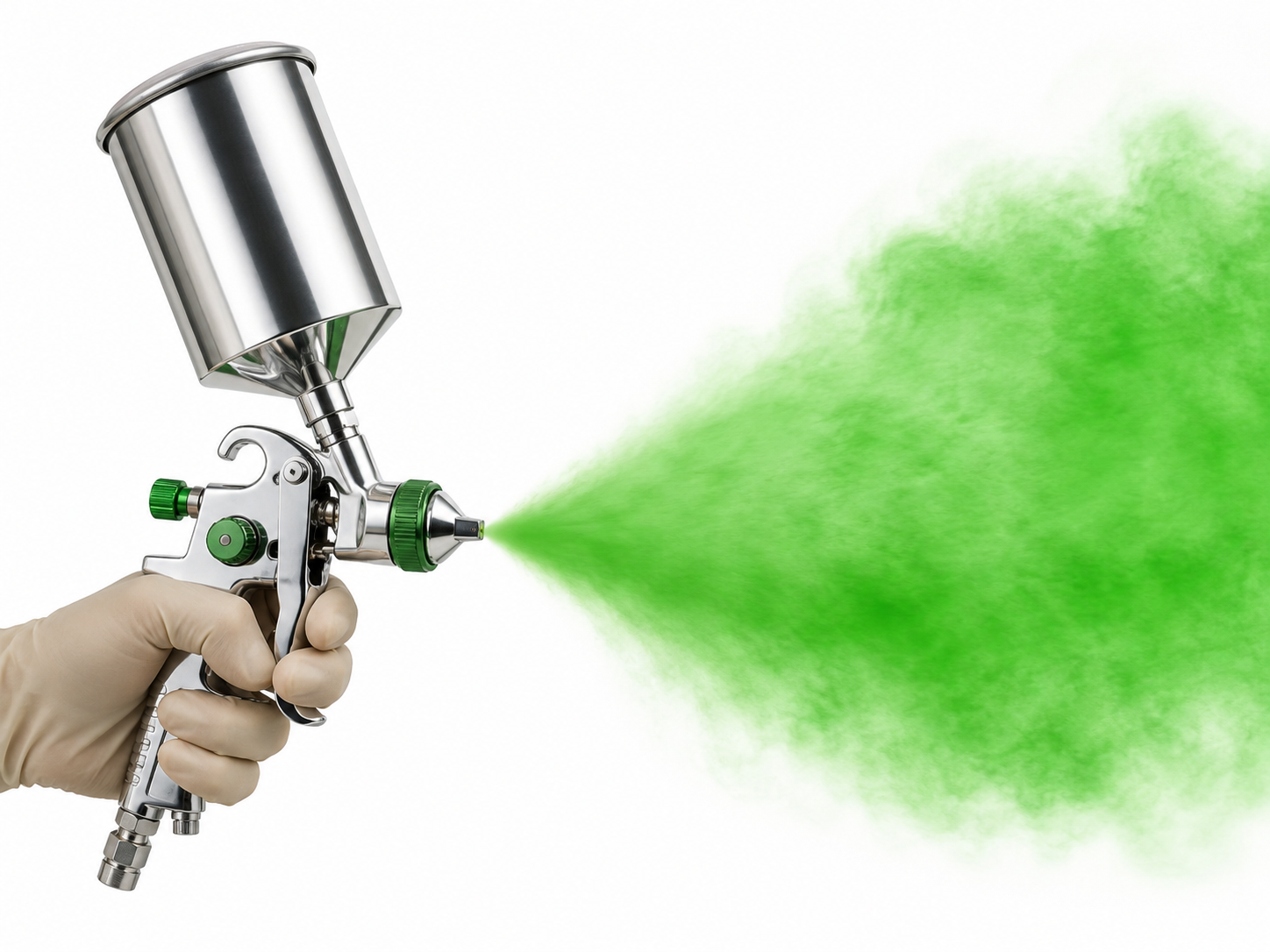
Urethane Paints
Two-part urethane paints are common in automotive, industrial, marine, and equipment finishing. They can provide a tough, professional-grade topcoat over properly prepared 3D printed parts.
Common Uses
Urethane paints are useful for:
- Finished prototypes
- Display models
- Industrial covers
- Shop-grade parts
- Equipment housings
- Outdoor parts
- Pattern topcoats
- Parts requiring better durability than spray paint
Advantages
Urethane paints can offer:
- Durable finish
- Good chemical resistance
- Good UV resistance depending on formulation
- Professional appearance
- Gloss, satin, or matte options
- Better wear resistance than ordinary spray paint
- Compatibility with primer systems
- Strong color control
Disadvantages
Urethane systems require more care:
- Two-part mixing
- Pot life limits
- Spray equipment
- Surface prep
- PPE and ventilation
- Isocyanate hazard in many systems
- More expensive than basic paint
- Not ideal for casual indoor use without proper safety controls
- Can fail if the substrate or primer is wrong
JaegerTech View
Urethane paint is a good choice when the printed part needs a professional and durable finish. It is overkill for simple prototypes, but useful for display, tooling, equipment, and customer-facing parts.
About the Author: jaegertechgroup.com

STAY IN THE LOOP
Subscribe to our free newsletter.
Leave A Comment
Using 3D Printing to De-Risk Production Tooling Production tooling is expensive for a reason. Whether the final process is injection molding, thermoforming,
From 3D Scan to Perfect Fit: The Corvette Bumper Project Moves Forward A few weeks ago, we shared a project that demonstrated

Great Conversations and New Connections at SMD in Huntsville Last week, Janelle and I had the opportunity to attend SMD in Huntsville,
Repairing a Discontinued Polypropylene ATV Snorkel With Plastic Welding When a customer could not locate a replacement snorkel for his 21-year-old ATV,