
Best $150 I’ve Ever Spent on This Car
Classic car projects have a way of turning simple problems into complicated ones.
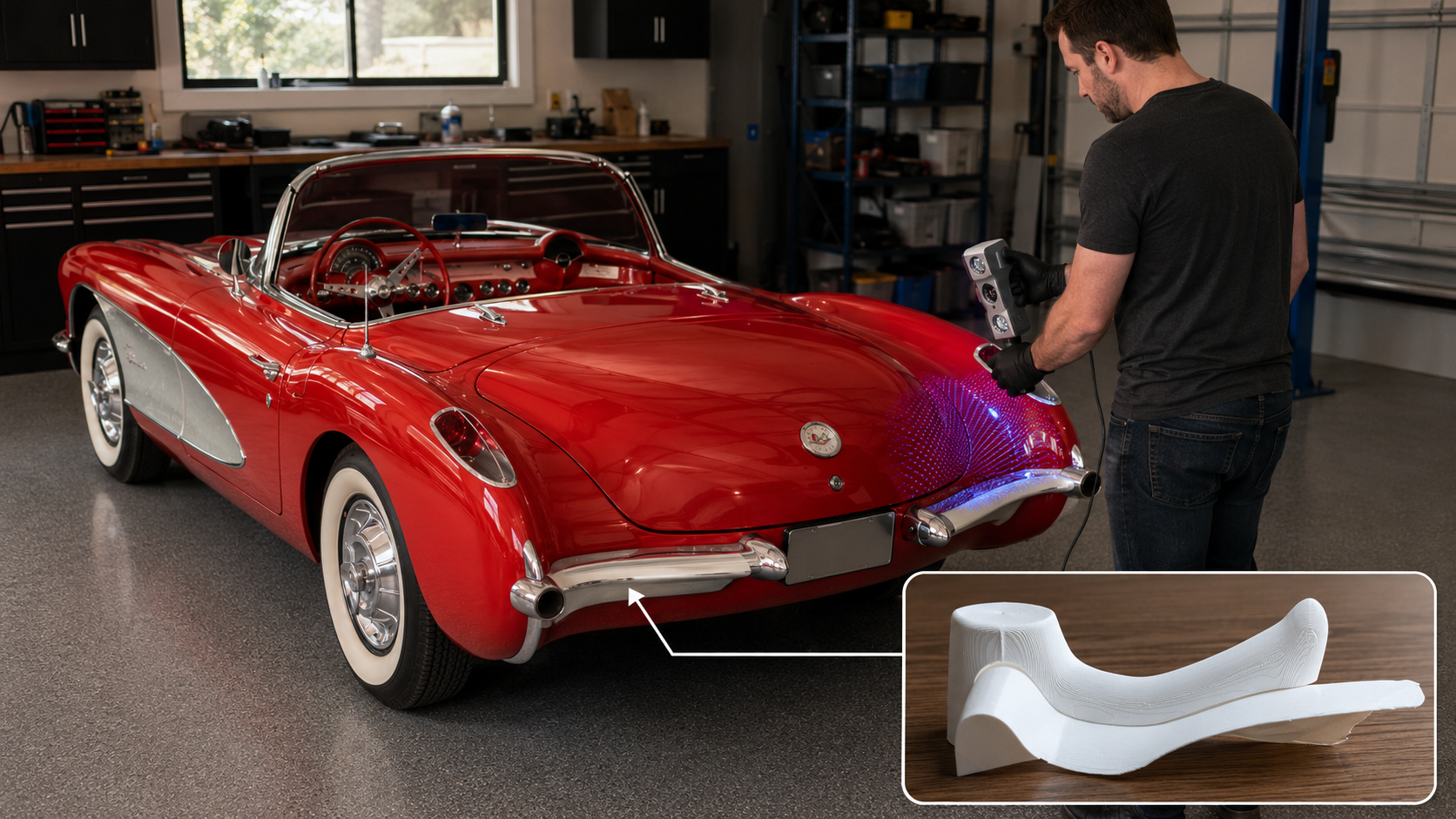
A customer recently came to us with a problem that will sound familiar to anyone who has restored, modified, or tried to keep an older vehicle on the road. He needed bumpers for a classic car, but the car was not exactly factory anymore. A previous owner had flared the body, which meant off-the-shelf replacement bumpers did not fit the car correctly. The original bumpers were also badly rusted, so repairing and reusing them was not a realistic option.
He had already done a lot of the hard work himself. Using 3D scan data from the car body, a colleague modeled a new bumper design in SolidWorks. The question was not whether the idea was possible. The question was whether the scan data, the CAD model, and the real car all agreed with each other before money was spent on full-size tooling or fabrication.
That is where JaegerTech came in.
Rather than jumping directly into a full-size part, we 3D printed a scale model of both the car body and the proposed bumper. For less than $150, the customer was able to physically hold the design in his hands, compare the bumper to the car body, check the proportions, and confirm that the digital work translated into the real world.
That small print paid for itself immediately.
During the review, the customer caught a small design issue that would have been much more expensive and frustrating to discover later. On a full-size bumper, that kind of mistake could have meant wasted material, rework, mold changes, or starting over. On a scale model, it was simply a correction to the CAD file.
This is one of the most practical uses of 3D printing in restoration and custom automotive work. You do not always need a perfect industrial scan to move a project forward. In many cases, a consumer-grade 3D scanner, structured-light scanner, or even a careful mobile phone scan can provide enough usable geometry to capture the shape of a body panel, opening, trim feature, or missing part. That scan data can then be used as a reference for CAD modeling.
The important part is validation.
Digital models can look correct on a screen while still being wrong in subtle ways. A scale print gives the designer, fabricator, and vehicle owner something physical to inspect before committing to the expensive steps. It is a low-cost checkpoint between the computer and the shop floor.
In this case, the customer used the printed scale model to validate the scan and bumper design, make adjustments, and move forward with confidence. We also discussed multiple manufacturing paths, including direct fabrication, mold making, composite layup, and other approaches depending on cost, durability, finish quality, and the final look he wanted.
The customer ultimately used the 3D printed model as part of his mold-making process. From that mold, he produced carbon fiber layups, and the finished bumper was later chrome plated. The result was a custom bumper that fit the modified car, solved the rust problem, and gave him a path forward when suitable replacement parts simply were not available.
His reaction summed it up well:
“Best $150 I’ve ever spent on this car.”
For us, that is exactly the point.
3D scanning and 3D printing are not just about making final parts. Sometimes the highest value comes from reducing uncertainty. A small model can confirm geometry, reveal mistakes, improve communication, and prevent expensive errors before they happen.
For classic cars, modified vehicles, rare parts, and restoration projects, that can be the difference between guessing and knowing.
At JaegerTech, we help customers bridge the gap between scan data, CAD design, physical prototypes, and real manufacturing. Whether the final part is printed, machined, cast, molded, thermoformed, or fabricated by hand, a physical validation model can be one of the smartest first steps in the process.
Before you spend thousands of dollars building the wrong part, spend a little to prove the design is right.
About the Author: jaegertechgroup.com

STAY IN THE LOOP
Subscribe to our free newsletter.
Leave A Comment
Designing Drone Parts for Vibration, Impact, and Real-World Flight Loads A drone part can look perfect on the bench and still fail
Beyond ESP32 and Raspberry Pi: Designing Electronics for Real Products Development boards are one of the best tools available for product development.
From MVP to Market: How Consumer Electronics Become Real Products A working MVP is an important milestone. It proves that the idea
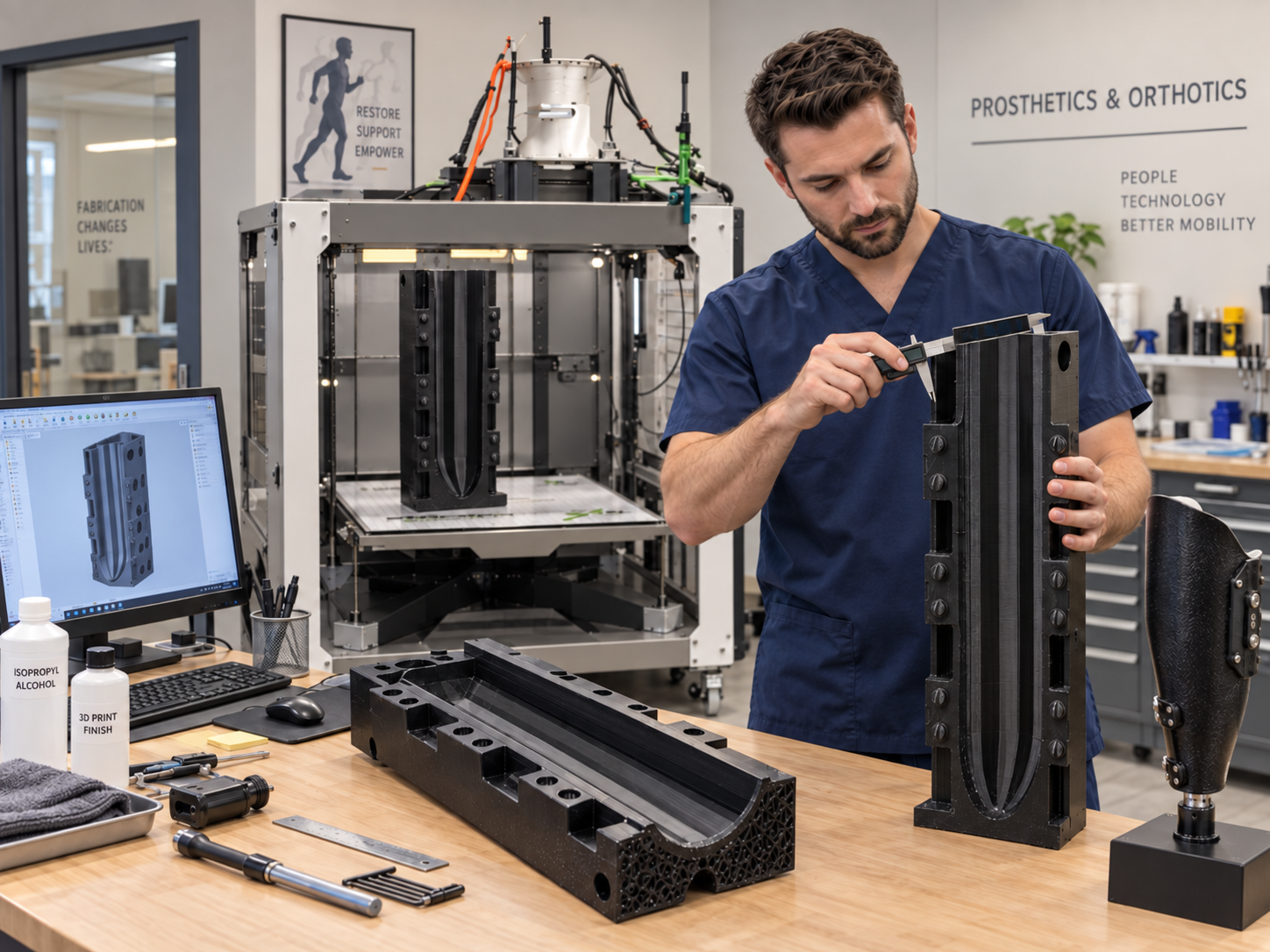
From Hesitation to Hands-On: Bringing Large-Format 3D Printing Into a Prosthetics and Orthotics Practice For many prosthetics and orthotics practitioners, the potential