
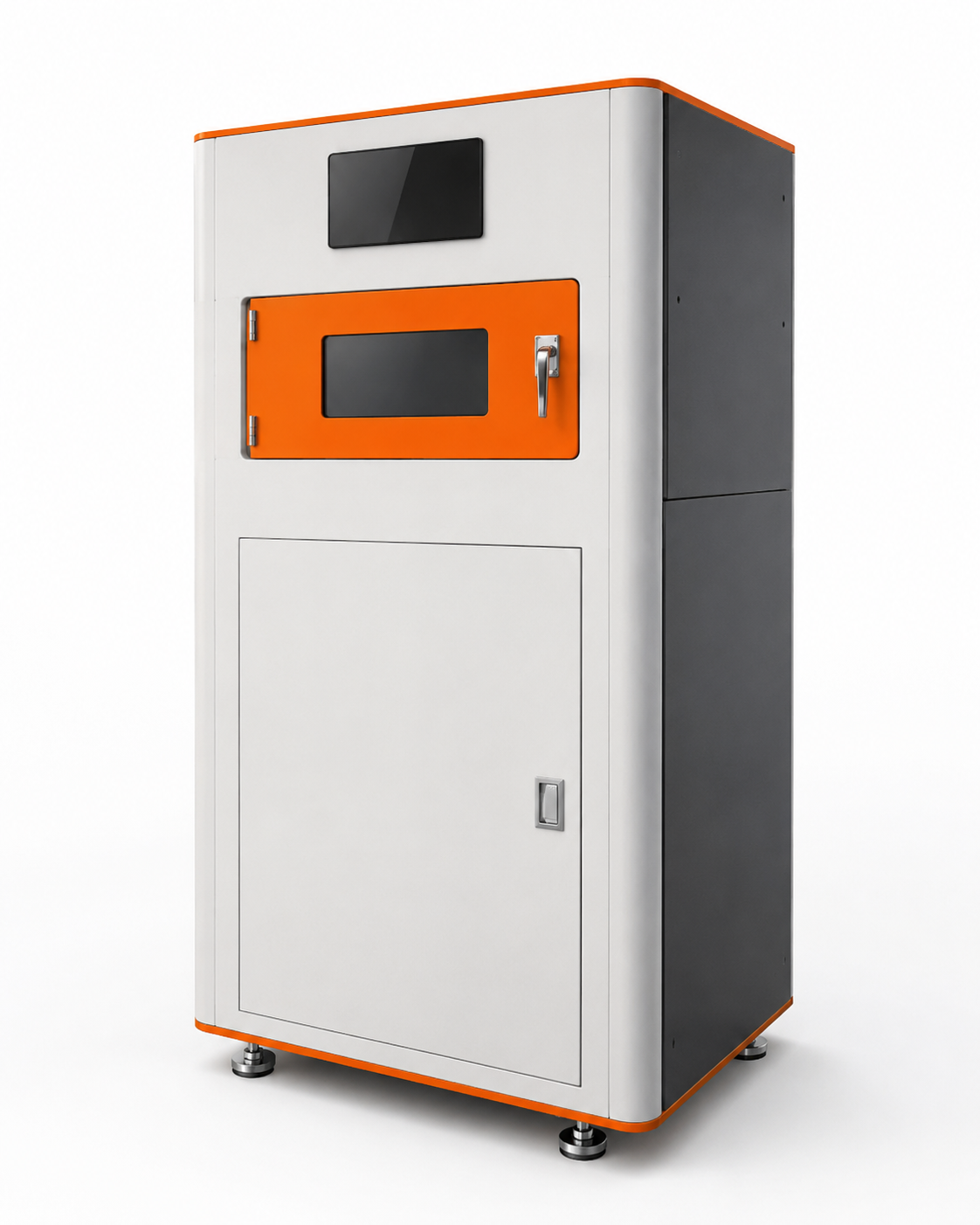
JT-SLM-130 for Dental Laboratories
Compact Metal AM for Dental Material and Workflow Evaluation
The JaegerTech JT-SLM-130 Metal Additive Manufacturing Cell is a compact, configurable laser powder bed fusion platform for dental laboratory evaluation, research, training, fit studies, and qualified workflow development. **
For dental laboratories, metal additive manufacturing is not simply a question of buying a printer. A practical metal AM workflow includes material selection, build preparation, powder handling, inert atmosphere operation, support removal, finishing, inspection, documentation, and process control.
The JT-SLM-130 gives dental labs a cost-conscious, open-parameter platform for evaluating whether selected metal AM workflows can be studied, documented, and developed in-house.
Why Dental Labs Are Looking at Metal AM
Many dental laboratories already outsource metal frameworks, bars, and substructure work. Outsourcing can be effective, but it limits a lab’s ability to study process variables, train technicians, control workflow knowledge, and develop internal procedures.
The JT-SLM-130 provides a compact way to evaluate dental metal AM workflows internally. Labs can review sample geometry, surface condition, support strategy, finishing requirements, and process documentation before deciding whether a complete system configuration makes sense.
With the right material, parameters, and post-processing plan, a lab can move from evaluation samples to a documented internal workflow that supports its own validation, quality records, and application-specific requirements.
Designed For
Dental Laboratories
Evaluate compact metal additive manufacturing capability for in-house workflow development.
Dental Research
Study cobalt-chromium process variables, density, surface finish, fit, and post-processing effects.
Dental Education
Teach metal AM workflow, powder handling, build preparation, support removal, and finishing fundamentals.
Process Development
Develop and document qualified workflows for selected alloys, applications, and lab requirements.
Key Advantages
Materials
Cobalt-chromium and stainless alloy workflows are available for application review, process development, and qualified laboratory evaluation. Additional materials are planned as the platform and supporting workflows continue to develop. **
Lower Barrier to Entry
A cost-conscious platform for dental labs evaluating in-house metal workflow development before committing to a larger production-class system.
Compact Footprint
A smaller-format SLM system suited for labs where floor space, installation planning, and supporting workflow areas matter.
Open Parameters
Open-access process parameter management supports research, training, material evaluation, and controlled workflow development with qualified materials.
Powder Handling Cell
Supporting equipment and workflow planning for inert atmosphere operation, powder handling, powder screening, and powder residue management.
Post-Processing Ready
Optional support for build plate separation, media blasting, finishing tools, inspection, and workflow separation.
Dental Workflow Overview
A dental metal AM workflow includes more than the print cycle itself.
| Workflow Step | Purpose |
|---|---|
| Digital Design / CAD | Prepare dental geometry using the lab’s existing digital workflow |
| Build Preparation | Orient parts, assign supports, review build strategy, and prepare print files |
| Laser Powder Bed Fusion | Print selected evaluation parts or lab-directed metal components using controlled atmosphere operation |
| Powder Recovery | Remove and manage unused powder through controlled handling and screening procedures |
| Post-Processing | Evaluate stress relief, build plate separation, support removal, media blasting, and finishing requirements |
| Inspection and Documentation | Review geometry, fit, surface condition, dimensional results, and process records |
Core Cell Components
| Component | Purpose |
|---|---|
| JT-SLM-130 Metal Additive Manufacturing System | Produces smaller metal parts using laser powder bed fusion |
| JT-PS-8400 Inert Powder Sieving System | Screens and recovers applicable metal powder in an inert environment |
| JT-NG-001 Nitrogen Generation System | Provides nitrogen for compatible inert-atmosphere operation |
| JT-PV-001 Metal Powder Vacuum System | Supports controlled collection of powder and residue, subject to material and facility review |
The cell is configurable. Additional equipment, facility controls, or outside services may be required depending on the selected material, application, and lab workflow.
Material Strategy
For dental laboratory evaluation, the JT-SLM-130 is positioned around cobalt-chromium and stainless steel alloy workflow development. **
| Material | Recommended Positioning |
|---|---|
| Cobalt-chromium alloy | Primary dental workflow evaluation material |
| Stainless steel | Secondary dental workflow evaluation material |
| Titanium alloy | In development or subject to application review |
| Other materials | In development or subject to application review |
Recommended Workflow Separation
A compact printer does not mean every operation should occur in the same area. Metal AM requires a practical layout for powder handling, post-processing, and inspection.
| Area | Operations |
|---|---|
| Powder and Printing Area | Printer operation, powder handling, powder sieving, powder residue collection, powder storage |
| Post-Processing Area | Build plate separation, support removal, media blasting, finishing tools |
| Inspection and Dental Evaluation Area | Fit checks, dimensional inspection, documentation, scan comparison, technician or student review |
Separating these functions helps manage contamination, powder-handling risk, finishing debris, and clean inspection requirements.
Post-Processing and Lab Completion Options
Printing a metal part is only part of the workflow. Once a build is complete and powder removal is performed, the part may still need to be separated from the build plate, cleaned of supports, finished, inspected, and documented.
| Optional Module | Intended Function |
|---|---|
| JT-BS-001 Build Plate Separation Bandsaw | Supports removal of selected fully depowdered parts from the build plate |
| JT-MB-001 Enclosed Media Blasting Cabinet | Supports surface finishing of fully depowdered metal parts |
| JT-FT-001 Dental / Metal AM Finishing Tool Kit | Supports support removal, deburring, and controlled finishing |
| JT-IN-001 Basic Inspection Kit | Supports dimensional inspection and documentation |
| Additional Build Plates | Supports continued workflow while plates are inspected or resurfaced |
Stress relief, precision plate separation, metallurgical testing, and build plate resurfacing may require qualified outside services depending on the application.
Evaluate Before You Commit
Qualified dental laboratories may request representative metal AM samples to review geometry, surface condition, finishing requirements, and workflow suitability before moving into system configuration.
Samples can help a lab evaluate:
- Feature detail
- General print quality
- Surface condition
- Support strategy
- Finishing expectations
- Fit-study planning
- Process-development requirements
- Whether the system is worth deeper technical review
Evaluation samples are provided for review and process discussion only. They are not represented as patient-use dental devices, validated dental restorations, or certified production articles.
JT-SLM-130 Key Specifications
| Item | Specification |
|---|---|
| Technology | Selective Laser Melting / Laser Powder Bed Fusion |
| Build Volume | Ø130 mm × 80 mm cylindrical |
| Laser Type | Fiber laser, water-cooled |
| Laser Power | 500 W |
| Laser Spot Size | 50–100 µm adjustable |
| Powder Layer Thickness | 20–120 µm adjustable |
| Scanning Speed | ≤10 m/s |
| Forming Speed | 5–20 cm³/h |
| Powder Feeding Method | Bottom feeding, unidirectional variable-speed spreading |
| Protective Atmosphere | Nitrogen or argon, material dependent |
| Working Oxygen Content | ≤100 ppm |
| Filter System | Supplier-reported permanent filter cartridge, ≥30,000 hours service life |
| Rated Power | 3 kW |
| Electrical Requirements | 100–110 V or 220–240 V AC, 50/60 Hz, single phase, 16 A |
| Operating System | Windows 10 or Windows 11 |
| Data Formats | CLI / SLC / STL and other formats |
| Machine Dimensions | 720 mm × 653 mm × 1726 mm |
| Supplier-Listed Printer Materials | Stainless steel, titanium alloy, mold steel, cobalt-chromium alloy, and other supplier-listed materials |
Supporting Systems at a Glance
| System | Key Specifications | Intended Use |
|---|---|---|
| JT-PS-8400 Powder Sieving System | Ø400 mm screen, 200 mesh, inert gas pressure 0.5–0.7 MPa, 350 W | Powder screening and recovery in an inert environment |
| JT-NG-001 Nitrogen Generator | 99.999% purity, 3 Nm³/h flow rate, dew point ≤ -40 °C | Nitrogen supply for compatible inert atmosphere processes |
| JT-PV-001 Metal Powder Vacuum System | 300 m³/h airflow, 1 µm filtration, 80 L collection capacity, supplier-listed explosion-protection designation | Controlled powder and residue collection, subject to material and facility review |
More Than a Printer Quote
JaegerTech helps customers evaluate the complete cell: printer configuration, powder handling, inert gas supply, workflow separation, post-processing options, training needs, and application fit.
The goal is not simply to place a machine. The goal is to help the lab understand what is required to evaluate metal AM responsibly.
JaegerTech can assist with:
- System configuration review
- Application discussion
- Sample request coordination
- Powder-handling workflow planning
- Post-processing strategy
- Facility layout considerations
- Startup training coordination
- Future expansion review
Request Information or Evaluation Samples
The JT-SLM-130 Metal Additive Manufacturing Cell is intended for dental laboratories evaluating compact metal laser powder bed fusion capability for cobalt-chromium, stainless steel, and future material workflow development.
Contact JaegerTech to discuss:
- Representative metal AM samples
- Cobalt-chromium workflow evaluation
- Stainless steel workflow evaluation
- Supporting powder-handling equipment
- Facility planning considerations
- Optional post-processing modules
- Application review and quotation options
** – Specification and Application Notice
Other material workflows are in development or subject to application review.
Dental laboratories are responsible for validating their own materials, process parameters, post-processing methods, inspection criteria, quality records, labeling, and regulatory obligations for any patient-use dental application. JaegerTech does not represent that the system, by itself, produces FDA-cleared, FDA-approved, or otherwise compliant dental devices.
Technical specifications, listed material classes, performance values, and equipment descriptions are based on current supplier-provided information and are subject to confirmation before quotation or sale.
Material suitability, process atmosphere, powder-handling procedures, ancillary equipment selection, cleanup methods, facility controls, and operator training must be evaluated for each intended application. Supplier-listed explosion-protection designations are provided for equipment-identification and configuration-review purposes only unless separately confirmed in writing.
About the Author: jaegertechgroup.com

STAY IN THE LOOP
Subscribe to our free newsletter.
Leave A Comment
From 3D Scan to Perfect Fit: The Corvette Bumper Project Moves Forward A few weeks ago, we shared a project that demonstrated
Still Using Cura or Simplify3D? JaegerTech Can Help Build an OrcaSlicer Profile for Your 3D Printer A 3D printer does not become
Preventive Maintenance for 3D Printers: In-Shop and On-Site Service A 3D printer rarely fails without warning. Belts loosen, bearings collect debris, nozzles
When the Manufacturer Disappears: Support for Orphaned 3D Printers Industrial 3D printers are often purchased with the expectation that they will remain