
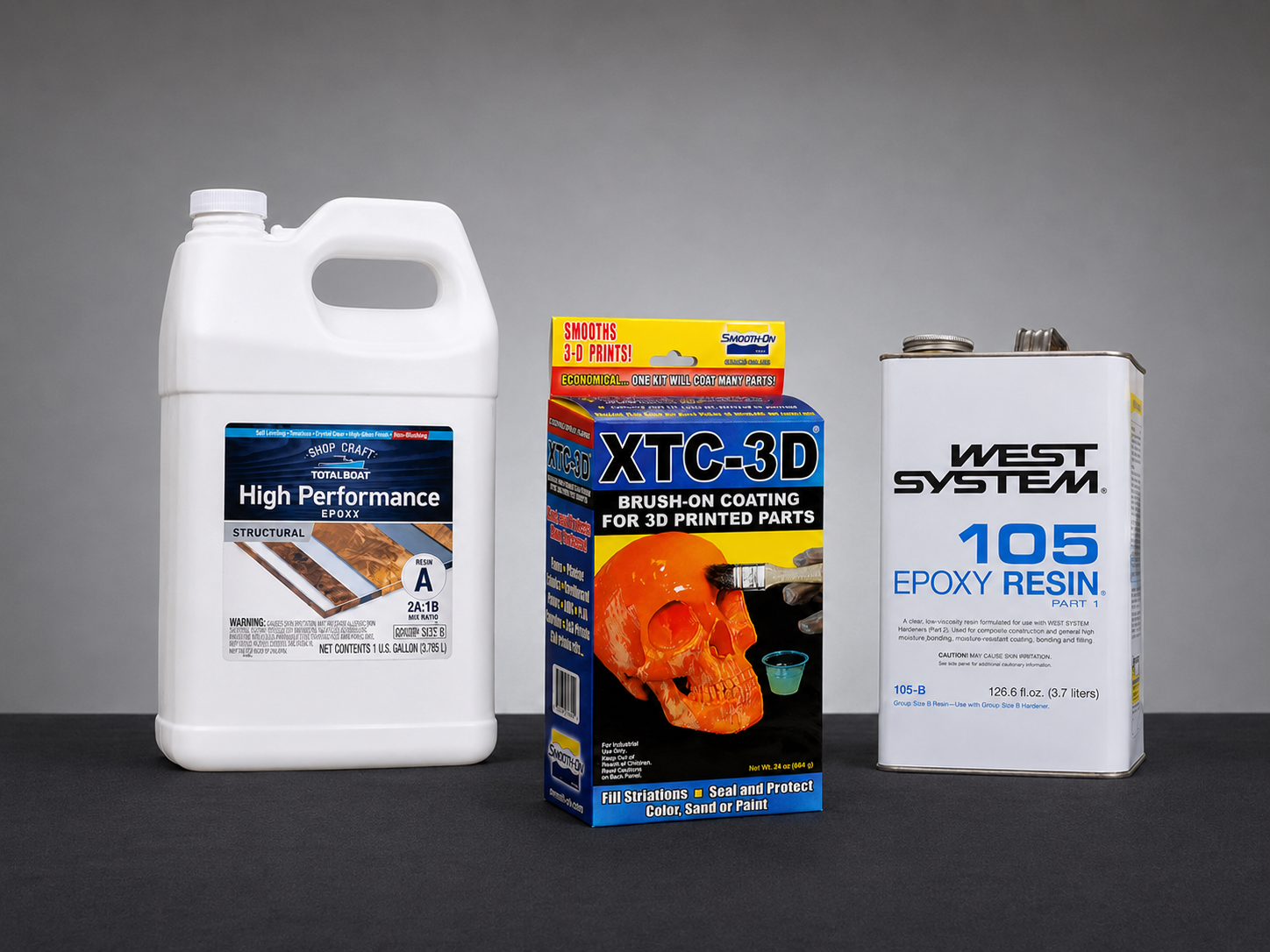
Epoxy Coatings
Epoxy is one of the most useful coatings for 3D printed industrial parts. It can seal layer lines, improve surface durability, create a harder outer shell, and provide a good base for sanding, priming, or pattern work.
Common Uses
Epoxy coatings are useful for:
- Foundry patterns
- Core boxes
- Vacuum forming tools
- Composite mold masters
- Large-format printed parts
- Fixtures
- Tooling
- Display models
- Sealed prototypes
- Parts needing a smoother finish
Advantages
Epoxy offers several practical benefits:
- Good adhesion to many properly prepared plastics
- Good sealing of layer lines and porosity
- Tough surface compared with primer alone
- Can be sanded after cure
- Can improve pattern durability
- Can be built up in layers
- Can bond printed sections together
- Can be combined with fillers
- Can improve surface stability before painting
For large FDM prints, epoxy is often one of the most practical ways to turn a layered printed surface into a more useful tooling or pattern surface.
Disadvantages
Epoxy is not perfect.
Limitations include:
- Cure time
- Runs and drips if applied too thick
- Added weight
- Possible loss of fine detail
- Sanding labor
- Amine blush with some systems
- Surface prep requirements
- Pot life limits
- Sensitivity to mix ratio
- Possible heat generation in thick pours
- PPE and ventilation requirements
Epoxy is best used with controlled application thickness, proper surface prep, and realistic expectations about sanding and finishing.
JaegerTech View
Epoxy is one of our preferred coating families for functional printed tooling, foundry patterns, large-format parts, and mold masters. It is especially useful when the goal is sealing, durability, and a sandable surface.
About the Author: jaegertechgroup.com

STAY IN THE LOOP
Subscribe to our free newsletter.
Leave A Comment
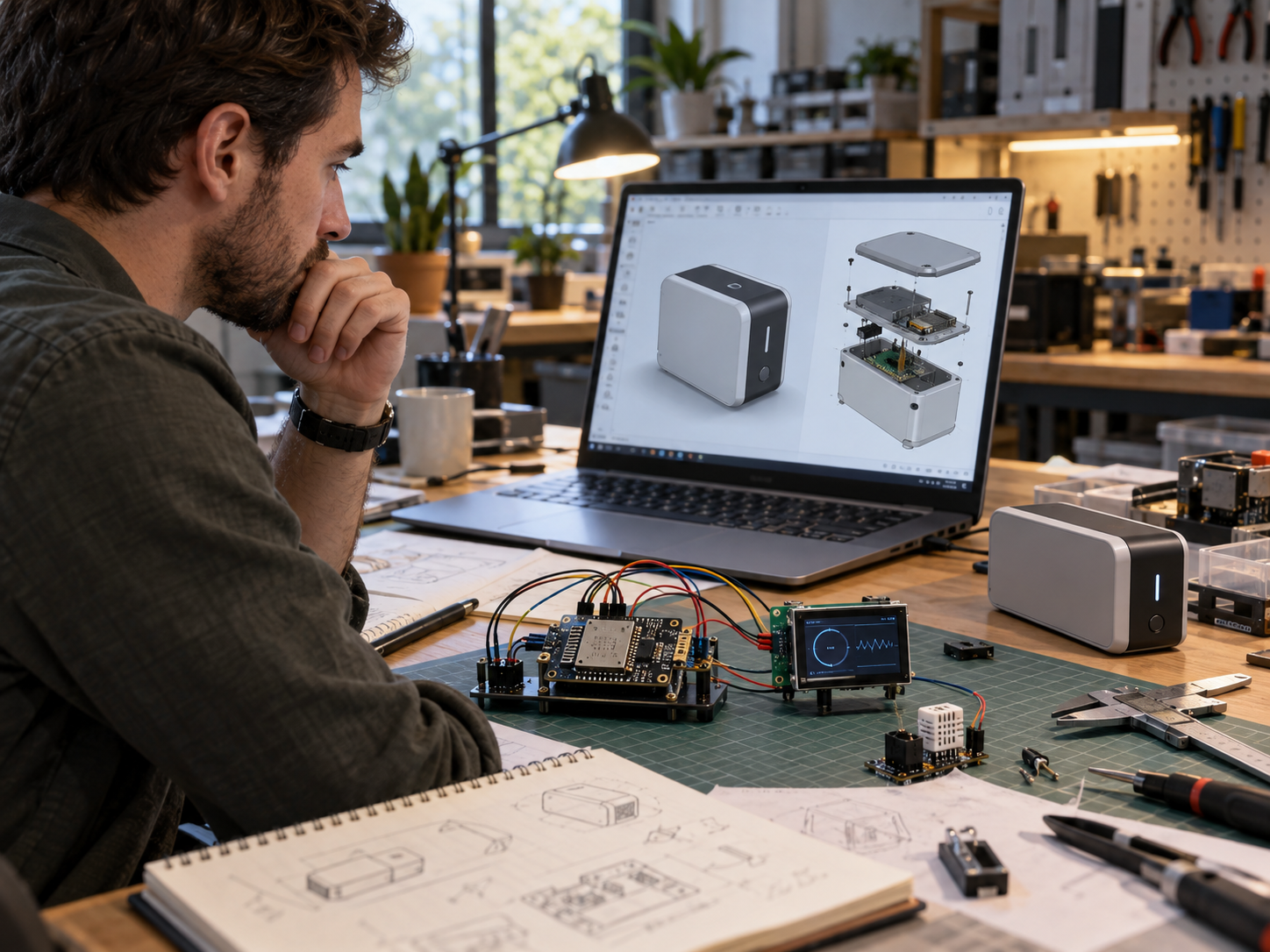
Beyond ESP32 and Raspberry Pi: Designing Electronics for Real Products Development boards are one of the best tools available for product development.

From MVP to Market: How Consumer Electronics Become Real Products A working MVP is an important milestone. It proves that the idea
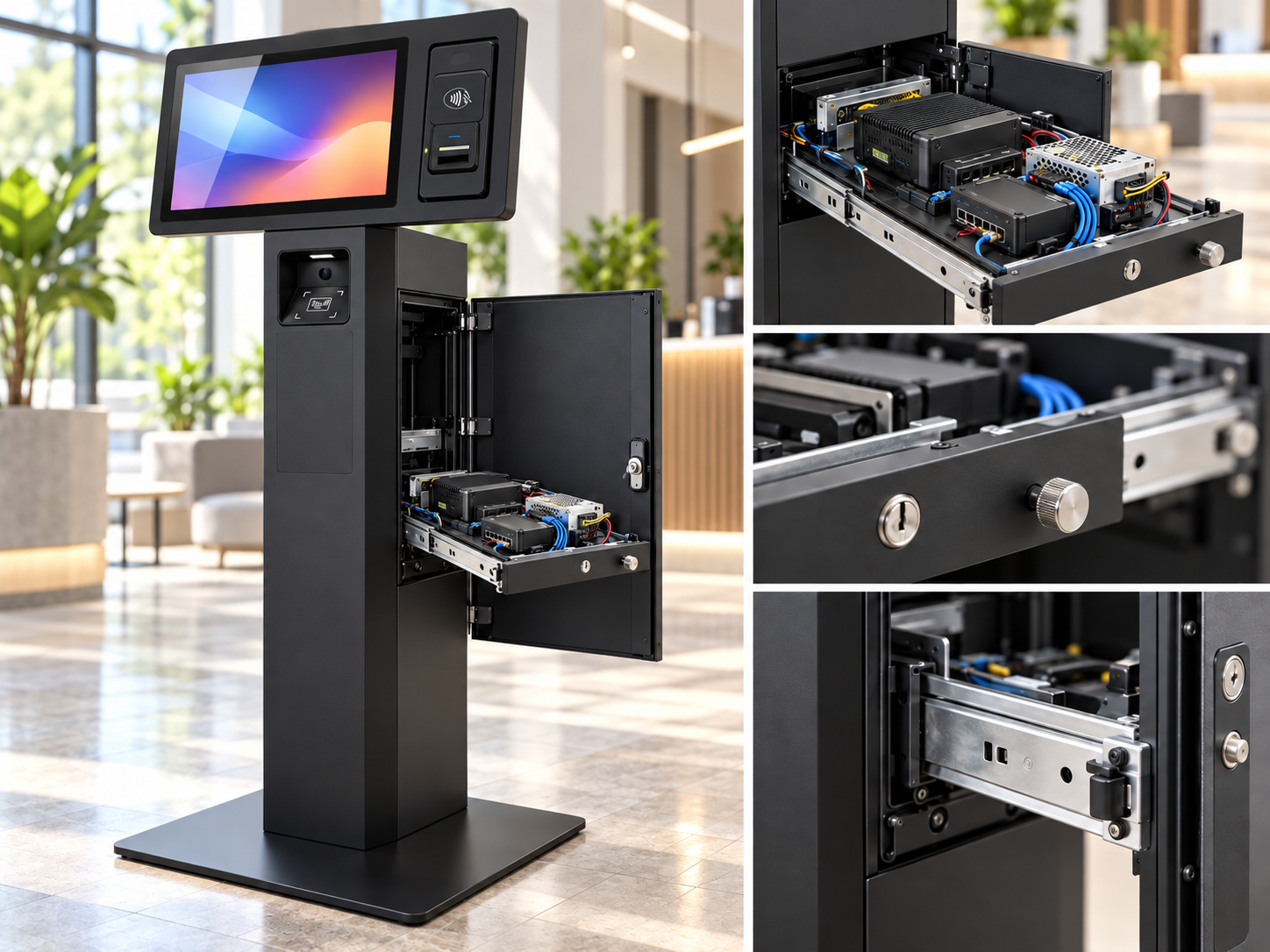
Designing Products for Serviceability, Maintenance, and Field Repair A product can work perfectly on the day it is delivered and still be
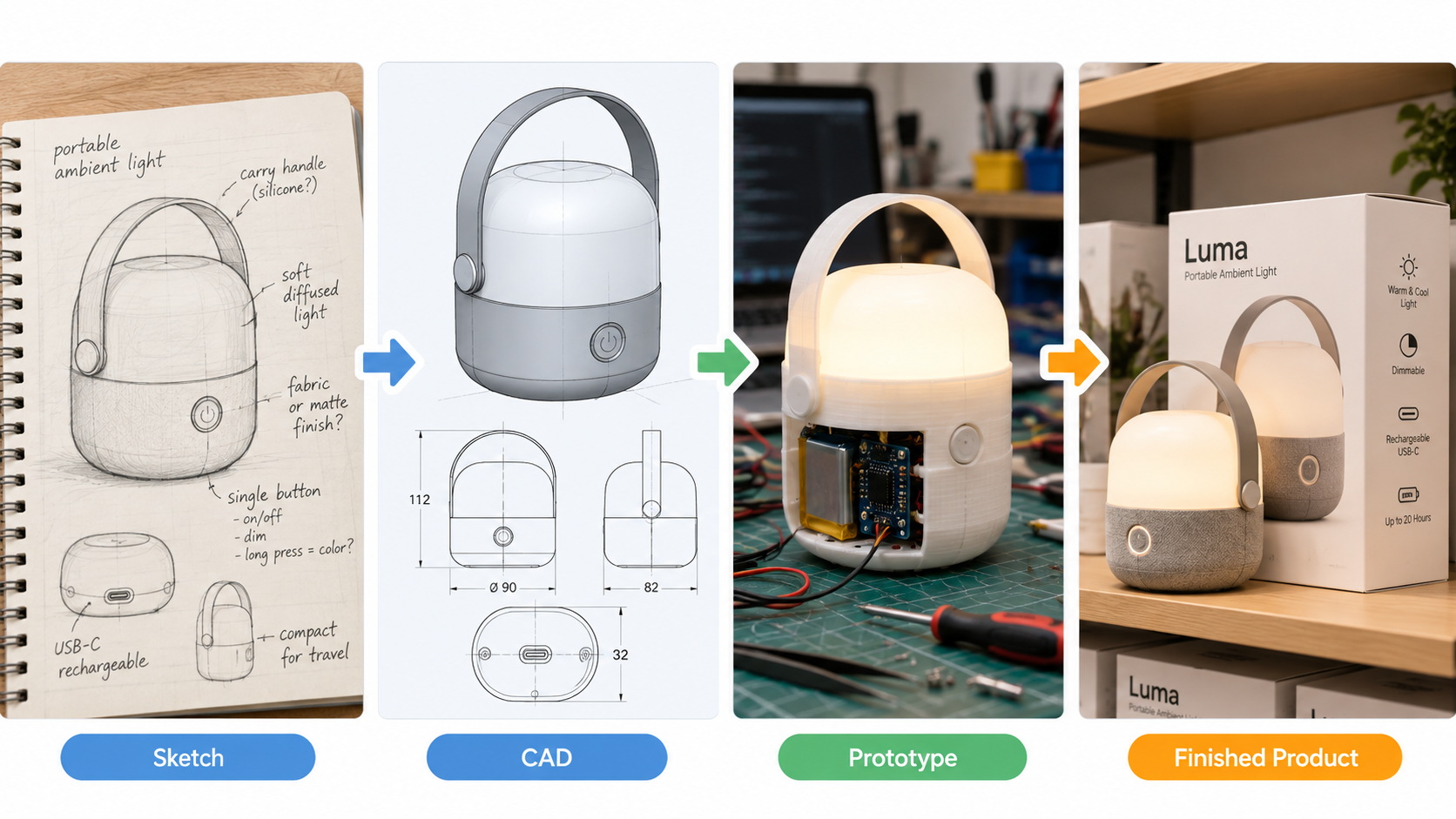
From Prototype to Small-Batch Production: What Changes After the First Part Works Getting the first prototype to work is a major milestone.