
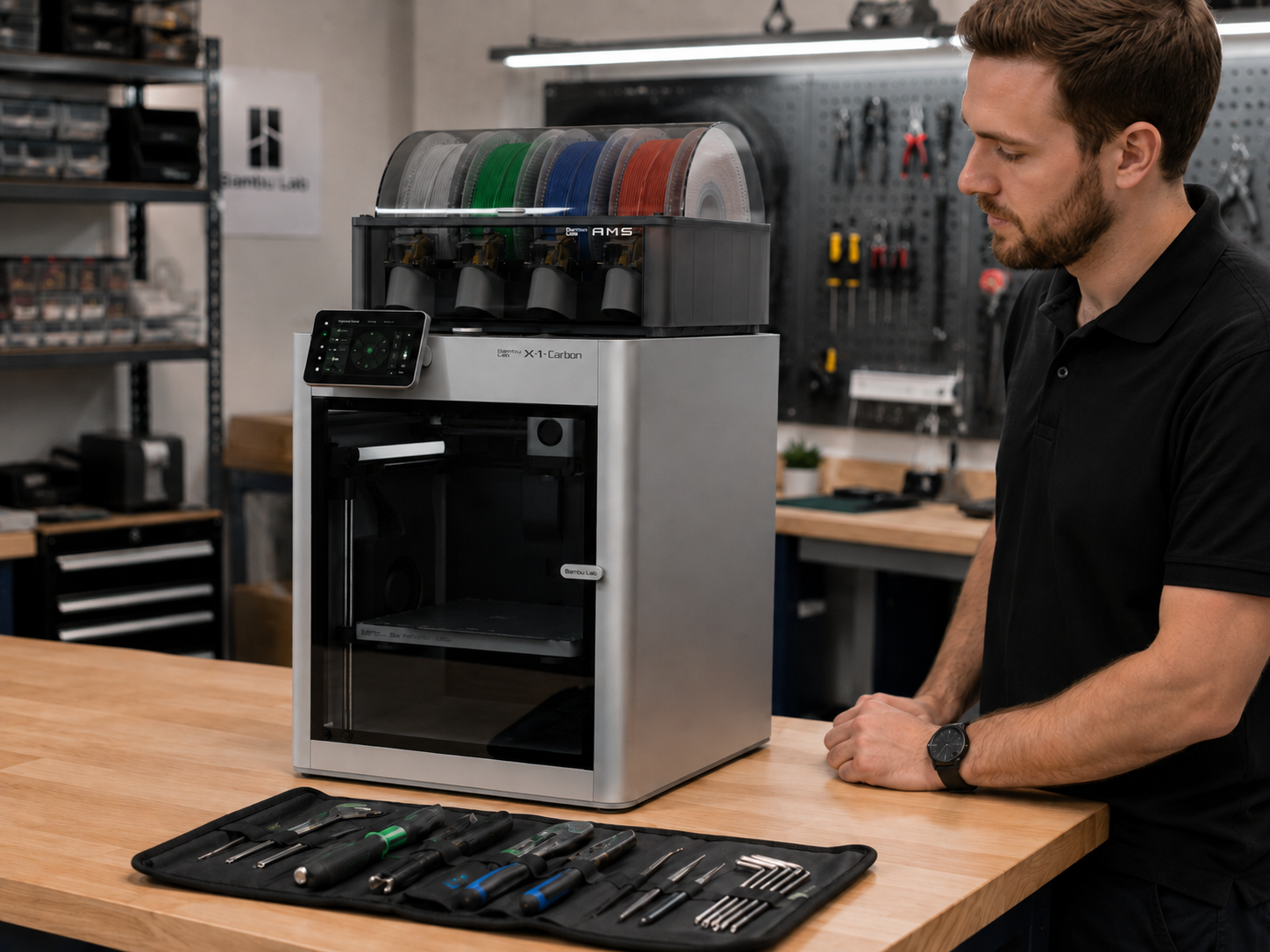
3D Printer Service and Repair for Bambu Lab, Prosumer, and Industrial Machines
A 3D printer that is down, unreliable, clogged, poorly calibrated, or producing inconsistent parts can quickly become more than an inconvenience. For businesses, schools, research labs, engineering teams, and serious users, printer downtime can delay prototypes, disrupt production support, and waste material, labor, and time.
JaegerTech offers 3D printer service and repair support for a range of desktop, prosumer, and industrial 3D printers. Service may be available by walk-in, scheduled drop-off, or on-site visit depending on the machine, issue, location, and urgency.
We do not service every printer ever made, but we can support many common machines, including Bambu Lab systems, many prosumer 3D printers, and a variety of industrial platforms through our in-house technicians and strategic service partners.
3D Printer Service Options
Different printer problems require different service approaches. Some issues can be diagnosed quickly in the shop. Others require a scheduled bench evaluation or an on-site visit.
JaegerTech offers several options depending on the situation.
Walk-In 3D Printer Service
For smaller printers and quick evaluations, walk-in service may be available.
This can be useful for problems such as:
- clogged nozzles
- failed prints
- bed adhesion problems
- filament loading issues
- broken or worn consumable parts
- unusual noises
- print quality problems
- basic troubleshooting questions
Walk-in service is best for relatively portable machines and straightforward issues. Availability may vary depending on workload, technician availability, and the complexity of the repair.
For best results, bring the printer, power supply, build plate, any accessories related to the issue, and a sample failed print if available.
Scheduled Drop-Off Service
For more involved repairs, a scheduled drop-off is usually the better option. This allows time for proper inspection, diagnosis, testing, and repair planning.
Scheduled drop-off service may be appropriate for:
- recurring print failures
- motion system problems
- extrusion problems
- hotend or toolhead issues
- bed leveling problems
- firmware or configuration concerns
- wiring or sensor faults
- multi-material system issues
- printer tune-ups
- machines that need a full inspection before being returned to service
A scheduled evaluation gives our technicians time to properly examine the machine instead of guessing at the problem. In many cases, the printer needs to be powered on, homed, heated, tested, and run through a controlled print before the problem is fully understood.
On-Site 3D Printer Service
Some printers should not be moved casually. Larger machines, industrial systems, production printers, and printers integrated into a business or lab environment may require on-site service.
On-site service may be available for:
- industrial 3D printers
- larger-format systems
- printer farms
- school or university labs
- business production environments
- machines that are difficult to transport
- equipment requiring installation or setup support
- troubleshooting that depends on the customer’s local workflow
On-site support may also be useful when the issue involves more than one printer, room conditions, material handling, operator workflow, networking, or production process problems.
For industrial systems outside our direct in-house capability, we may work with strategic partners to help support repair, diagnosis, replacement parts, training, or next-step service planning.
Bambu Lab 3D Printer Service
Bambu Lab printers are widely used by businesses, schools, engineers, makers, and advanced hobbyists because they are fast, capable, and relatively easy to use. However, like any machine, they can still develop problems.
We can help with many Bambu Lab service issues, including:
- print quality problems
- clogged hotends
- extruder issues
- AMS feed problems
- filament path issues
- bed adhesion problems
- calibration problems
- worn consumables
- unusual machine behavior
- setup and basic workflow support
Bambu printers are capable machines, but they still benefit from correct maintenance, clean filament handling, proper build plates, appropriate material settings, and realistic expectations about part geometry and materials.
Prosumer 3D Printer Service
Many serious users and small businesses rely on prosumer 3D printers. These machines often sit between hobby printers and industrial platforms. They can be very capable, but they may require more maintenance, tuning, and troubleshooting than users expect.
We may be able to support many prosumer models, including machines used for:
- functional prototypes
- fixtures
- small production runs
- engineering samples
- educational labs
- farm or business use
- product development
Common service needs include extrusion tuning, hotend replacement, bed leveling, motion system troubleshooting, firmware/configuration review, part cooling issues, and print quality improvement.
Because the prosumer printer market is broad, we evaluate serviceability on a case-by-case basis.
Industrial 3D Printer Service
Industrial 3D printers require a different level of support than small desktop machines. Problems may involve machine calibration, material handling, environmental conditions, heated chambers, motion systems, print process settings, operator training, or production workflow.
JaegerTech supports industrial 3D printer service through a combination of in-house technical experience and strategic partners.
Industrial support may include:
- machine assessment
- troubleshooting
- preventive maintenance review
- setup and installation support
- material and process review
- workflow recommendations
- coordination with OEM or partner service providers
- guidance on whether repair, upgrade, or replacement makes sense
Not every industrial printer can be repaired directly in-house, but we can often help customers understand the problem, determine the next step, and avoid wasting time on the wrong fix.
We Do Not Service Every Printer
It is important to be direct: we do not service every printer, brand, or machine type.
Some low-cost printers may not be economical to repair. Some machines may require proprietary parts, factory-only tools, locked firmware, or OEM service access. In other cases, the replacement cost of the machine may be close to the cost of a serious repair.
When that happens, we will be honest about it.
Sometimes the best answer is repair. Sometimes it is upgrade. Sometimes it is replacement. Sometimes the issue is not the machine at all, but material, settings, environment, or operator workflow.
Our goal is to help you make a practical decision.
Common 3D Printer Problems We Can Evaluate
We can evaluate many common 3D printer issues, including:
- clogged nozzles and hotends
- extrusion problems
- under-extrusion or over-extrusion
- poor bed adhesion
- inconsistent first layers
- layer shifting
- ringing, ghosting, or vibration artifacts
- stringing and oozing
- heat creep
- filament grinding
- broken thermistors or heater faults
- failed fans
- worn build plates
- loose belts or motion issues
- bed leveling and Z-offset problems
- AMS or filament feed issues
- material-related print failures
- recurring failed prints
- poor surface finish
- dimensional accuracy problems
A good diagnosis usually starts with understanding the machine, the material, the part, the settings, and the failure mode.
What to Bring for Drop-Off or Walk-In Service
To help us diagnose the issue faster, bring as much relevant information as possible.
Useful items include:
- the printer
- power supply and cables
- build plate
- filament being used when the problem occurred
- failed print samples
- nozzle or hotend parts if recently changed
- screenshots of error messages
- slicer settings or project files if relevant
- photos or videos of the failure
- a short explanation of what changed before the problem started
The more context we have, the faster we can separate machine problems from material, slicing, environmental, or operator issues.
Service Is About More Than Repair
A 3D printer may be mechanically functional and still produce poor results. That is why service is not always just replacing parts.
Many printer problems involve the full process:
- material condition
- filament quality
- slicer settings
- bed surface
- part orientation
- support strategy
- nozzle size
- chamber temperature
- humidity
- maintenance history
- operator workflow
This is especially true for engineering materials like nylon, TPU, polycarbonate, carbon-fiber-filled filaments, and other functional materials.
A working printer is useful. A reliable printing process is better.
Service for Schools, Labs, and Businesses
3D printers in schools, labs, and businesses often fail for predictable reasons: many users, inconsistent maintenance, unknown materials, clogged nozzles, damaged build plates, and poorly documented settings.
We can help organizations evaluate printer condition, standardize basic maintenance, troubleshoot recurring failures, and decide which machines are worth repairing.
For organizations with multiple printers, service may include:
- printer condition review
- basic maintenance planning
- operator guidance
- material recommendations
- workflow improvement
- repair prioritization
- identifying machines that should be retired or upgraded
This can be especially valuable for schools, universities, engineering labs, makerspaces, and small production environments.
When Repair May Not Be Worth It
Some machines are worth repairing. Others are not.
Repair may not make sense when:
- replacement parts are unavailable
- the machine is heavily modified and undocumented
- the frame or electronics are badly damaged
- repair cost approaches replacement cost
- the printer cannot meet the customer’s real needs
- the machine is unsafe
- the printer is too unreliable for the required application
In those cases, we can help evaluate whether the better path is repair, upgrade, replacement, or outsourcing the print work.
Schedule 3D Printer Service
JaegerTech offers 3D printer service by walk-in, scheduled drop-off, and on-site support where appropriate.
We support Bambu Lab printers, many prosumer models, and a range of industrial systems through our in-house technicians and strategic partners. We do not service every printer, but we can help determine whether your machine is a good candidate for repair, maintenance, troubleshooting, or upgrade.
If your printer is down, unreliable, or producing bad parts, bring the machine, the failed print, and any relevant files or settings. We can help diagnose the problem and recommend the next practical step.
About the Author: jaegertechgroup.com

STAY IN THE LOOP
Subscribe to our free newsletter.
Leave A Comment
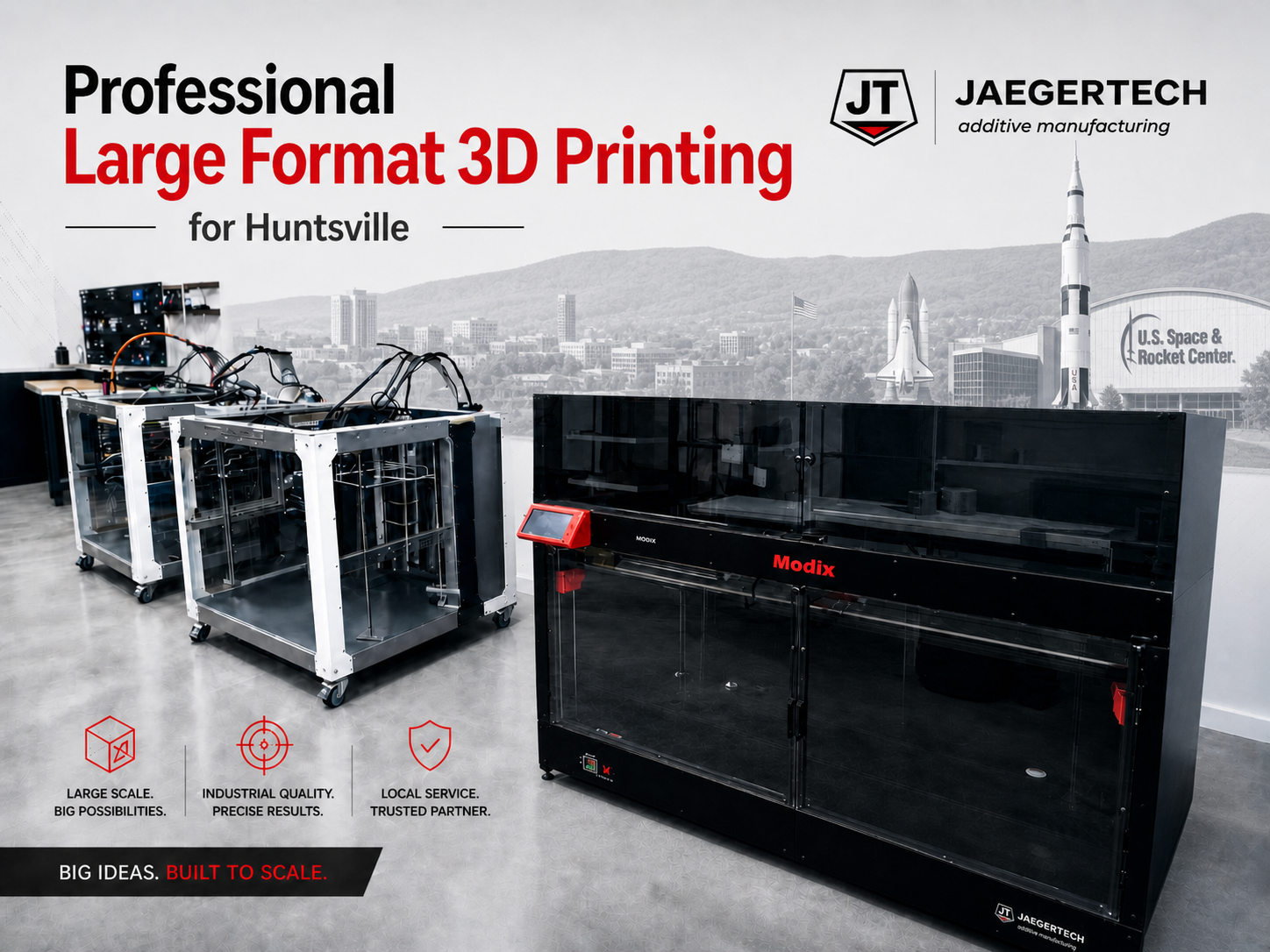
Modernizing Large-Format 3D Printers Instead of Replacing Them One of the biggest advantages of open-source and openly serviceable 3D printers is that
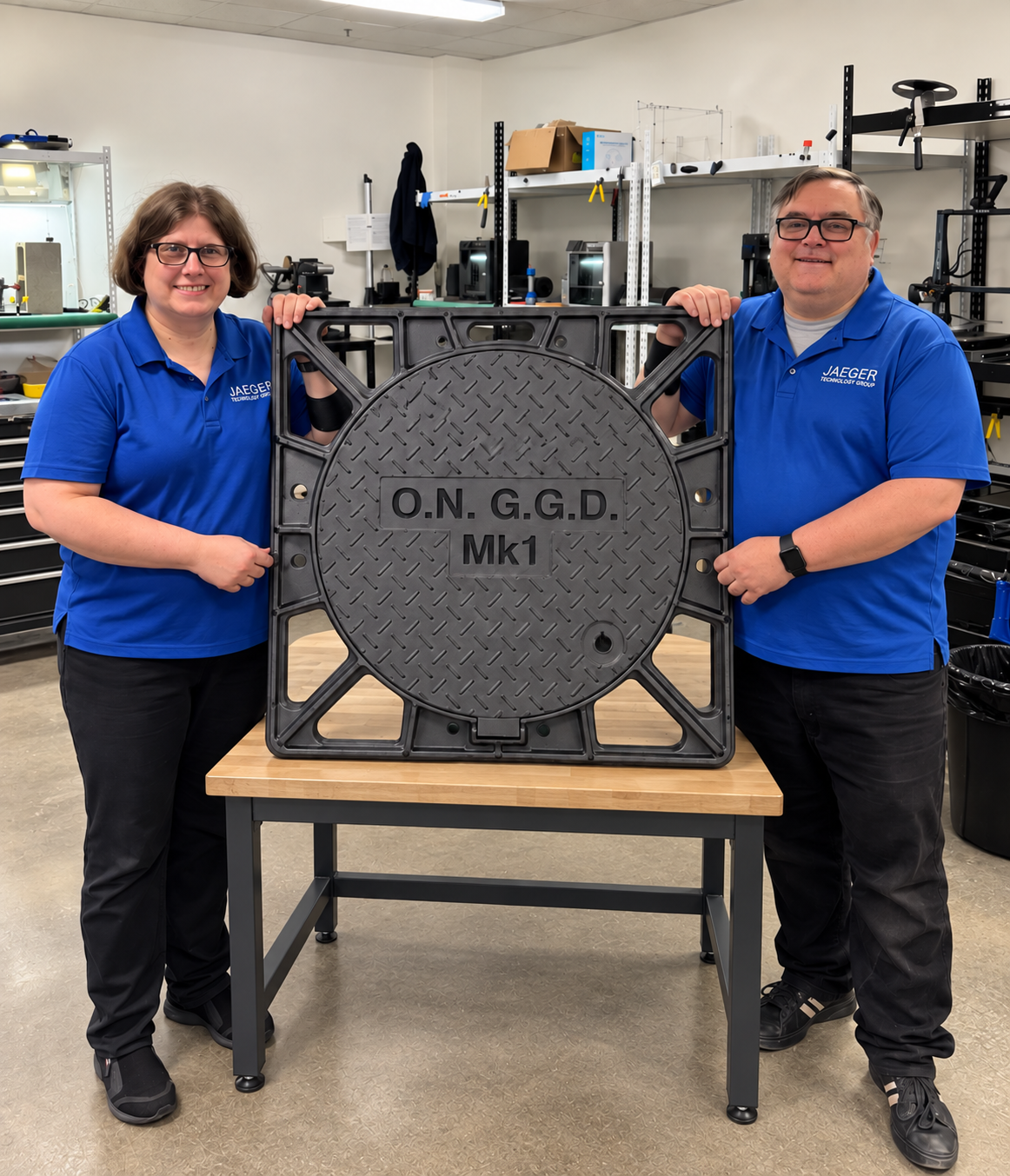
How Large-Format 3D Printing Helped Validate a Production Mold in 9 Days When an energy company was preparing to invest in an
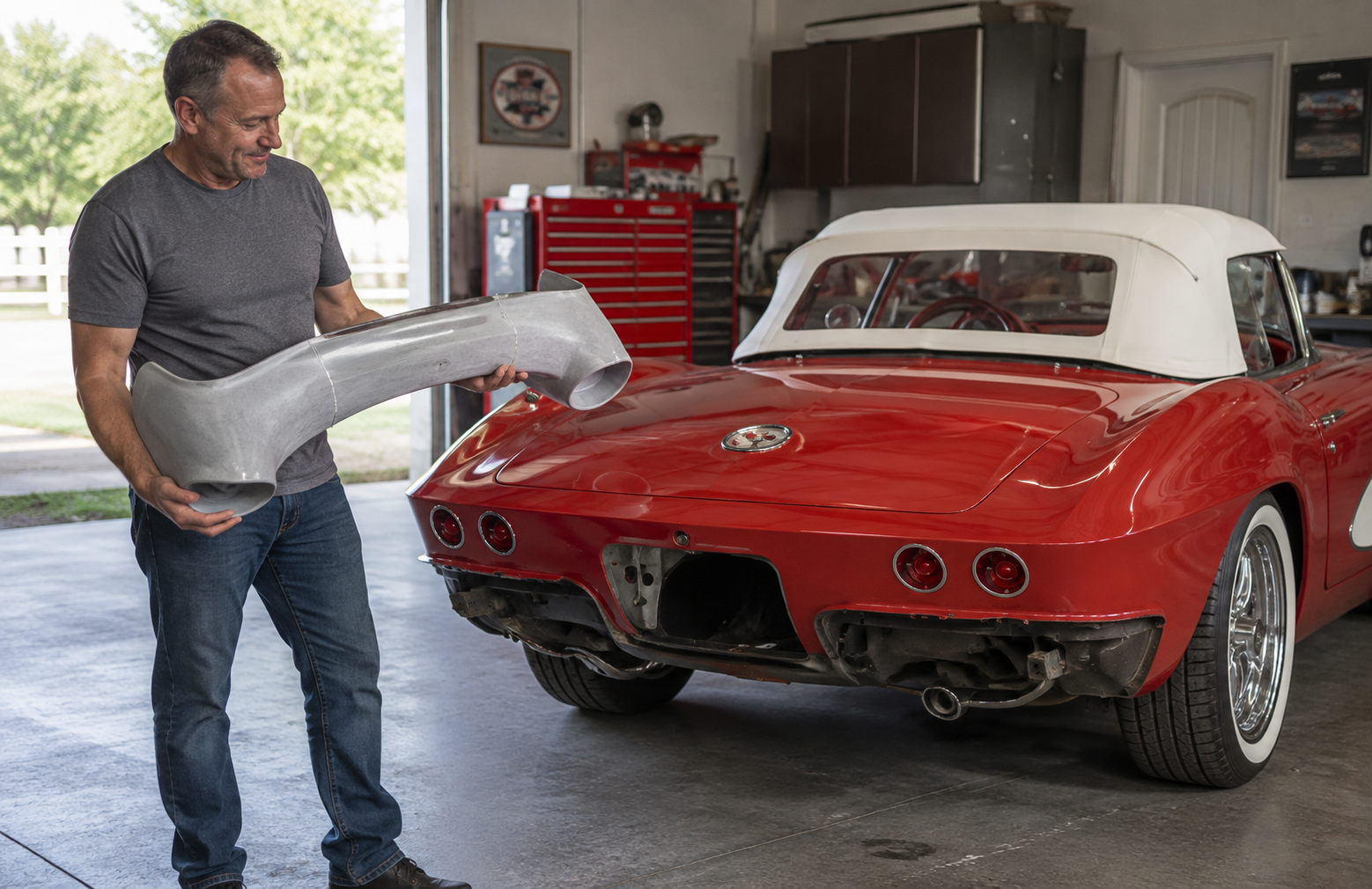
From 3D Scan to Perfect Fit: The Corvette Bumper Project Moves Forward A few weeks ago, we shared a project that demonstrated
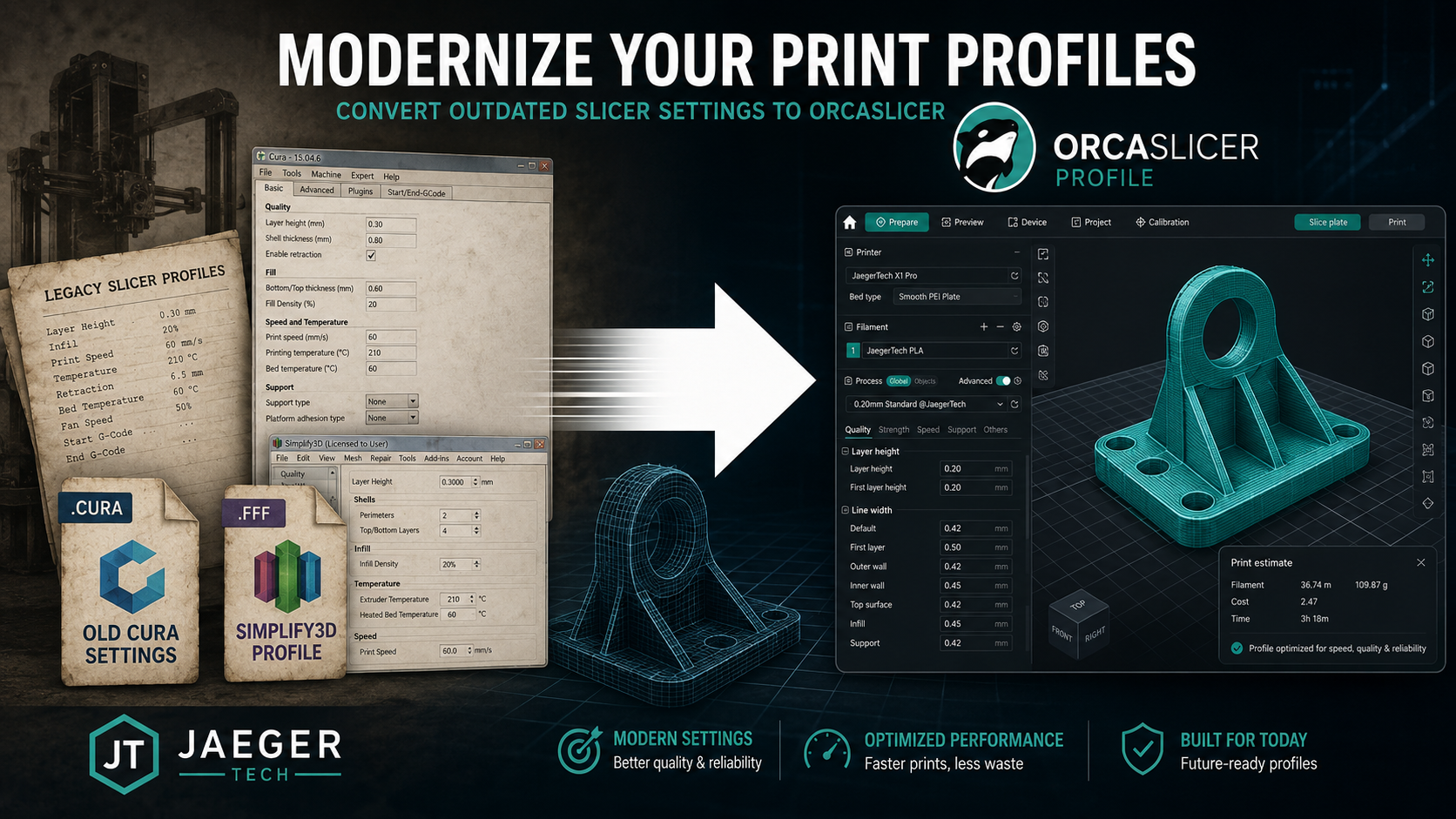
Still Using Cura or Simplify3D? JaegerTech Can Help Build an OrcaSlicer Profile for Your 3D Printer A 3D printer does not become