
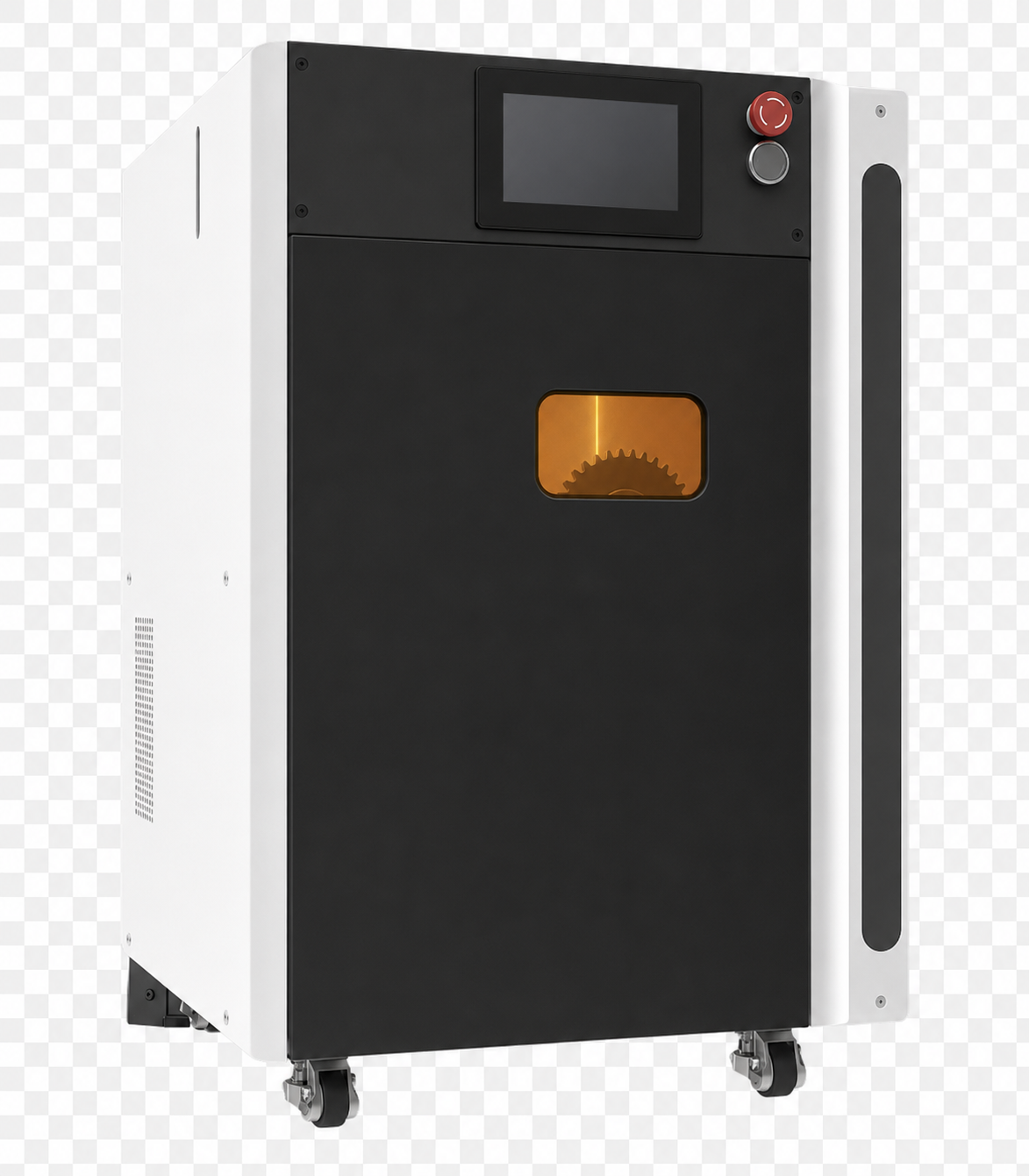
JaegerTech is preparing to add a compact selective laser sintering system for functional nylon and TPU parts to their lineup. The new JaegerTech SLS 1620 package is intended for research, education, prototyping, and small-batch manufacturing where durable, support-free polymer parts are needed.
Unlike FDM or resin printing, SLS does not require traditional support structures. Parts are built inside a bed of powder, allowing complex geometries, internal passages, nested components, and production-style part layouts that are difficult or impractical with many other additive manufacturing processes.
Functional Nylon Parts, Without the Guesswork
The JaegerTech SLS 1620 is designed around a compact powder-bed workflow for producing engineering-grade polymer parts. It is well suited for universities, research labs, product development teams, and small manufacturers that need strong, functional parts without investing in a large industrial SLS platform.
Expected applications include:
- Functional prototypes
- Research test coupons
- Small-batch production parts
- Fixtures and tooling
- Housings and enclosures
- Flexible TPU components
- Wear parts and mechanical components
- Lightweight nylon parts with complex geometry
Key System Specifications
The planned system package is based around the following specifications:
| Specification | Detail |
|---|---|
| Build Volume | 160 × 160 × 200 mm |
| Laser | 10W, 450 nm diode laser |
| Laser Classification | Class 1 laser product |
| Layer Thickness | 100 to 150 microns |
| Display | 7-inch touchscreen |
| Scanning System | Galvanometer scanning |
| Software | VoxelDance |
| Power | 100–120V 10A or 220–240V 5A |
This makes the system compact enough for a lab or professional shop environment while still offering a true powder-bed process for support-free nylon and TPU part production.
Material Options
The JaegerTech SLS 1620 is expected to support several useful polymer powder options:
PA11
A tough nylon material commonly selected for impact resistance and durable functional parts.
PA12
A general-purpose engineering nylon suitable for prototypes, housings, fixtures, and production-style components.
TPU
A flexible elastomeric material for parts requiring compliance, impact absorption, grip, or rubber-like behavior.
Glass Fiber-Filled Nylon
A stiffer nylon option for improved dimensional stability and increased rigidity.
Carbon Fiber-Filled Nylon
A lightweight, higher-strength nylon option for applications where stiffness and strength-to-weight matter.
Why SLS Matters
For many functional parts, SLS offers a major advantage: design freedom.
Because the surrounding powder supports the part during the build, SLS can produce geometries that would normally require support material, awkward post-processing, or design compromise. This is especially valuable for research and prototyping, where the goal is often to test real geometry, not simplified geometry created only to make the part easier to print.
SLS also allows multiple parts to be nested in the same build volume. For small-batch work, this means a single build can contain several prototypes, test samples, or production components.
Complete Startup Package
JaegerTech is evaluating this as a complete package, not just a printer purchase. The goal is to offer a practical startup workflow for customers who may not already have experience with powder-based 3D printing.
The proposed package includes:
- SLS 1620 printer
- Powder handling workflow
- Startup powder package
- Spare parts and consumables kit
- Educational training package
- Guided first-build support
For university and research customers, this matters. A successful SLS installation is not just about the machine. It also requires proper powder handling, part breakout, powder recovery, material storage, safety practices, maintenance, and operator training.
Built for Research and Education
The JaegerTech SLS 1620 is being positioned as a compact research and education platform. It is intended to help universities and technical programs introduce students and researchers to powder-bed polymer additive manufacturing without requiring a full-scale industrial SLS installation.
Potential research uses include:
- Material comparison studies
- Mechanical test coupons
- Process parameter evaluation
- Lightweight design studies
- Flexible TPU component testing
- Small functional assemblies
- Product development and applied engineering projects
Coming Soon
JaegerTech is currently working through system validation, package configuration, sample part benchmarking, and support workflow planning.
The goal is simple: provide a practical, complete nylon and TPU SLS solution for customers who need real functional polymer parts, not just display models.
More information, sample parts, and application examples will be available soon.
About the Author: jaegertechgroup.com

STAY IN THE LOOP
Subscribe to our free newsletter.
Leave A Comment
Modernizing Large-Format 3D Printers Instead of Replacing Them One of the biggest advantages of open-source and openly serviceable 3D printers is that
How Large-Format 3D Printing Helped Validate a Production Mold in 9 Days When an energy company was preparing to invest in an
From 3D Scan to Perfect Fit: The Corvette Bumper Project Moves Forward A few weeks ago, we shared a project that demonstrated
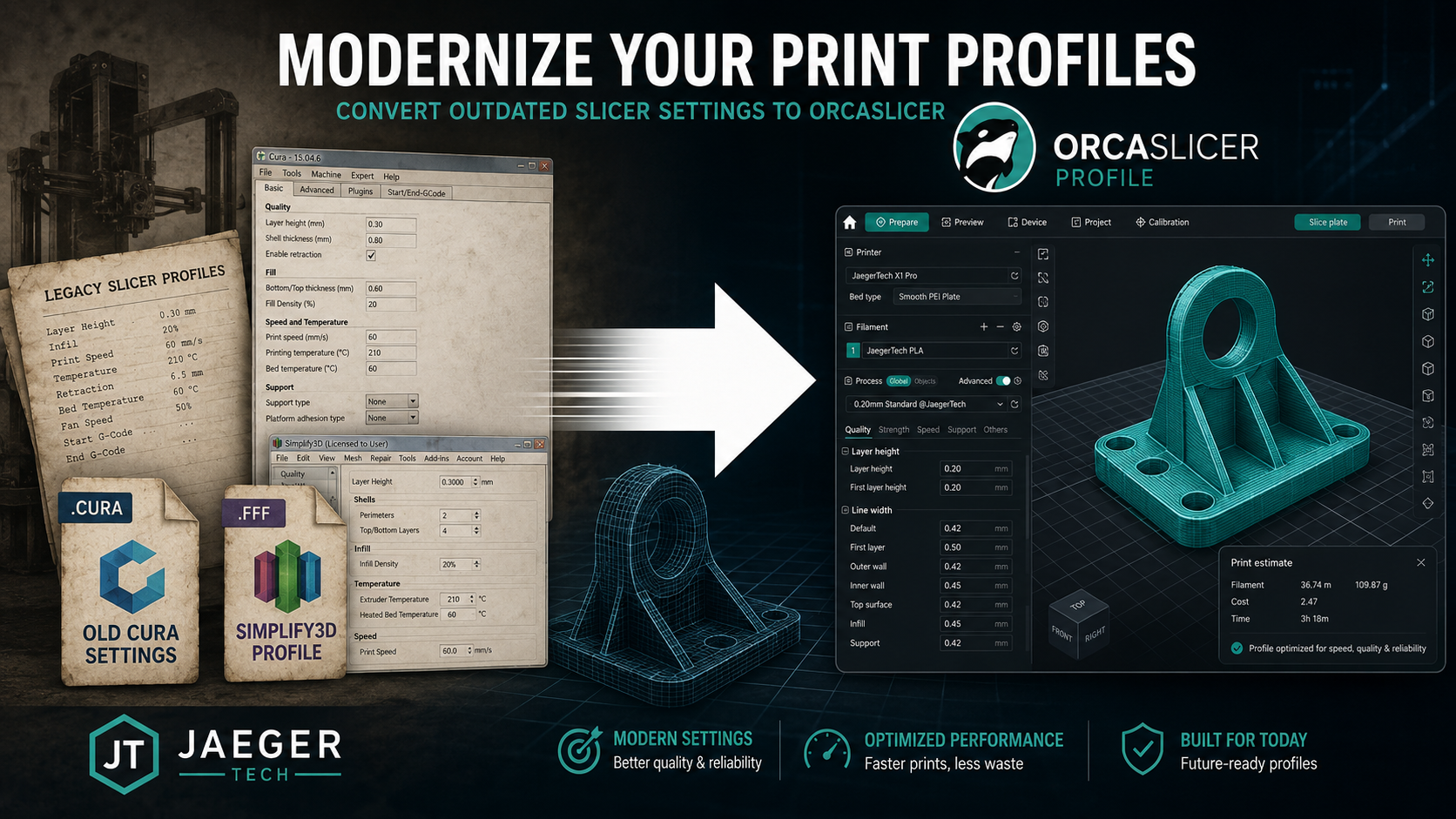
Still Using Cura or Simplify3D? JaegerTech Can Help Build an OrcaSlicer Profile for Your 3D Printer A 3D printer does not become