
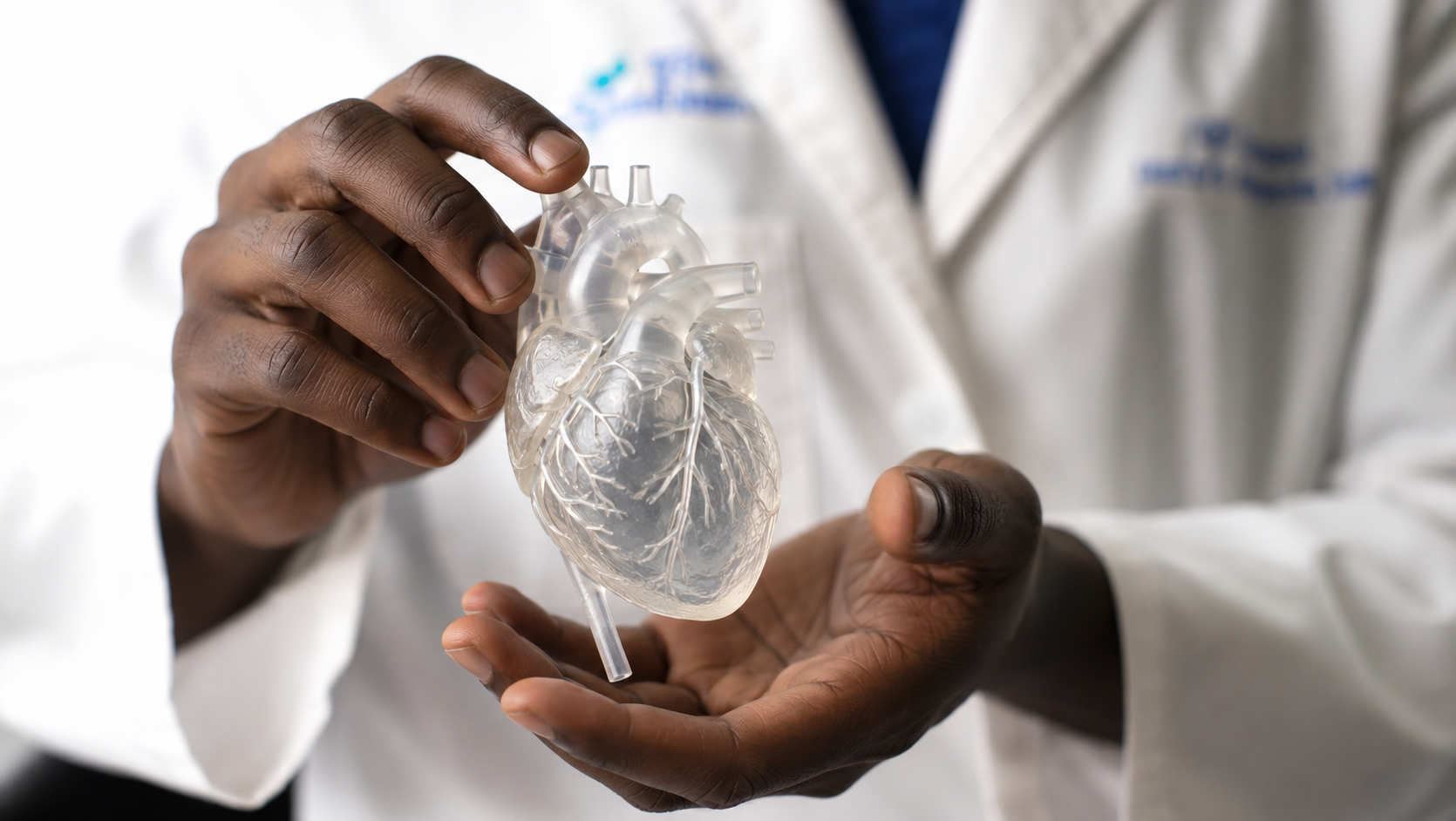
3D Printed Medical Models for Training, Patient Education, Surgical Planning, and Legal Support
Medical imaging is powerful, but it is still usually viewed on a flat screen.
For many cases, that is enough. CT, MRI, ultrasound, and other imaging tools give physicians and specialists the information they need to diagnose, plan, and document care.
But there are situations where a physical model helps.
A 3D printed medical model can turn imaging data into something people can hold, examine, mark up, and discuss. That can be useful for medical schools, patient education, surgical preparation, and legal review.
Medical Models for Training
Medical schools and training programs need realistic teaching tools.
Cadavers, commercial anatomy models, and digital simulations all have value, but they do not cover every training need. A 3D printed model can be made to show a specific anatomy, defect, fracture, implant condition, tumor location, or surgical approach.
That makes printed models useful for:
- Anatomy demonstrations
- Procedure training
- Device placement practice
- Case review
- Resident and student education
- Rare or unusual anatomy examples
The advantage is specificity. A generic anatomy model may show the basic structure. A printed model can show the actual geometry from a real or representative case.
For medical training, this can help students move from textbook anatomy to real-world variation.
Patient Understanding
Patients do not always understand what they are seeing on a scan.
A physician may be very comfortable reading cross-sectional imaging, but the patient may only see gray shapes on a monitor. A physical model can make the problem easier to explain.
For example, a model may help show:
- The location of a fracture
- The shape of a deformity
- How a tumor or mass relates to nearby structures
- Where an implant may be placed
- Why a procedure is being recommended
- Why a case is more complex than it appears
This does not replace the physician’s explanation. It supports it.
When a patient can see and hold a simplified version of the anatomy, the discussion often becomes more concrete. That can improve communication, reduce confusion, and help the patient ask better questions.
Surgical Preparation
Some procedures benefit from physical planning.
A printed model can help a surgical team evaluate geometry before the operation. This is especially useful when the anatomy is complex, distorted, or difficult to visualize from 2D images alone.
Medical models may support:
- Preoperative planning
- Plate or implant sizing
- Cutting guide concept development
- Access planning
- Team communication
- Rehearsal of unusual anatomy
- Review of difficult cases
The value is not that the model replaces clinical judgment. The value is that it gives the team another way to study the anatomy.
For some cases, seeing the anatomy physically can reveal spatial relationships that are harder to understand on a screen. This can be useful for complex orthopedic, craniofacial, dental, veterinary, oncologic, and reconstructive cases.
Legal and Case Support
Medical models can also help in legal and insurance-related settings.
Some cases involve anatomy, injury patterns, surgical repairs, or implant positioning that may be difficult for non-medical people to understand. A physical model can make the discussion clearer.
Potential uses include:
- Legal case review
- Expert witness support
- Demonstrative exhibits
- Injury explanation
- Implant or hardware explanation
- Settlement and mediation discussions
- Insurance documentation support
A model should be treated as a communication aid, not as a substitute for the underlying medical record. The source imaging, segmentation method, assumptions, and intended use should be clearly understood.
For legal use, documentation matters. The model should be traceable to the source data and reviewed carefully before presentation.
The Model Has to Match the Use
Not every medical model needs the same level of detail.
A teaching model may need durability and repeated handling. A patient education model may need simplified anatomy and color contrast. A surgical planning model may need dimensional accuracy in a specific region. A legal support model may need clear documentation and careful labeling.
Important decisions include:
- What anatomy should be included
- What anatomy should be removed or simplified
- Whether the model needs color coding
- Whether the model needs to be rigid or flexible
- Whether the model is for visual explanation or dimensional review
- How much detail is actually useful
- What imaging data is available
- What tolerances are appropriate for the application
More detail is not always better. A cluttered model can be harder to understand. The goal is to create a model that supports the decision, lesson, or explanation.
From Imaging Data to Printed Model
The basic workflow usually starts with medical imaging data. That data may be converted into a 3D model through segmentation, cleanup, and file preparation.
After that, the model can be printed using a material and process that fit the application.
Common considerations include:
- CT or MRI data quality
- Segmentation accuracy
- Thin walls or fragile features
- Scale
- Color requirements
- Surface finish
- Strength
- Cleaning and handling
- Turnaround time
- Documentation needs
The print process matters, but the digital preparation often matters more. A poor segmentation or poorly prepared file can create a misleading model, even if the print itself looks good.
Where Additive Manufacturing Helps
3D printing is well suited for medical models because each model can be different.
Traditional manufacturing works best when the same part is made many times. Medical models are often case-specific. That makes additive manufacturing a practical fit.
A printed model can be made from one patient’s anatomy, a representative training case, or a modified teaching file. It can be scaled, sectioned, colored, labeled, or simplified depending on the need.
For medical schools and research teams, this also allows faster iteration. A training model can be reviewed, revised, and printed again without creating hard tooling.
Practical Uses for Medical Schools and Clinical Teams
Medical models can support several groups at once.
A medical school may use them for student training. A surgeon may use them for case planning. A patient may use them to better understand a condition. A legal team may use them to explain anatomy during a case review.
That overlap is part of the value.
A single model can often support:
- Teaching
- Planning
- Communication
- Documentation
- Review
The key is to define the purpose before the model is built.
Work With the End Use in Mind
A good medical model starts with a clear question.
Is the goal to teach anatomy? Explain a procedure? Support surgical planning? Help a non-medical audience understand an injury? Demonstrate implant position? Review a complex case?
The answer affects the entire build.
At JaegerTech, we help evaluate the intended use, available data, model geometry, material choice, and manufacturing approach before committing to a print. For medical schools, research teams, physicians, and legal professionals, that practical review can help turn medical imaging into a useful physical model.
Practical Takeaway
3D printed medical models are not just display pieces.
When prepared correctly, they can support training, improve communication, assist surgical planning, and make complex anatomy easier to understand. The best models are built for a specific purpose, with the right level of detail, the right material, and a clear understanding of how the model will be used.
If you are evaluating a medical model for training, patient education, surgical preparation, or legal support, JaegerTech can help review the application, source data, model requirements, and manufacturing approach before you commit to a build.
About the Author: jaegertechgroup.com

STAY IN THE LOOP
Subscribe to our free newsletter.
Leave A Comment
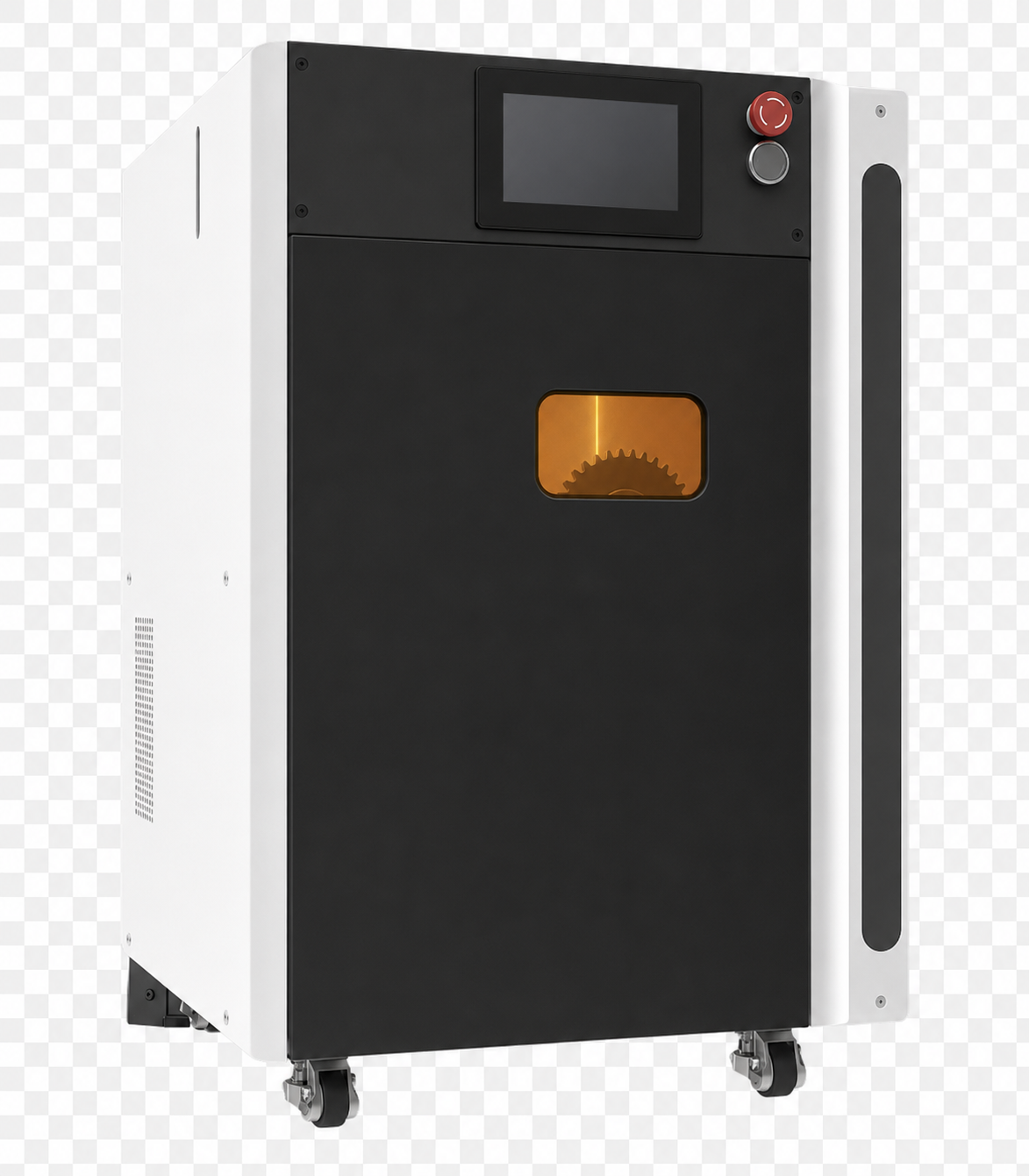
JaegerTech is preparing to add a compact selective laser sintering system for functional nylon and TPU parts to their lineup. The new
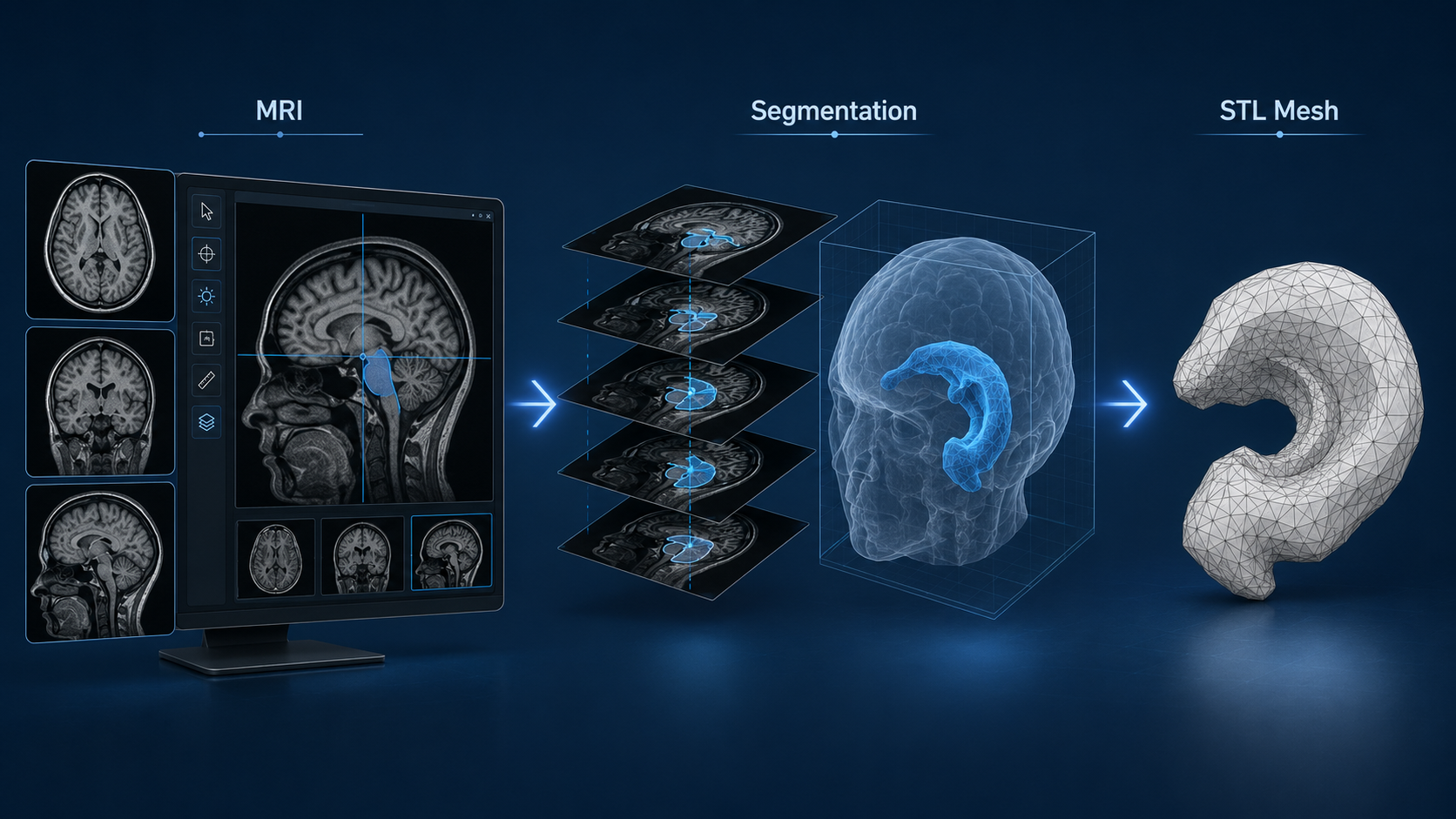
How DICOM Medical Imaging Becomes a 3D Printable STL Model Medical 3D printing usually starts with imaging data. For many medical models,
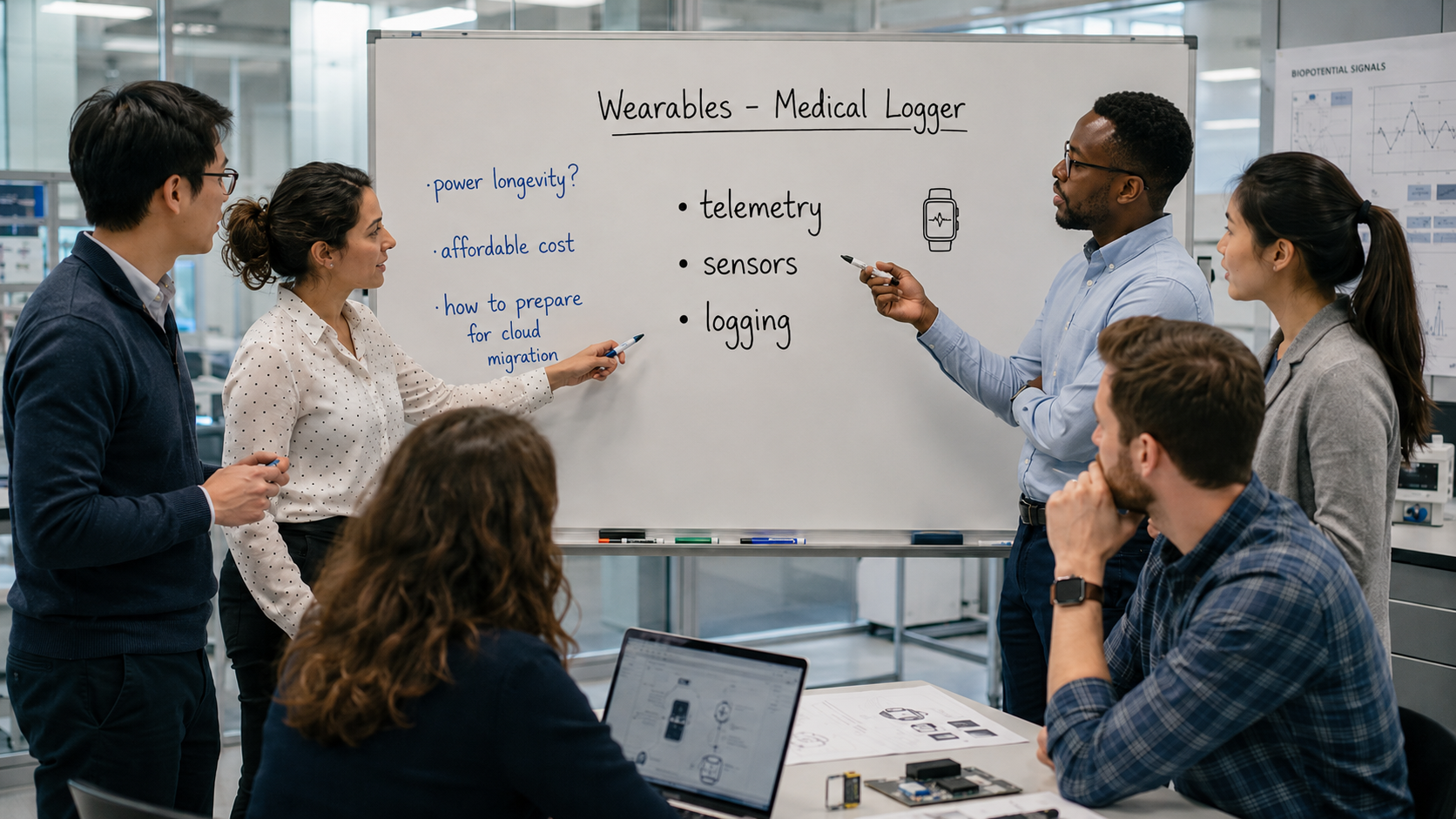
Confidential Medical Device Prototype: Sensor Integration and Local Event Logging Helping a Research Team Move from Concept to Testable Hardware A research
3D Printing and Wire Management in Product Development Wire management is one of the most overlooked parts of product design. A device