
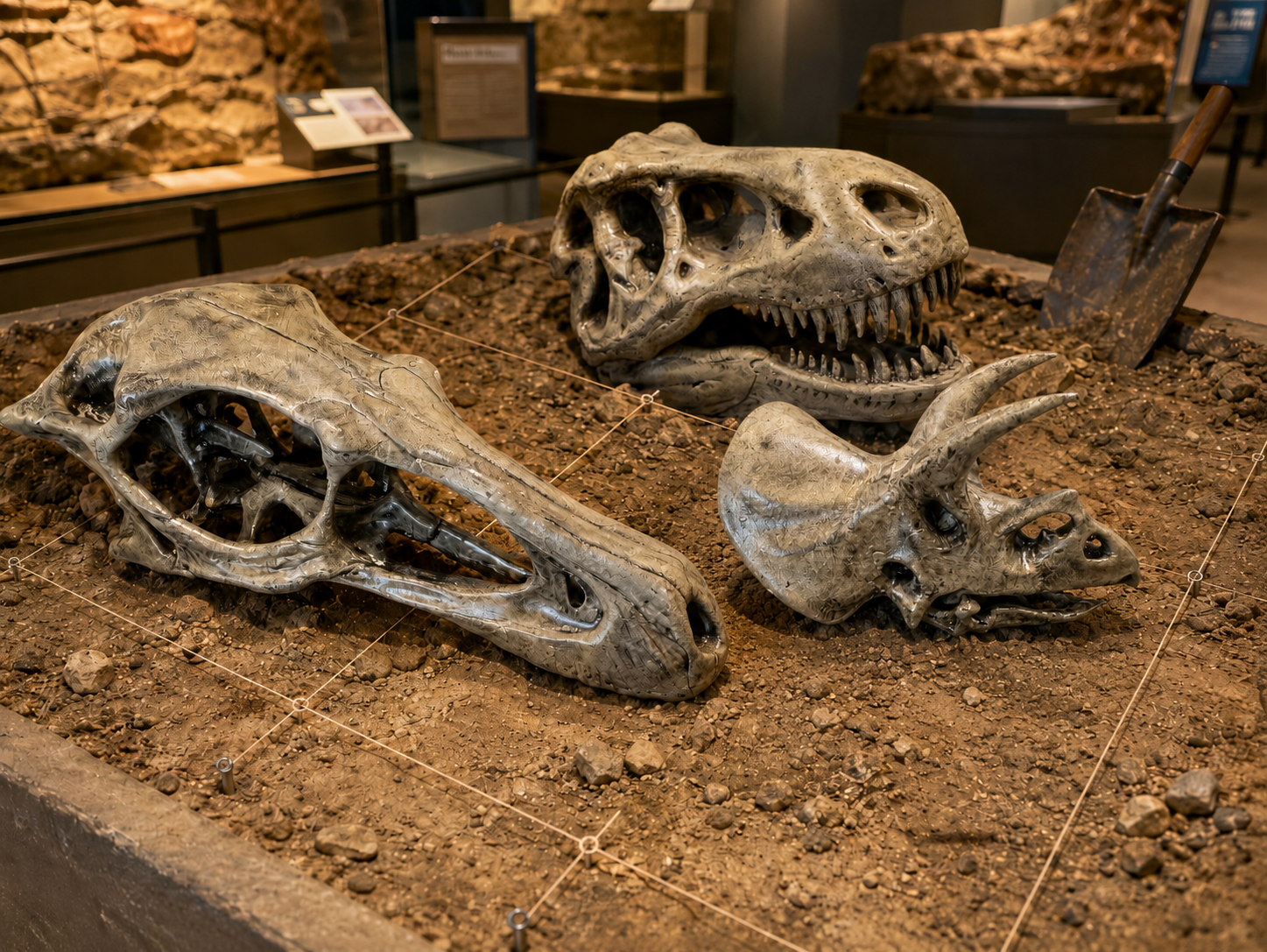
3D Printing for Museums: Fossil Recreation, Exhibit Models, Replicas, and Educational Displays
Museums often need objects that can be handled, displayed, studied, or reproduced without risking damage to original artifacts.
That is where 3D printing can help.
A fossil, bone, artifact, sculpture, tool, or historic object may be too fragile, rare, valuable, or restricted for regular handling. A 3D printed replica gives museums, schools, researchers, and exhibit teams a practical way to share the object while protecting the original.
Why Museums Use 3D Printed Replicas
Original objects are not always suitable for display or handling.
Some are too delicate. Some are incomplete. Some are stored in controlled collections. Others may be needed for research, conservation, or legal ownership reasons.
A printed model can support:
- Public exhibits
- Classroom handling
- Traveling displays
- Research access
- Fossil reconstruction
- Tactile learning
- Donor presentations
- Exhibit prototyping
- Replacement display pieces
- Accessibility programs
The goal is not to replace the original artifact. The goal is to make the information easier to share.
Fossil Recreation and Reconstruction
Fossils are a strong use case for 3D printing.
Many fossil specimens are incomplete, fragile, or embedded in matrix. In some cases, only part of the bone or shell is available. In other cases, the original fossil is too valuable to handle regularly.
A printed fossil model can be used to:
- Recreate missing sections
- Mirror left/right anatomy
- Build full skeletal displays
- Produce classroom handling copies
- Show internal or hidden features
- Create lightweight exhibit versions
- Support research discussion
For example, if one side of a fossil jaw is preserved, the opposite side may be digitally mirrored for display or study. If a vertebra, tooth, skull fragment, or limb bone is too fragile, a printed copy can be used for handling while the original remains protected.
This is especially useful for outreach and education. Students can handle a replica, examine the geometry, and understand the specimen without putting the original at risk.
Exhibit Models and Display Pieces
Museums often need more than one version of an object.
A display version may need to look realistic. A classroom version may need to be durable. A traveling exhibit version may need to be lightweight and replaceable. A donor presentation model may need to be clean, polished, and mounted.
3D printing allows these needs to be separated.
The same digital file can be used to make:
- A high-detail exhibit model
- A rugged handling model
- A scaled-down display version
- A larger teaching version
- A sectioned model that shows internal features
- A painted or finished replica
- A mounting-ready version for installation
That flexibility is valuable for curators, educators, and exhibit designers.
Protecting Original Artifacts
Handling damage is a real concern.
Even careful handling can create wear over time. Oils from skin, repeated movement, accidental drops, and environmental changes can all affect original objects.
A printed replica lets people interact with the shape and scale of the object without placing the original at risk.
This is useful for:
- School groups
- Public programs
- Touch tables
- Accessibility exhibits
- Traveling museum programs
- Research workshops
- Internal planning meetings
For high-value or fragile objects, the replica becomes a working copy. The original can stay protected while the museum still shares the object with visitors.
Accessibility and Tactile Learning
Many museum objects are displayed behind glass.
That protects the collection, but it limits interaction. For visitors with visual impairments, young students, and hands-on learners, tactile models can make exhibits more meaningful.
A 3D printed replica can be designed for touch.
This may include:
- Larger scale features
- Simplified surfaces
- Durable materials
- Braille or raised labels
- Sectioned geometry
- High-contrast painted areas
- Mounted handling displays
The model does not always need to be a perfect copy. Sometimes the best educational model is one that highlights the important features clearly.
Scaling Objects Up or Down
Some objects are hard to understand at their original size.
A tiny fossil, tool mark, shell structure, artifact detail, or surface texture may be too small for a visitor to see clearly. A large object may be too big to display in full.
3D printing allows museums to scale objects for better interpretation.
Small features can be enlarged. Large pieces can be reduced. Fragile objects can be reproduced at a manageable size. This helps visitors understand form, structure, and context.
Examples include:
- Enlarged fossil teeth or claws
- Scaled skull sections
- Miniature architectural pieces
- Reduced-size statues or monuments
- Enlarged tool marks
- Educational geology samples
- Sectioned mechanical or historical objects
Scaling should be done carefully. The exhibit should clearly state whether the model is full-size, enlarged, reduced, or reconstructed.
From Scan to Finished Model
Museum models usually start with a digital file.
That file may come from 3D scanning, photogrammetry, CT data, CAD reconstruction, or an existing digital archive. Once the file is prepared, it can be cleaned, repaired, scaled, sectioned, hollowed, or modified for display.
The print process depends on the final use.
A high-detail fossil replica may need resin printing or fine-layer FDM. A large exhibit piece may be better suited for large-format FDM. A handling model may need a tougher material. A display model may need sanding, painting, mounting, or protective coating.
Important decisions include:
- Required size
- Surface detail
- Strength
- Weight
- Color and finish
- Mounting method
- Visitor handling
- Indoor or traveling use
- Budget
- Turnaround time
- Accuracy requirements
The right process depends on the purpose of the model.
Accuracy Matters, But So Does Use
A museum replica should be honest about what it represents.
Some models are direct reproductions. Some are repaired. Some are mirrored. Some are scaled. Some are interpretive reconstructions based on partial evidence.
That does not make them less useful, but it does mean the assumptions should be clear.
For museum and educational work, documentation may include:
- Source scan or image data
- Scale
- Reconstruction notes
- Mirrored or repaired areas
- Material used
- Finish process
- Intended use
- Whether the model is for display, handling, or research support
This helps curators, educators, and visitors understand the model correctly.
Practical Uses for Museums and Educators
3D printed museum models can support many different programs.
They can help a natural history museum recreate fossils. They can help a local museum reproduce historic artifacts for handling. They can help a university collection make teaching copies. They can help an exhibit team test layout and scale before final installation.
Common uses include:
- Fossil replicas
- Bone and skull models
- Artifact copies
- Exhibit props
- Mounting aids
- Educational kits
- Traveling displays
- Donor models
- Tactile exhibits
- Replacement parts for old displays
- Prototype exhibit components
The best projects start with a clear purpose. A model made for a glass case is not always the same model you would hand to a classroom full of students.
Work With the Exhibit Goal in Mind
A good museum model starts with the question: how will this be used?
Will visitors touch it? Will it be painted? Will it travel? Does it need to be lightweight? Does it need to show fine detail? Does it need to match an original object exactly? Does it need to survive repeated handling?
Those answers guide the material, print process, finish, and budget.
At JaegerTech, we help museums, educators, researchers, and exhibit teams turn digital files into practical physical models. That may include fossil recreation, artifact replicas, educational displays, exhibit prototypes, and durable handling models.
Practical Takeaway
3D printing gives museums a practical way to share objects without risking originals.
It can support fossil recreation, exhibits, classroom learning, accessibility, research, and traveling programs. The key is to match the model to the use. A good museum replica is not just printed. It is planned, documented, finished, and built for the way people will interact with it.
If you are evaluating a fossil replica, exhibit model, educational display, or handling copy, JaegerTech can help review the source file, model requirements, material choice, finish, and manufacturing approach before you commit to a build.
About the Author: jaegertechgroup.com

STAY IN THE LOOP
Subscribe to our free newsletter.
Leave A Comment
Same-Day 3D Printed RFID Prop Repair Helped Get an Escape Room Back in Service Escape rooms are built around one simple promise:
3D Printed Escape Room Props, Puzzle Housings, and Themed Mechanisms Escape rooms depend on objects that feel real. A puzzle box, control