
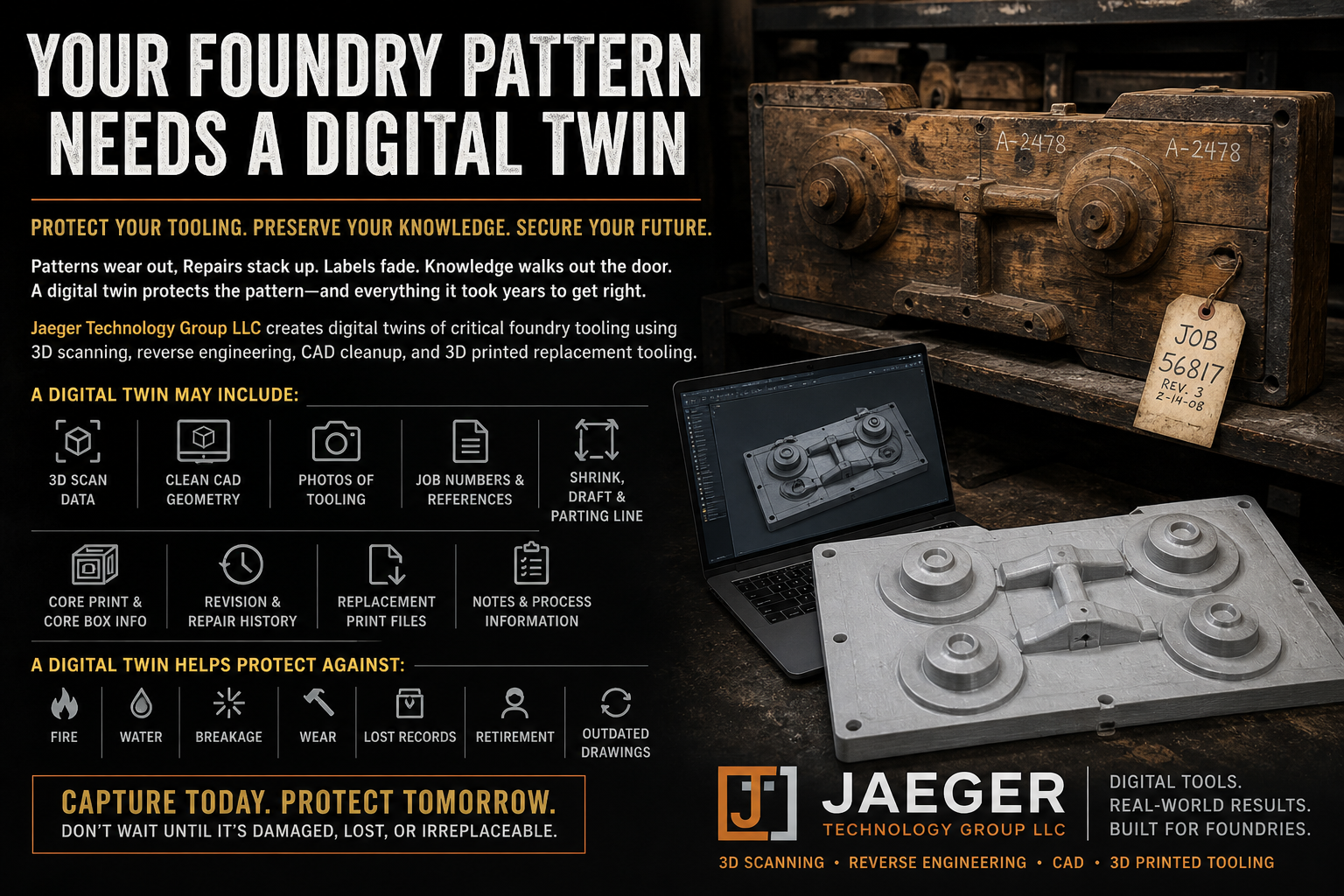
Your Foundry Pattern Needs a Digital Twin
A foundry pattern sitting on a shelf is not the same thing as a backup plan.
Patterns wear out. Labels fall off. Wood moves. Repairs pile up. Core prints get damaged. Match plates get modified. Somebody remembers what changed, until that person retires, leaves, or simply forgets.
That is why every important foundry pattern needs a digital twin.
At Jaeger Technology Group LLC, we help foundries create digital records of critical patterns using 3D scanning, reverse engineering, CAD cleanup, and 3D printed replacement tooling.
What Is a Digital Twin for a Foundry Pattern?
A digital twin is a controlled digital version of a physical pattern, match plate, loose pattern, or core box.
It may include:
- 3D scan data
- Clean CAD geometry
- Photos of the physical tooling
- Job numbers and customer references
- Shrink allowance notes
- Draft and parting line information
- Core print and core box details
- Revision history
- Repair history
- Replacement print files
The goal is simple: if the physical pattern is damaged, lost, worn out, or needs revision, the foundry is not starting from zero.
Physical Patterns Are Fragile Records
Old patterns often contain years of undocumented knowledge. A hand-sanded fillet, a modified boss, a changed core print, or an added machining allowance may never appear on the original drawing.
That means the pattern itself becomes the record.
That is dangerous.
If the pattern is damaged, the knowledge is damaged with it. If the pattern is destroyed, the foundry may lose not just a tool, but the practical history of how that casting was actually made.
Why Digital Archiving Matters
A digital twin gives the foundry a recoverable reference. It helps protect against:
- Fire damage
- Water damage
- Pattern wear
- Broken core prints
- Lost labels
- Outdated drawings
- Missing revision history
- Retirement of key employees
- Customer repeat orders with no current CAD
- Costly reverse engineering after the fact
The best time to scan a critical pattern is before it fails, not after someone is trying to rebuild it from a cracked casting and a blurry drawing.
Digital Twins Make Replacement Faster
Once a pattern has a digital twin, replacement becomes much easier.
If a loose pattern breaks, it can be reprinted.
If a match plate insert wears out, it can be replaced.
If a core box needs revision, it can be modified digitally.
If a customer needs a repeat job, the foundry has a controlled starting point.
This saves time, reduces uncertainty, and helps keep work moving.
Better Than “We Think This Is the Current Version”
Digital twins also help with version control.
Many pattern rooms have tools that were modified over time but never fully documented. A digital archive lets the foundry assign a revision, capture the current geometry, and preserve the version that actually worked.
That matters for repeatability.
When the customer comes back years later, the foundry can work from known tooling data instead of relying on memory, guesswork, or whatever happens to be sitting on the shelf.
A Practical Upgrade for Modern Foundries
Creating digital twins does not mean replacing every pattern tomorrow. Start with the important ones:
- High-value repeat jobs
- Fragile wood patterns
- Worn but still-used tooling
- Legacy customer patterns
- Match plates with undocumented changes
- Core boxes that would be expensive to rebuild
- Patterns with no current CAD file
- Tooling that would stop production if lost
Digital archiving is not just a technology project. It is risk reduction.
Work With Jaeger Technology Group LLC
Jaeger Technology Group LLC helps foundries create digital twins of critical tooling through 3D scanning, reverse engineering, CAD cleanup, and 3D printed replacement patterns.
If your pattern room contains tools that would be expensive, slow, or nearly impossible to replace, now is the time to capture them digitally.
Contact Jaeger Technology Group LLC to create digital twins for foundry patterns, match plates, loose patterns, core boxes, and legacy casting tooling.
About the Author: jaegertechgroup.com

STAY IN THE LOOP
Subscribe to our free newsletter.
Leave A Comment
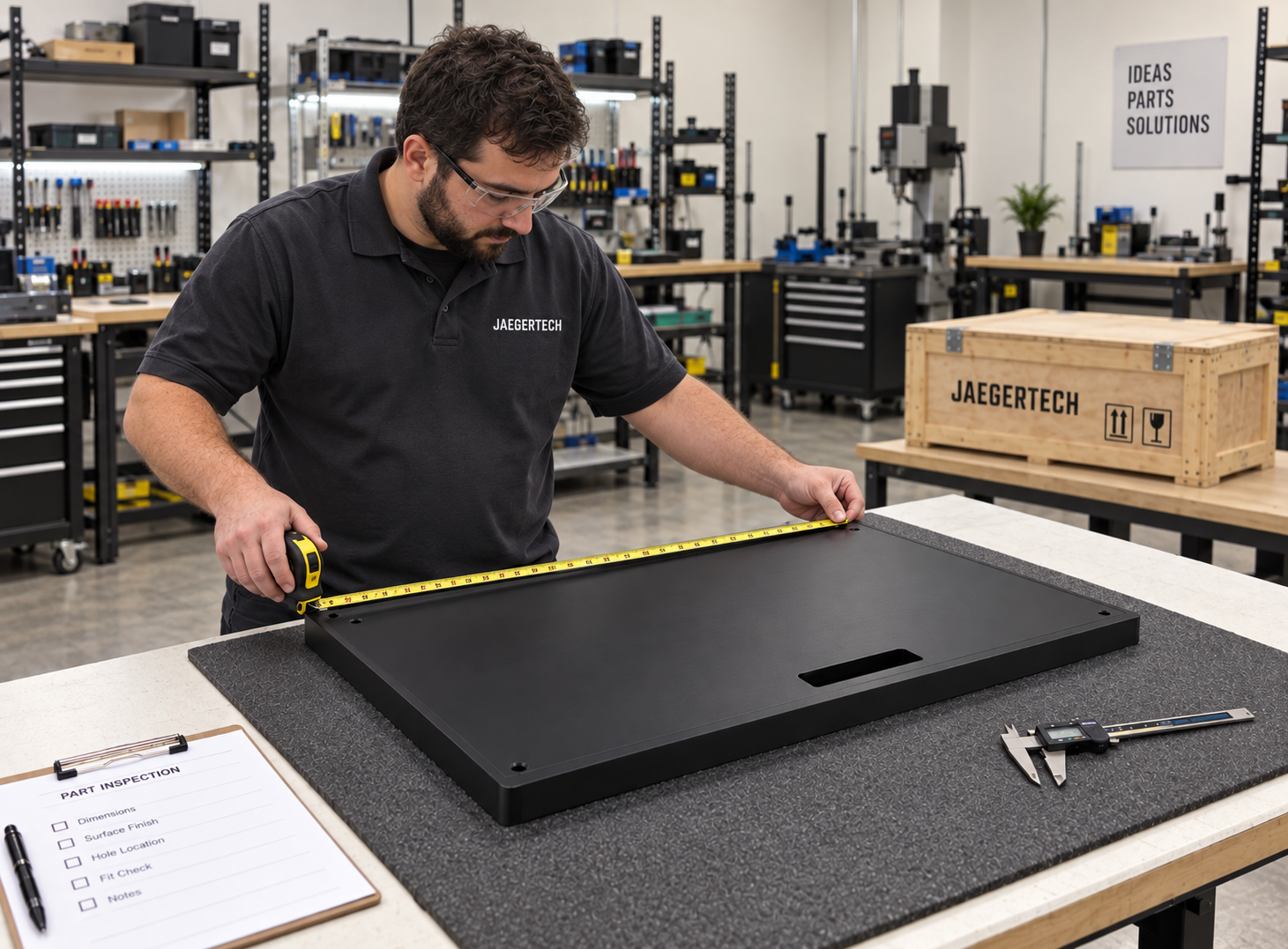
Using 3D Printing to De-Risk Production Tooling Production tooling is expensive for a reason. Whether the final process is injection molding, thermoforming,
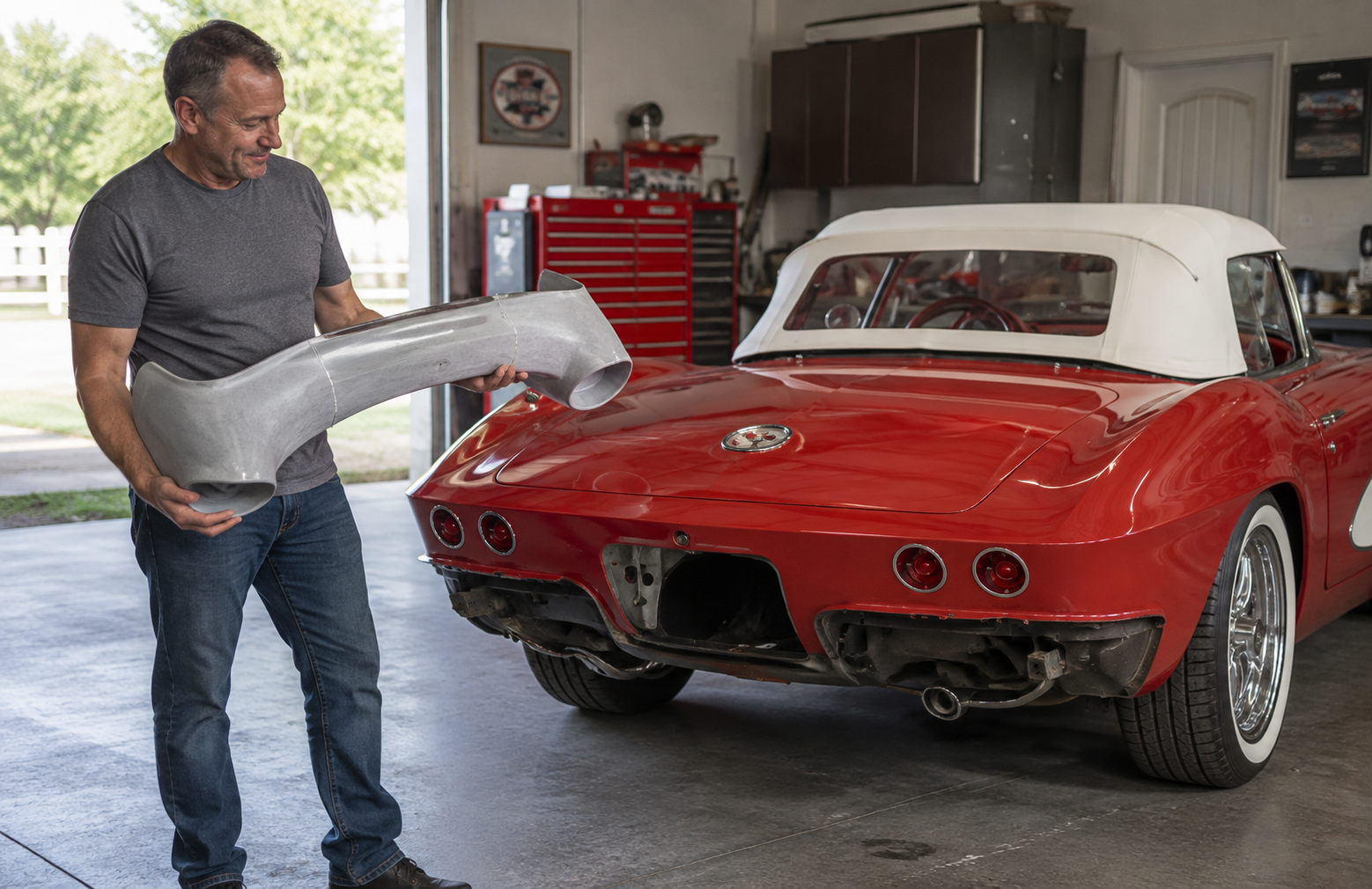
From 3D Scan to Perfect Fit: The Corvette Bumper Project Moves Forward A few weeks ago, we shared a project that demonstrated
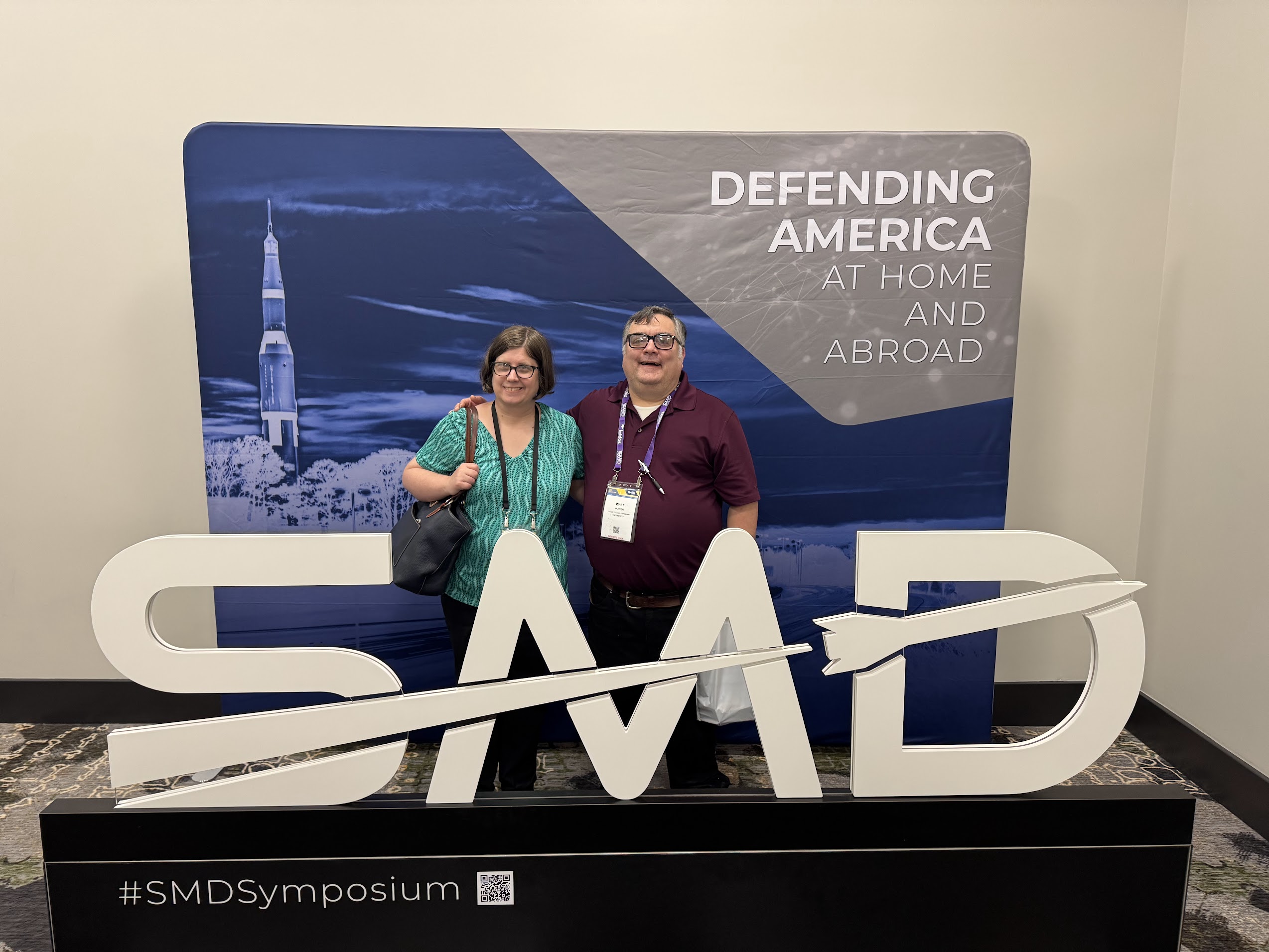
Great Conversations and New Connections at SMD in Huntsville Last week, Janelle and I had the opportunity to attend SMD in Huntsville,
Repairing a Discontinued Polypropylene ATV Snorkel With Plastic Welding When a customer could not locate a replacement snorkel for his 21-year-old ATV,