
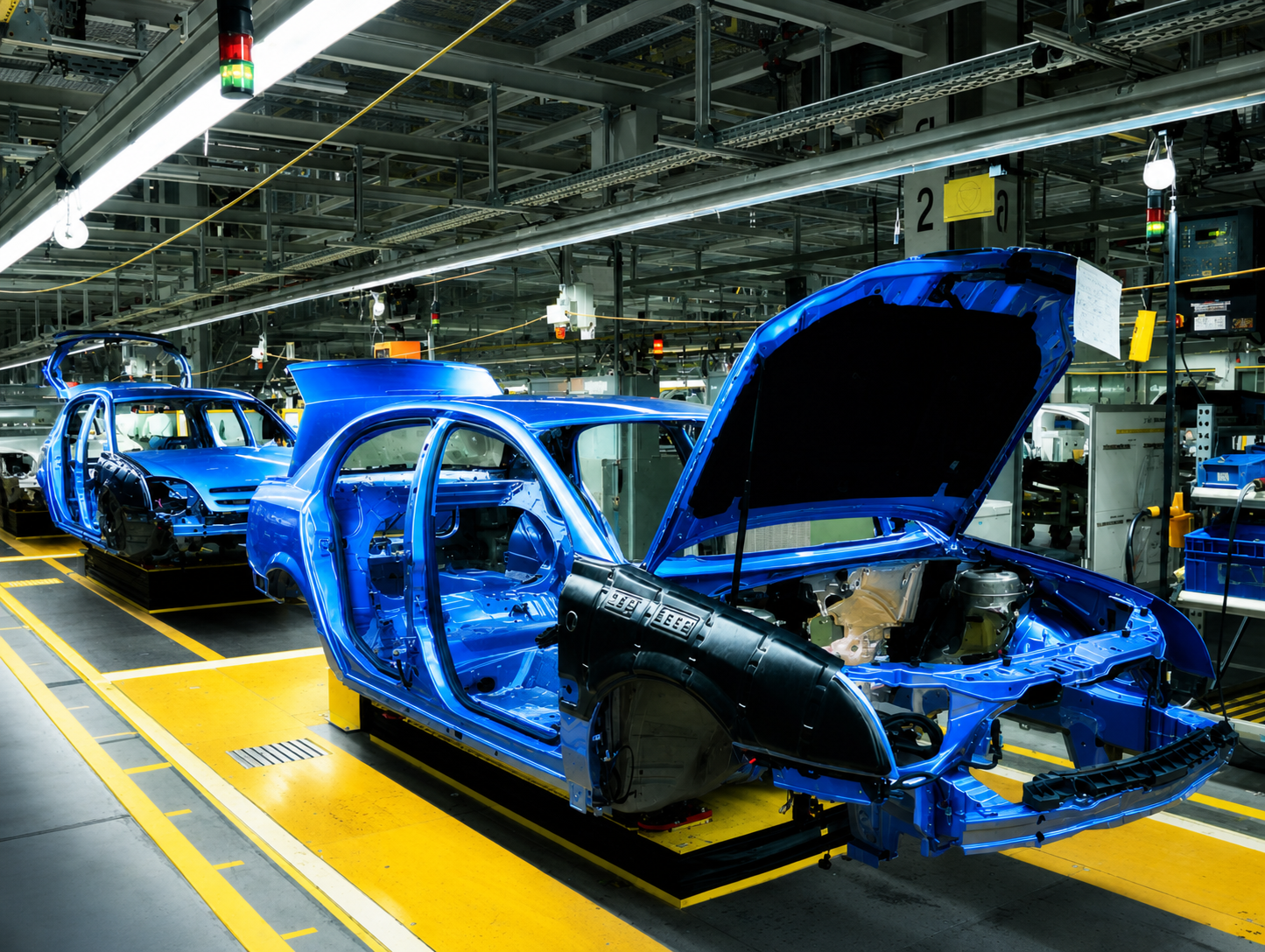
What 3D Printing Can Do for Automotive Assembly Lines
Automotive assembly lines live and die by repeatability.
The work may look simple from the outside: install the part, tighten the fastener, apply the label, route the harness, check the fit, move to the next station. But on the floor, every small operation has variables.
Parts shift.
Operators get rushed.
Fasteners get blocked.
Labels go on crooked.
Harnesses get routed differently.
Clips bend.
Trim scratches.
Inspection catches the problem too late.
That is where 3D printed production support tooling can make a real difference.
3D printing gives manufacturers a fast, practical way to create jigs, fixtures, gauges, nests, templates, trays, protectors, and workholding aids that make assembly operations easier, faster, and more repeatable.
The Big Advantage: Fast, Practical Tooling
Traditional tooling can be expensive and slow to produce. That makes it hard to justify for small problems, temporary builds, prototype lines, pilot production, engineering changes, or low-volume operations.
3D printing changes that.
A fixture that might not justify machining can often be designed and printed quickly. That means the plant can solve real floor problems without waiting weeks or spending thousands of dollars on every small tool.
This is especially valuable when the issue is not a major engineering problem, but a practical shop-floor problem:
“Can we hold this part in the right position?”
“Can we keep this harness from being routed wrong?”
“Can we make this decal placement repeatable?”
“Can we stop operators from installing this bracket backward?”
“Can we check this feature before it moves down the line?”
Those are exactly the kinds of problems 3D printed tooling is good at solving.
Common Automotive Assembly Line Uses
3D printed tools can support many areas of automotive and transportation manufacturing, including:
- Assembly fixtures
- Poka-yoke tools
- Drill guides
- Inspection gauges
- Go/no-go gauges
- Part nests
- Kitting trays
- Fastener organization trays
- Decal and badge placement fixtures
- Harness routing guides
- Clip installation tools
- Trim alignment aids
- Soft jaws and protective tooling
- Paint masking fixtures
- ESD-safe electronics assembly fixtures
- Torque access guides
- Operator hand tools
- Temporary replacement fixtures
- Prototype and pilot-line tooling
The common theme is simple: 3D printing helps turn repeated manual judgment into a controlled process.
Assembly Fixtures
A 3D printed assembly fixture can hold a part in the correct location while the operator installs fasteners, clips, adhesives, pins, labels, brackets, or trim.
Instead of asking the operator to “hold it just right,” the fixture controls the position.
That can reduce:
- Misalignment
- Cross-threading
- Part movement
- Operator fatigue
- Rework
- Training burden
- Variation between shifts
A good fixture does not need to be complicated. It just needs to make the correct position obvious.
Poka-Yoke Tools
Poka-yoke tooling helps prevent mistakes before they happen.
A 3D printed poka-yoke fixture can be designed so a part only fits one way. If the part is backward, upside down, rotated, or on the wrong side, it does not seat properly.
That is valuable because many automotive defects are not caused by carelessness. They happen because the process allows the wrong action.
A simple printed tool can prevent:
- Backward brackets
- Reversed clips
- Incorrect part orientation
- Wrong-side installation
- Misrouted harnesses
- Misplaced adhesive parts
- Incorrect fastener selection
“Be careful” is not a quality system. A fixture that makes the wrong action impossible is much stronger.
Inspection Gauges
3D printed inspection gauges can help operators and quality teams check features quickly at the station.
These may include:
- Go/no-go gauges
- Hole location checks
- Edge distance gauges
- Profile gauges
- Gap and flush checks
- Clip presence checks
- Label placement checks
- Assembly verification tools
The benefit is speed. A gauge does not need to replace full metrology. It can simply catch obvious problems before the part travels farther down the line.
The earlier the problem is caught, the cheaper it usually is to fix.
Kitting and Organization
A lot of production mistakes come from poor organization.
3D printed kitting trays can separate parts by operation, side, sequence, color, fastener type, or assembly step. They can also make missing parts obvious.
For automotive assembly, this can help with:
- Fastener control
- Clip organization
- Left-hand/right-hand part separation
- Small hardware staging
- Tool organization
- Workstation cleanliness
- 5S programs
- Error reduction
A good tray can show at a glance whether the operator has the correct parts and whether anything is missing.
Decal, Badge, and Trim Placement
Automotive appearance items need to be placed consistently. Decals, labels, badges, nameplates, foam tape, and trim pieces are easy to misalign if the operator is working by eye.
3D printed placement fixtures can locate against panel edges, holes, molded features, or body lines. That allows the operator to place the item quickly and consistently.
This is useful for:
- Exterior badges
- Interior logos
- Warning labels
- Foam tape strips
- Trim appliqués
- Adhesive-backed parts
- Marine, RV, powersports, and specialty vehicle graphics
A small misplacement can create a surprisingly expensive rework problem. A simple placement jig can prevent it.
Protective Tooling and Soft Contact Surfaces
Automotive parts often have finished surfaces that need protection during assembly.
3D printed tooling can be designed with soft contact points, replaceable pads, TPU inserts, or non-marring surfaces to protect painted, polished, coated, or cosmetic parts.
Examples include:
- Soft jaws
- Trim protectors
- Door edge protectors
- Clamp pads
- Handling fixtures
- Paint-safe locating tools
- Interior panel support blocks
This is especially useful when a tool needs to touch the part but cannot scratch, dent, or mark it.
ESD-Safe and Electronics Assembly Tooling
Modern vehicles include more electronics than ever. 3D printed tooling can support electronics assembly, testing, handling, and repair.
With appropriate materials or coatings, 3D printed fixtures can be used for ESD-conscious workstations, including:
- PCB holding fixtures
- Connector alignment tools
- Sensor assembly nests
- Test fixtures
- Wire harness support tools
- Small component trays
- Protective covers
The tooling can be customized to the exact board, connector, module, or assembly.
Prototype, Pilot, and Engineering Change Support
Automotive programs change. Parts get revised. Operators discover better ways to build something. Engineering changes move faster than permanent tooling budgets.
3D printing is useful because it supports quick iteration.
A fixture can be printed, tested on the line, revised, and reprinted without starting from scratch. That makes it useful for:
- Pilot builds
- Launch support
- Engineering trials
- Temporary fixtures
- Short-run production
- Bridge manufacturing
- Process validation
- Line balancing experiments
This is where 3D printing often saves the most time. It lets the team test a better process before committing to more expensive tooling.
Materials for Automotive Assembly Tools
Material choice depends on the job.
Common options include:
- PETG for general-purpose shop tools
- ASA or ABS for tougher fixtures and better heat resistance
- Nylon for wear resistance and durability
- Carbon fiber-filled nylon for stiffer functional tools
- TPU for soft inserts and non-marring contact surfaces
- ESD-safe materials for electronics work
- High-temperature materials for specific heat-exposed tasks
The best tool may use more than one material: a rigid body with soft inserts, replaceable wear pads, metal fasteners, threaded inserts, magnets, or color-coded sections.
Why This Matters
3D printed assembly line tooling does not need to be flashy to be valuable.
The best applications are often simple:
- A part nest that holds the bracket correctly
- A gauge that catches a bad hole location
- A tray that prevents mixed hardware
- A decal fixture that eliminates crooked placement
- A TPU insert that protects a painted surface
- A poka-yoke block that prevents backward installation
Small tools can prevent big problems.
And in automotive assembly, small repeatable improvements add up quickly.
Work With Jaeger Technology Group LLC
Jaeger Technology Group LLC helps manufacturers design and produce 3D printed assembly fixtures, poka-yoke tools, inspection gauges, kitting trays, decal placement jigs, soft jaws, ESD-safe fixtures, and production support tooling.
For automotive, marine, RV, powersports, aerospace, industrial, and manufacturing operations, 3D printed tooling can improve repeatability, reduce rework, support launch activity, and make operator tasks easier.
If your assembly line has a repeated problem that depends on hand alignment, memory, careful positioning, or operator judgment, it may be a good candidate for a 3D printed fixture.
Because practical tooling does not just make the job faster.
It makes the correct result easier to repeat.
About the Author: jaegertechgroup.com

STAY IN THE LOOP
Subscribe to our free newsletter.
Leave A Comment
Related Posts
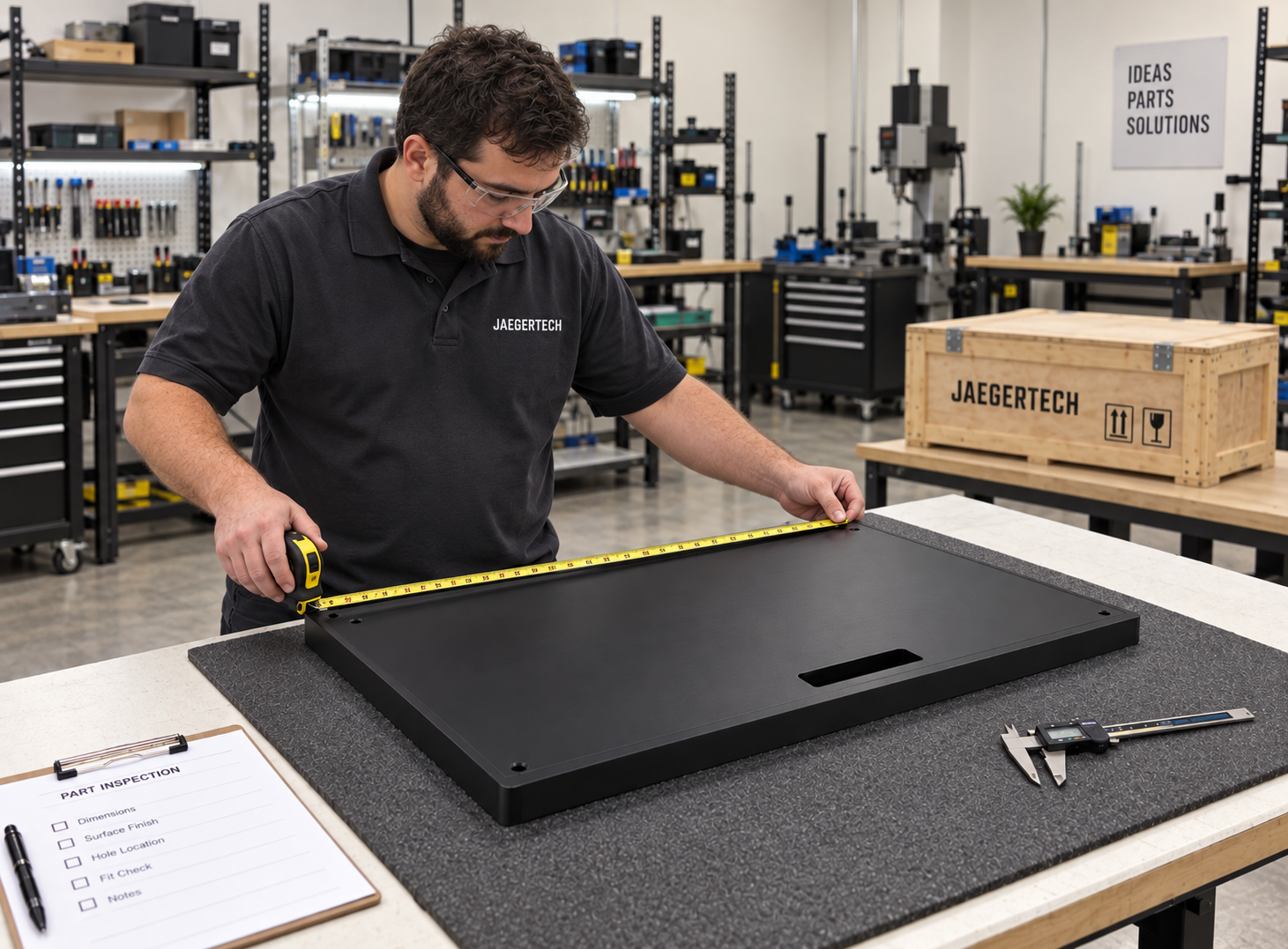
Using 3D Printing to De-Risk Production Tooling Production tooling is expensive for a reason. Whether the final process is injection molding, thermoforming,
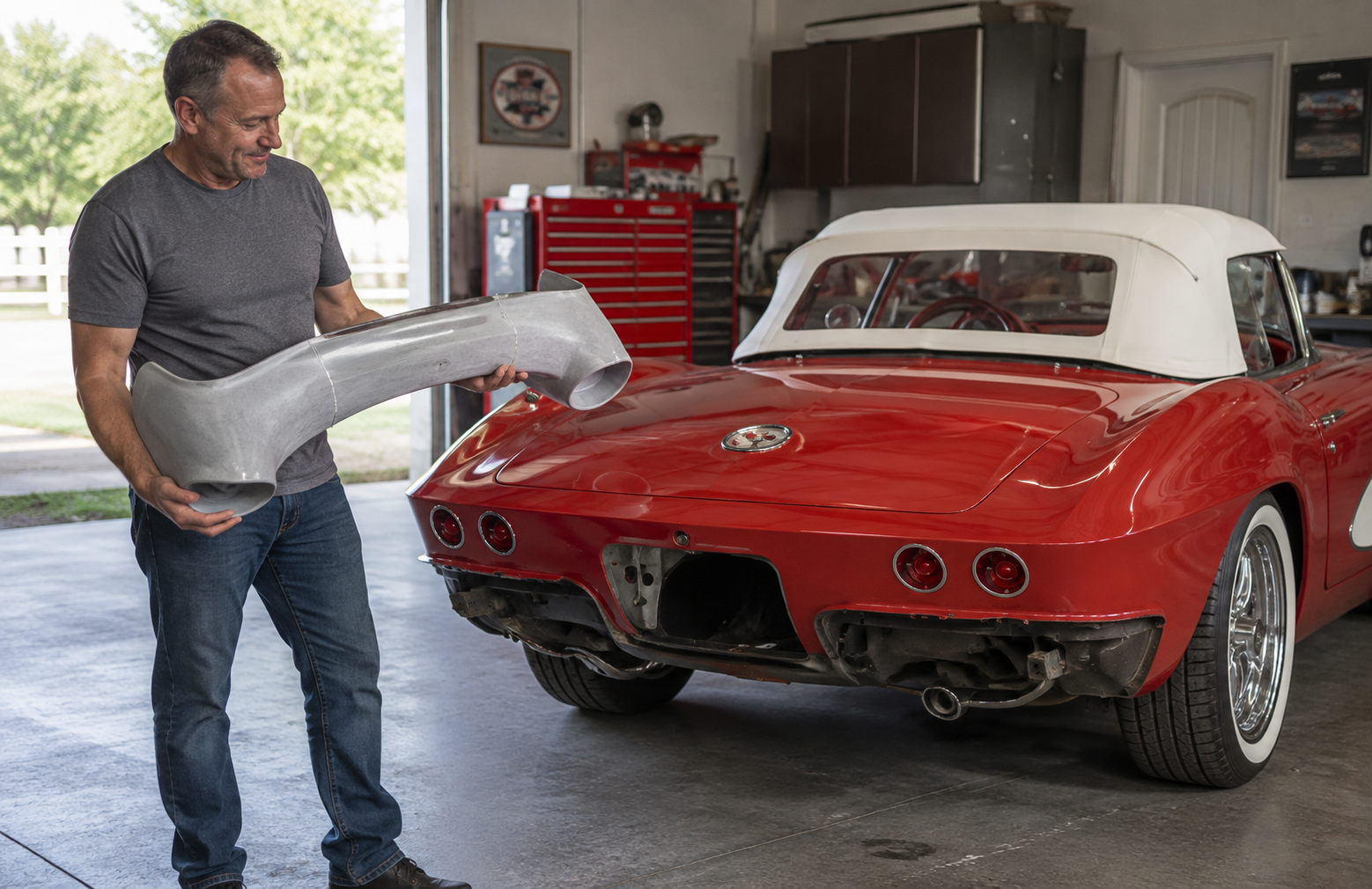
From 3D Scan to Perfect Fit: The Corvette Bumper Project Moves Forward A few weeks ago, we shared a project that demonstrated
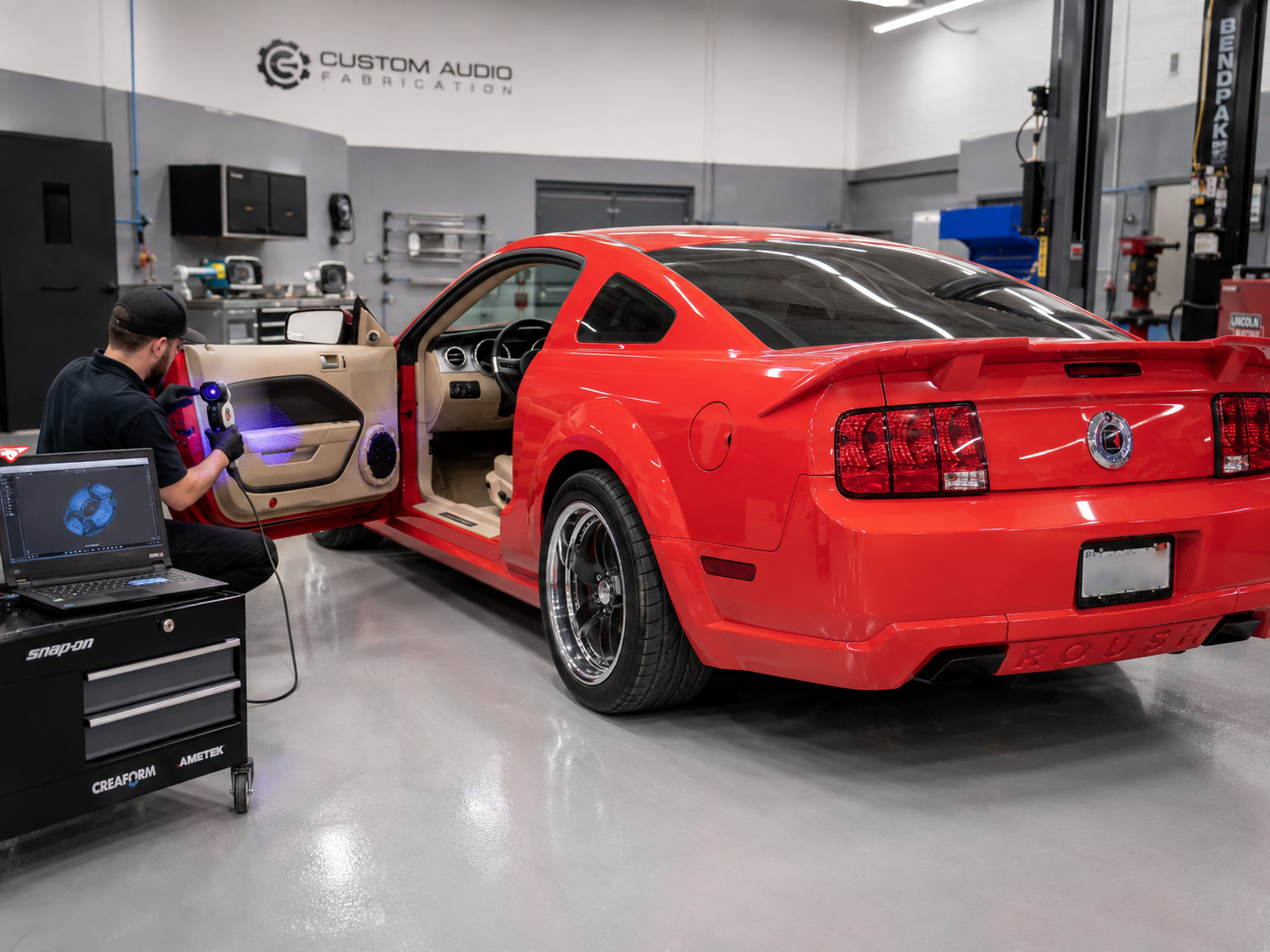
Custom 3D Printed Speaker Pods for a 2005 Ford Mustang Sometimes the problem is not the speaker. It is everything around it.
Best $150 I’ve Ever Spent on This Car Classic car projects have a way of turning simple problems into complicated ones. A