
Tullomer™ for FDM / FFF 3D Printing
Tullomer™ is a high-performance polymer from Z-Polymers positioned for demanding additive manufacturing and fiber applications. Z-Polymers describes Tullomer as lightweight, strong, non-flammable, recyclable, chemically resistant, and thermally capable, with applications in 3D printing and fibers.
Where Tullomer May Make Sense
Tullomer may be worth evaluating when the application needs:
- High strength-to-weight performance
- High stiffness
- Chemical resistance
- Low creep
- Flame resistance
- Thermal performance
- Electrical or dielectric performance
- Lightweight structural components
- Advanced aerospace, automotive, industrial, or electronics applications
It is not a commodity material. It belongs in the category of high-value materials where the application justifies the price and process work.
Practical Considerations
Emerging high-performance materials need real testing. Marketing claims and datasheets are useful starting points, but part geometry, print orientation, layer bonding, machine setup, and actual use conditions determine real performance.
For Tullomer, teams should evaluate:
- Printer capability
- Nozzle temperature requirement
- Bed and chamber behavior
- Layer adhesion
- Anisotropy
- Orientation sensitivity
- Cost per part
- Drying and storage
- Machining or finishing needs
- End-use validation
Tullomer is positioned as a premium material with high stiffness, thermal stability, flame-retardant behavior, and strong chemical/dimensional stability, but those properties should be tested against the actual application.
Trademark Note
Tullomer™ is a trademark of Z-Polymers.
JaegerTech View
Tullomer is worth watching closely. It may occupy a space between commodity engineering polymers and ultra-high-temperature polymers like PEEK/PEKK/PEI, but it should be treated as an application-specific material, not a universal replacement.
About the Author: jaegertechgroup.com

STAY IN THE LOOP
Subscribe to our free newsletter.
Leave A Comment
Best $150 I’ve Ever Spent on This Car Classic car projects have a way of turning simple problems into complicated ones. A
Using Development Boards in Early Hardware Prototypes Other Parts of this series: Part 2 – Choosing The Right Development Board Part 3
3D Printed Patterns for Investment Casting: Material, Support, and Ceramic Shell Considerations Investment casting has always depended on the quality of the
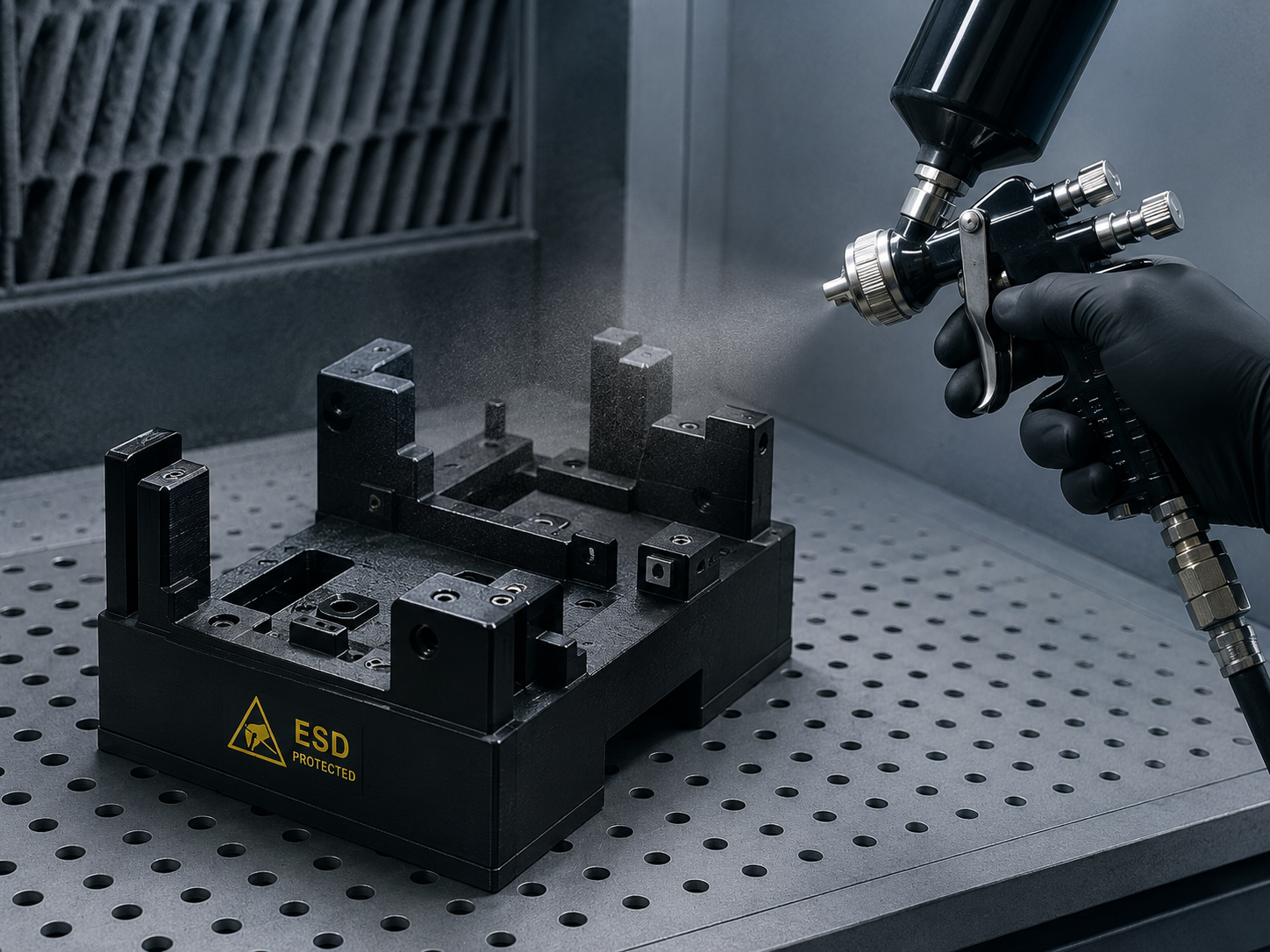
ESD-safe coatings can add static-dissipative behavior, helping reduce the risk of damage to printed parts used around electronics.