
“Somebody’s Going to Get Hurt”
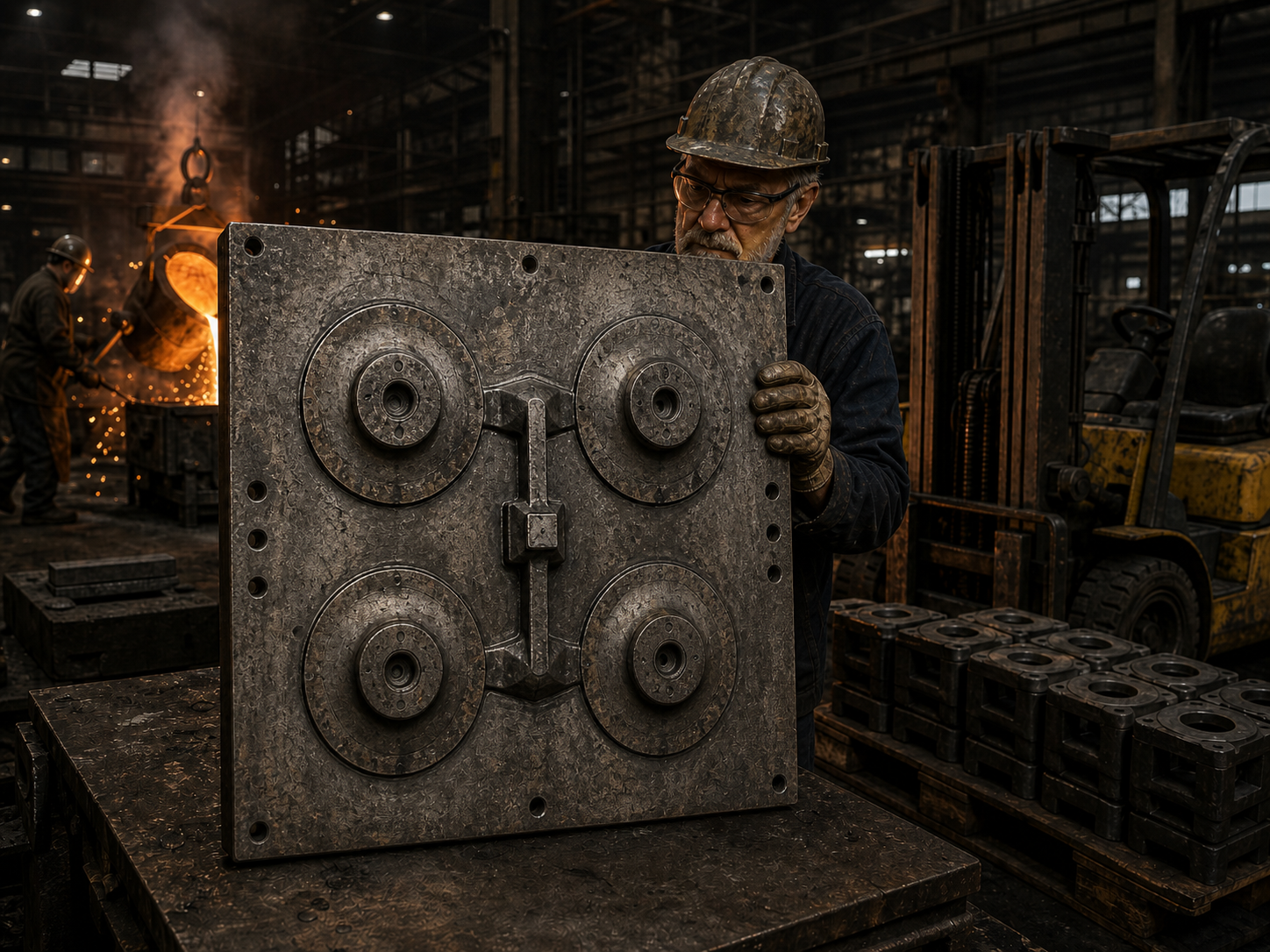
The foundry manager pointed at the old match plate.
“See that?”
I looked at it.
Aluminum plate. Bronze tools. Worn edges. Not enough draft. About 750 pounds of bad decisions and worse ergonomics.
He said, “We have to hand-flip that.”
I said, “You’re kidding.”
“I wish I was.”
The tool was not just heavy. It was fighting the sand every pull. The crew had to wrestle it, repair around it, and work too hard just to get molds made.
Then he said the part that mattered:
“One of these days, this thing is going to hurt somebody. Or kill somebody.”
And the job still was not making money.
That is the part people miss. Bad tooling is not just annoying. It eats labor, slows production, damages morale, increases risk, and turns a good casting job into a shop-floor problem.
So Jaeger Technology Group LLC worked with the foundry and rebuilt the tooling approach.
Not another 750-pound monster.
Not another patch.
Not another “just be careful.”
A new, properly drafted, 3D printed tooling system.
Final weight: about 16 pounds total.
The manager picked it up and just stared at it.
“That’s it?”
“That’s it.”
No crane. No wrestling match. No crew standing around wondering who had the worst luck that day.
Just lighter, safer, better tooling.
That is what modern foundry tooling should do.
It should make the job easier to run, not harder to survive.
About the Author: jaegertechgroup.com

STAY IN THE LOOP
Subscribe to our free newsletter.
Leave A Comment
Using 3D Printing to De-Risk Production Tooling Production tooling is expensive for a reason. Whether the final process is injection molding, thermoforming,
From 3D Scan to Perfect Fit: The Corvette Bumper Project Moves Forward A few weeks ago, we shared a project that demonstrated
Great Conversations and New Connections at SMD in Huntsville Last week, Janelle and I had the opportunity to attend SMD in Huntsville,
Repairing a Discontinued Polypropylene ATV Snorkel With Plastic Welding When a customer could not locate a replacement snorkel for his 21-year-old ATV,