
Polyamide / Nylon for FDM / FFF 3D Printing
Polyamide, commonly called nylon, is one of the most useful engineering material families in FDM/FFF printing. Nylon materials are known for toughness, fatigue resistance, impact resistance, and practical shop-floor durability. Nylon and carbon-fiber-filled nylon are common choices for fixtures, brackets, tooling, production aids, and functional parts.
Where Nylon Works Well
Nylon can be useful for:
- Stronger jigs and fixtures
- Brackets and mounts
- Workholding aids
- Part nests
- Wear-resistant shop tools
- Production support parts
- Functional prototypes
- Tough housings
- Hinged or snap-fit features, depending on geometry
- Industrial tooling
Nylon often performs better than PLA or PETG when the part will be handled, flexed, loaded, or abused.
PA-CF and PA-GF
Carbon-fiber-filled and glass-fiber-filled nylons are widely used for stiffer, more dimensionally stable parts.
PA-CF and PA-GF can be useful for:
- Stiff fixtures
- Tooling
- Brackets
- Inspection aids
- Production components
- Lightweight structural prototypes
- Higher-end shop-floor tools
Filled nylons can improve stiffness but can also reduce ductility, increase nozzle wear, and require careful print orientation.
Challenges
Nylon absorbs moisture. Wet nylon can print poorly, create surface defects, weaken parts, and cause inconsistent extrusion. Nylon also may require higher nozzle temperatures, heated beds, dry storage, and sometimes enclosed printers.
Key challenges:
- Moisture absorption
- Drying requirement
- Warping in some grades
- Bed adhesion
- Print orientation sensitivity
- Abrasive behavior in filled grades
- Cost compared with basic materials
JaegerTech View
For industrial fixtures and production aids, nylon is often one of the most practical material families. PA-CF is especially useful when stiffness and durability matter. The key is drying, process control, and understanding layer orientation.
About the Author: jaegertechgroup.com

STAY IN THE LOOP
Subscribe to our free newsletter.
Leave A Comment
Best $150 I’ve Ever Spent on This Car Classic car projects have a way of turning simple problems into complicated ones. A

Using Development Boards in Early Hardware Prototypes Other Parts of this series: Part 2 – Choosing The Right Development Board Part 3
3D Printed Patterns for Investment Casting: Material, Support, and Ceramic Shell Considerations Investment casting has always depended on the quality of the
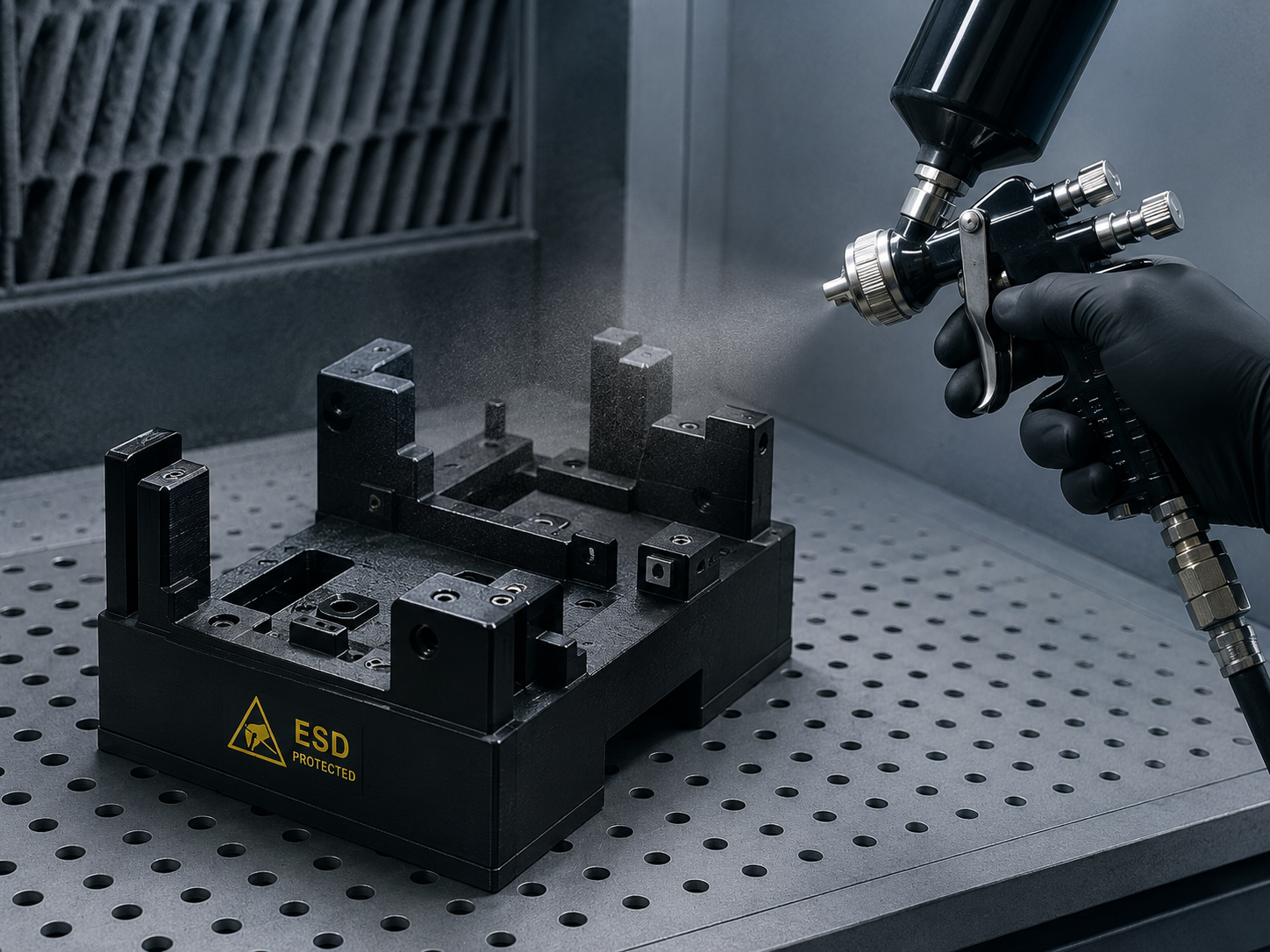
ESD-safe coatings can add static-dissipative behavior, helping reduce the risk of damage to printed parts used around electronics.