
Industrial Filament Drying: Stop Guessing Whether Your 3D Printer Filament Is Dry
Moisture is one of the most common causes of 3D printing problems.
A printer can be calibrated correctly.
The slicer profile can look right.
The material can be expensive and high quality.
The operator can do everything properly.
But if the filament is wet, the print can still fail.
That is especially true with engineering materials such as nylon, carbon fiber-filled nylon, glass fiber-filled materials, PETG, ASA, ABS, TPU, and other hygroscopic polymers. These materials can absorb moisture from the air, and once that moisture is inside the filament, it can create real problems during printing.
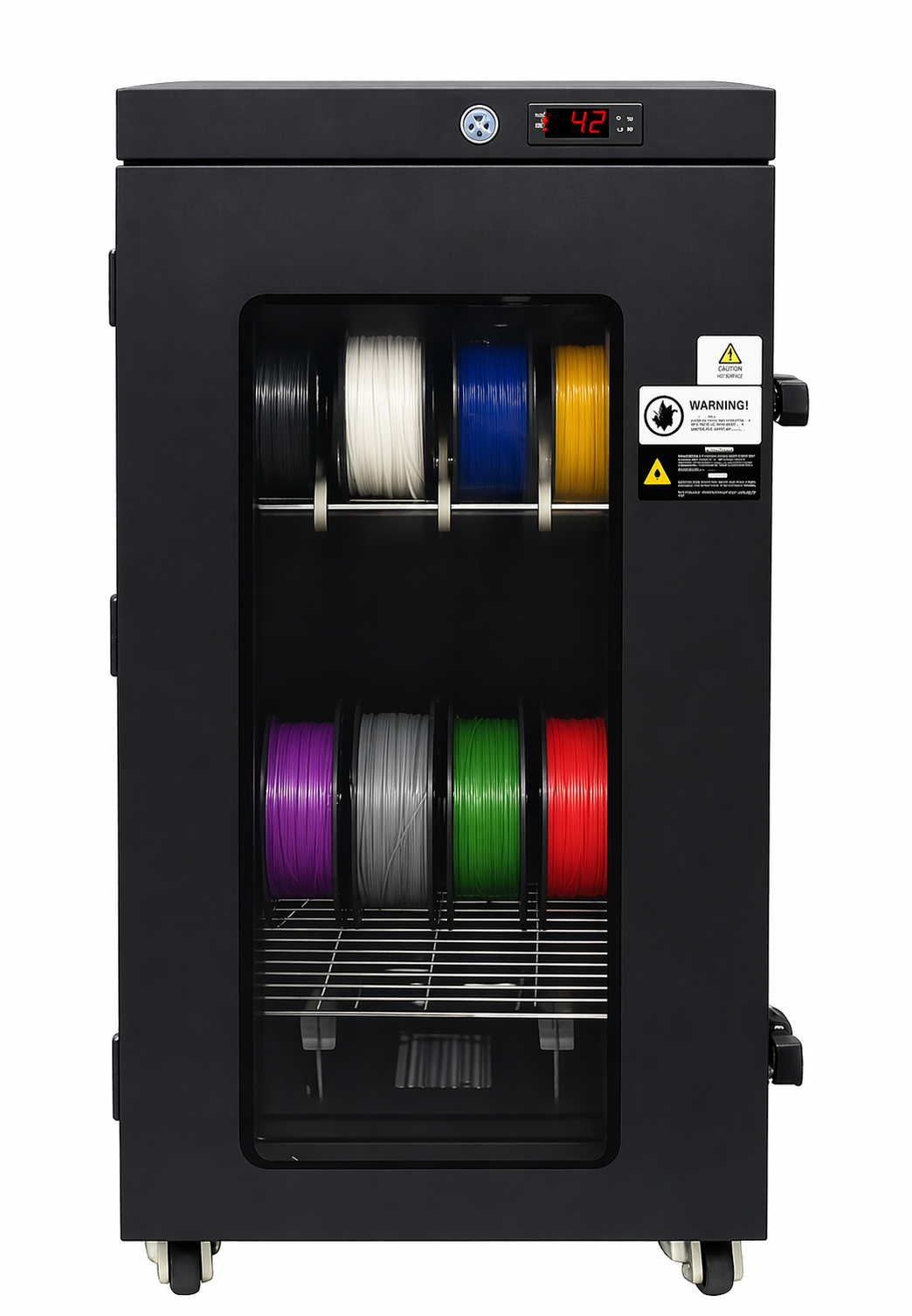
The JaegerTech Industrial Grade Extra Large Filament Drying Cabinet is designed to help shops, labs, makerspaces, and production users keep filament dry, organized, and ready for repeatable printing. The cabinet supports up to 12 spools, has a programmable temperature range of 10°C to 80°C, and is built for both drying and backup filament storage.
Why Wet Filament Is a Production Problem
Wet filament is not just a cosmetic issue.
Moisture can cause:
- Popping and bubbling during extrusion
- Rough surface finish
- Stringing and oozing
- Weak layer adhesion
- Inconsistent extrusion
- Dimensional inconsistency
- Poor mechanical properties
- Failed prints
- Unreliable production results
For a hobby print, that may be annoying.
For a production shop, it costs time, material, machine availability, and customer confidence.
The attached JaegerTech overview states the point plainly: moisture is the number one cause of filament-related failures. It also notes that a filament dryer can prevent moisture-related failures, improve layer adhesion and surface finish, maintain mechanical properties, and make production-grade output more repeatable.
Engineering Materials Need Better Filament Control
Some materials are much more moisture-sensitive than others.
PLA can often survive casual handling. But nylon, PA-CF, PA-GF, PETG-CF, TPU, and other engineering materials require more disciplined storage and handling.
When these materials absorb moisture, the printer is forced to deal with steam, inconsistent melt behavior, and compromised material flow. The result can be a part that looks rough, prints weak, or fails entirely.
That is why serious 3D printing operations need to stop treating filament storage as an afterthought.
Dry filament is not optional when the goal is functional parts.
Why an XL Drying Cabinet Makes Sense
Small filament dryers can be useful, but they are limited.
They may hold a couple spools. That works for occasional printing, but it is not enough for a production shop, print farm, lab, or makerspace managing multiple materials and spool sizes.
The JaegerTech XL filament drying cabinet is built around a larger-capacity approach. It has a dual-shaft system for multi-spool support, backup filament storage on a lower rack, pneumatic feed ports for direct printer connection, and a double-glass window for monitoring the cabinet without heat loss.
That matters because drying filament is only part of the problem.
The bigger problem is keeping multiple materials dry and accessible in a working production environment.
Built for Multi-Spool Workflow
The XL drying cabinet supports up to 12 spools in a full-load drying configuration. It supports both 1.75 mm and 2.85 mm filament, making it useful across a wide range of printer types and material workflows.
That gives users room to manage:
- Common production materials
- Backup spools
- Color variations
- Support materials
- Nylon and composite materials
- Dedicated job materials
- Multi-printer workflows
- Lab and makerspace inventory
For a shop running multiple printers, this matters. The goal is not just to dry one spool before a print. The goal is to create a controlled material-handling process.
Direct Printer Connection
One of the most useful features is the cabinet’s pneumatic feed ports.
These sealed pass-through fittings allow direct printer connection, so filament can be stored and fed from a controlled drying environment instead of being dried and then immediately exposed to shop air.
That is especially important for long prints.
A spool may be dry at the start of a job, but if the print runs for many hours or several days, the material can begin absorbing moisture again while it sits exposed. Feeding directly from a dry cabinet helps reduce that risk.
For production printing, that can be the difference between a repeatable process and a frustrating guessing game.
Programmable Temperature Control
Different materials need different drying conditions.
The JaegerTech XL cabinet has programmable temperature controls and a listed temperature range of 10°C to 80°C.
That range supports a broad set of filament-drying workflows. Lower temperatures may be appropriate for sensitive materials, while higher temperatures can support more demanding hygroscopic filaments.
The point is control.
A drying cabinet should not just get warm. It should allow the user to manage the drying environment based on the material being used.
Large Internal Chamber
The cabinet’s listed chamber dimensions are 376 × 360 × 700 mm, with an overall machine footprint of 490 × 475 × 975 mm and a net weight of 64 kg.
That makes it large enough to support serious filament storage while still being a manageable piece of shop equipment.
The cabinet also includes configurable rods and shelves, allowing the internal layout to be adjusted based on the user’s spool sizes, workflow, and storage needs.
That is important because no two print operations are exactly the same. Some users need many standard spools. Others need larger-format material storage. Others need a mix of active feed spools and backup inventory.
Better for Production Than Plastic Bags and Guesswork
Many shops start with improvised filament storage.
Plastic tubs.
Desiccant bags.
Vacuum bags.
One-spool dryers.
Open shelves.
Half-used rolls sitting beside the printer.
That may work for basic materials and occasional prints. It does not scale well when the shop is printing engineering materials, production tooling, customer parts, or long-duration jobs.
A dedicated drying cabinet gives the shop a better system.
It helps standardize material condition, reduce print failures, and make printing less dependent on luck.
Where the XL Filament Drying Cabinet Fits Best
The JaegerTech XL filament drying cabinet is a good fit for:
- 3D print farms
- Engineering labs
- Makerspaces
- Universities and technical schools
- Production 3D printing shops
- Manufacturers using nylon and composites
- Large-format printing operations
- Shops running multiple printers
- Facilities that need controlled material storage
- Users printing long-duration jobs
It is especially useful for anyone printing materials where moisture can ruin the job.
Practical Benefits
A filament drying cabinet can help a shop:
- Reduce moisture-related print failures
- Improve surface finish
- Improve layer adhesion
- Protect mechanical properties
- Reduce wasted material
- Support longer print runs
- Keep multiple spools organized
- Feed printers directly from a controlled environment
- Make production output more repeatable
- Reduce operator guesswork
That last point is important.
The goal is not just to dry filament. The goal is to make the entire printing process more predictable.
Work With Jaeger Technology Group LLC
Jaeger Technology Group LLC offers the Industrial Grade Extra Large Filament Drying Cabinet for users who need more reliable material handling for production 3D printing.
If your shop is printing nylon, carbon fiber blends, glass fiber blends, PETG, ASA, ABS, TPU, or other moisture-sensitive materials, filament drying should be treated as part of the process, not an optional accessory.
The JaegerTech XL dryer gives shops a practical way to manage multiple spools, maintain a controlled environment, feed printers directly, and reduce moisture-related failures.
Contact Jaeger Technology Group LLC to learn more about the XL filament drying cabinet, compatible 3D printers, engineering materials, and production-scale 3D printing workflows.
About the Author: jaegertechgroup.com

STAY IN THE LOOP
Subscribe to our free newsletter.
Leave A Comment
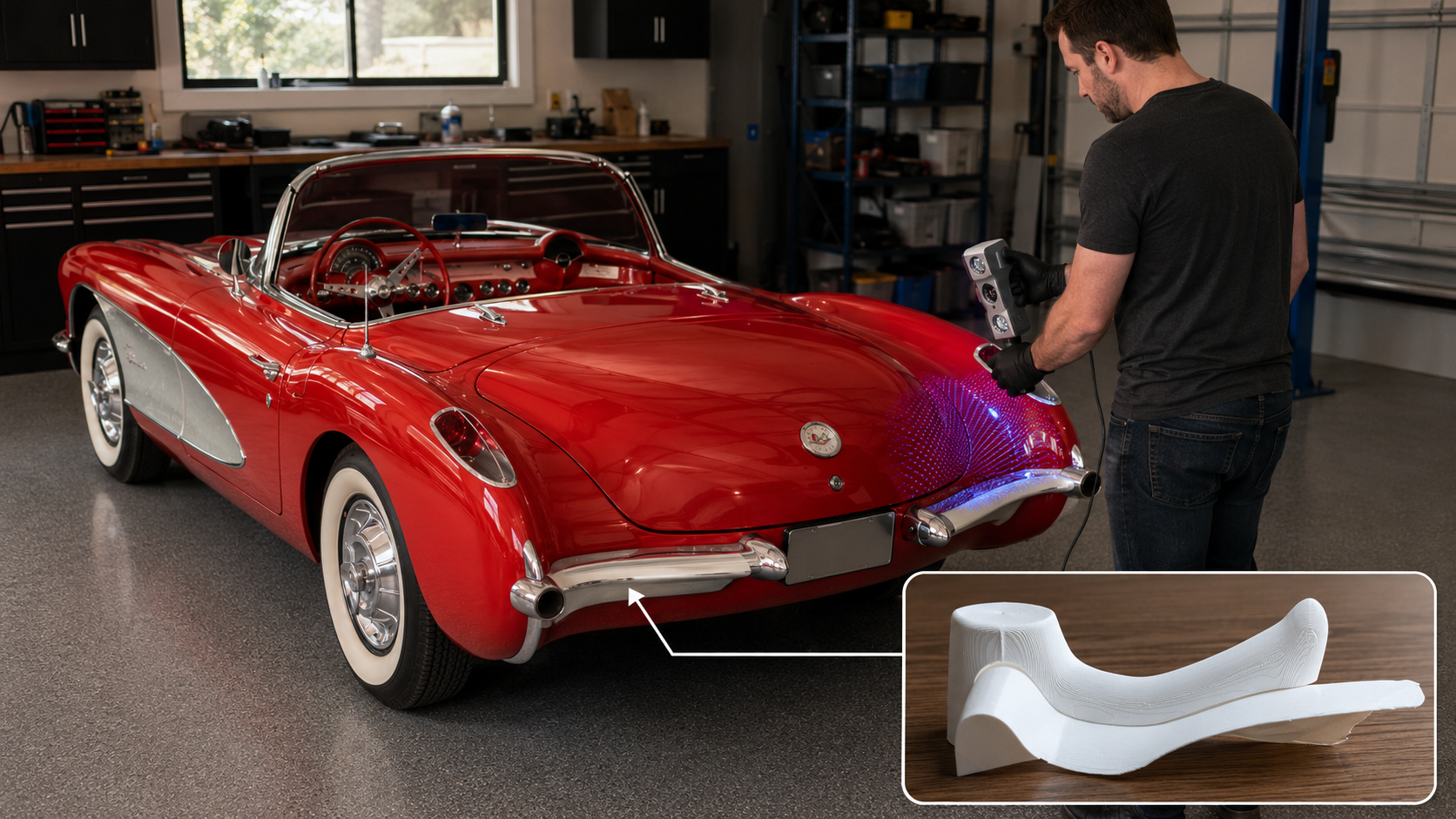
Best $150 I’ve Ever Spent on This Car Classic car projects have a way of turning simple problems into complicated ones. A

Using Development Boards in Early Hardware Prototypes Other Parts of this series: Part 2 – Choosing The Right Development Board Part 3

3D Printed Patterns for Investment Casting: Material, Support, and Ceramic Shell Considerations Investment casting has always depended on the quality of the
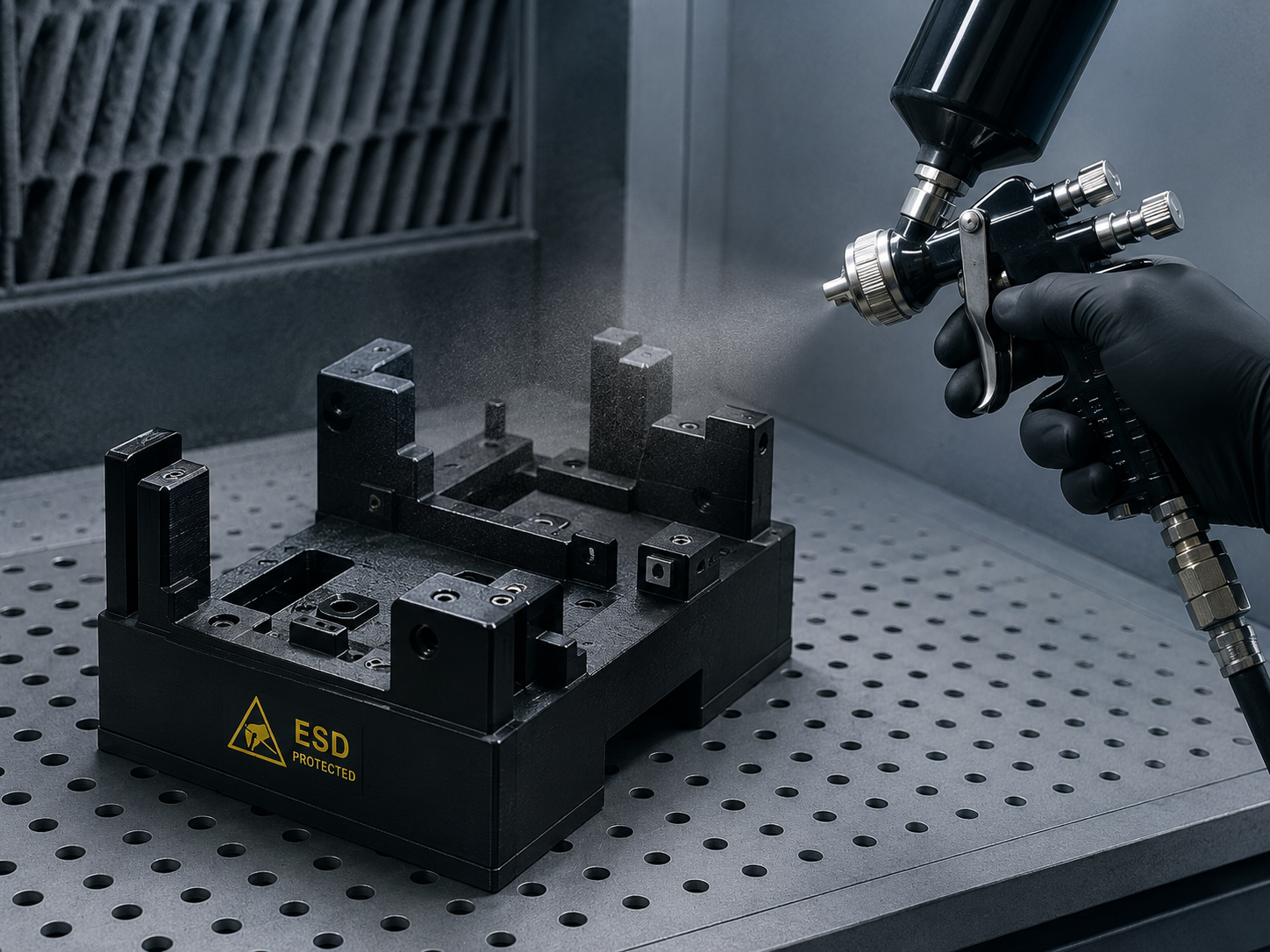
ESD-safe coatings can add static-dissipative behavior, helping reduce the risk of damage to printed parts used around electronics.