
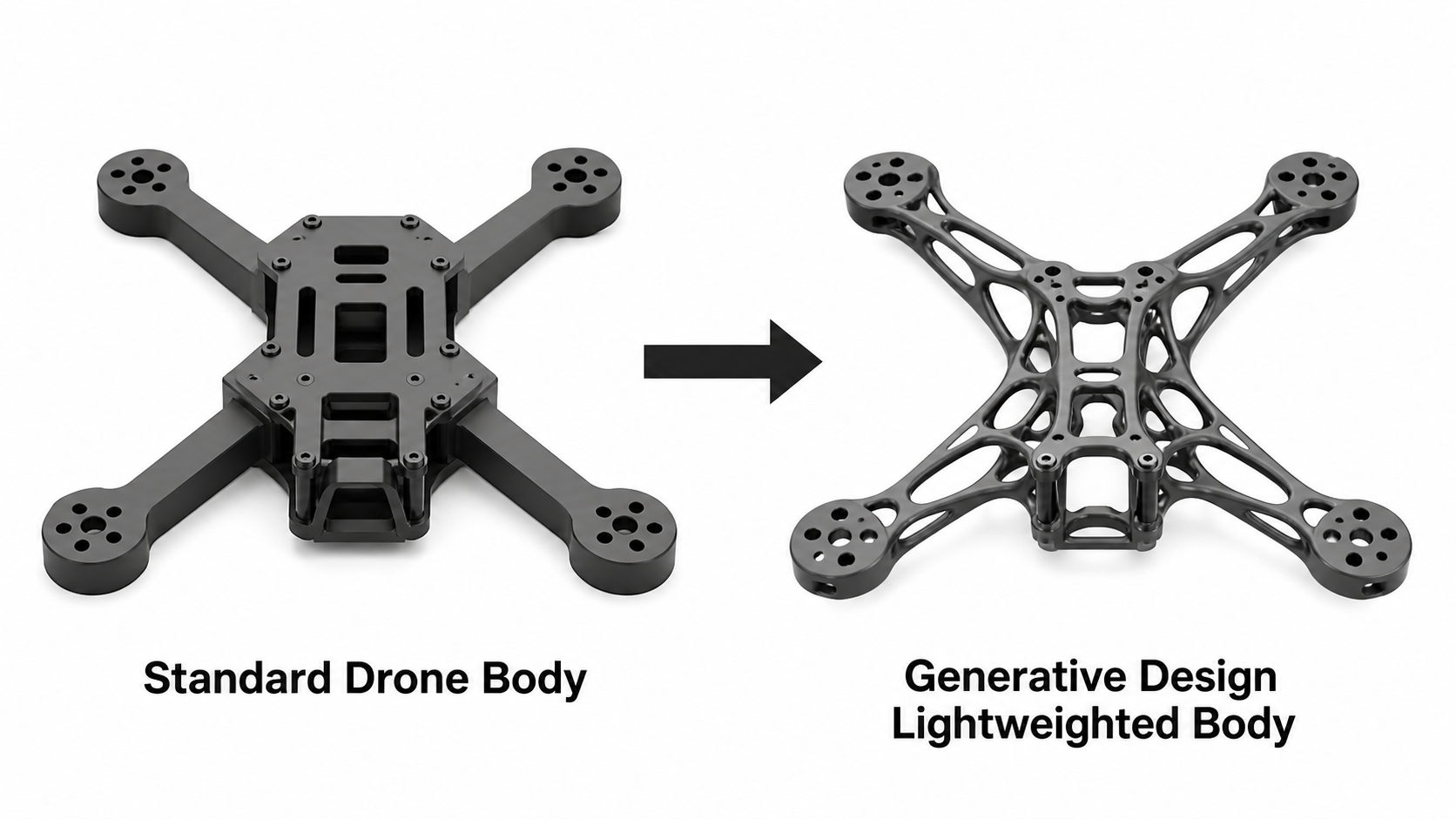
Generative Design and 3D Printed Drone Parts: Building Lighter, Smarter, More Capable Aerospace Components
In aerospace, every ounce matters.
Whether the application is a drone, UAV, RPA, inspection aircraft, defense platform, or specialized payload system, weight affects almost everything: flight time, battery life, range, maneuverability, payload capacity, structural efficiency, and cost of operation.
That is one of the reasons industrial 3D printing has become so valuable in aerospace and drone development. But the real opportunity is not simply replacing a machined bracket with a printed bracket.
The real opportunity is redesigning the part completely.
At Jaeger Technology Group LLC, we use industrial 3D printing to help manufacturers, engineers, and product developers produce lightweight, complex, application-specific parts that would be difficult, expensive, or sometimes impossible to make with traditional manufacturing methods.
This is where generative design, additive manufacturing, and part consolidation become powerful.
Traditional Manufacturing Limits the Shape of the Part
Most traditional manufacturing methods force the part to fit the process.
Machining prefers straight cuts, accessible surfaces, simple tool paths, and stock material removal. Injection molding requires draft angles, tooling investment, uniform wall sections, and moldability. Sheet metal favors bends, flat patterns, and formed geometry. Fabricated assemblies often require multiple brackets, fasteners, spacers, weldments, and secondary operations.
Those methods are still excellent when used correctly. But they often produce parts that are heavier, more complex, and more constrained than the application actually requires.
A drone component does not need to look like a block of machined aluminum just because that is how it would traditionally be made.
A sensor mount does not need five brackets, eight screws, and three spacers if the same function can be designed into one optimized printed part.
A duct, shroud, or enclosure does not need to be split into multiple pieces just because a cutting tool or mold cannot reach the internal geometry.
Additive manufacturing changes the design conversation.
Instead of asking, “How do we machine this?” the better question becomes:
What does this part actually need to do?
Generative Design Creates Parts Around Load, Function, and Constraint
Generative design allows engineers to define the important boundaries of a part: mounting points, load paths, keep-out zones, clearance areas, weight targets, stiffness requirements, and connection points.
From there, the software can explore forms that remove unnecessary material while preserving strength where it is actually needed.
The result often looks organic, skeletal, or lattice-like. That is not just for appearance. It reflects a different design logic.
Material is placed where the load requires it. Material is removed where it does not.
For drone and aerospace applications, this can be especially valuable for:
- Payload mounts
- Camera and gimbal brackets
- Sensor housings
- Battery compartments
- Avionics enclosures
- Antenna mounts
- Wire-routing structures
- Air ducts and cooling channels
- Shrouds and closeouts
- Internal frames and support brackets
- Composite layup tooling
- Test fixtures and prototype flight hardware
Many of these are the same categories commonly discussed in drone additive manufacturing, including payload enclosures, battery compartments, avionics housings, shrouds, wing structures, gimbal mounts, ducts, brackets, and related UAV components.
The difference is that a truly optimized 3D printed component should not simply copy the old design. It should take advantage of the manufacturing method.
Lightweighting Is Not Just About Saving Material
In drone and UAV applications, lightweighting is not a cosmetic benefit. It is a performance benefit.
A lighter part may allow:
- Longer flight time
- Increased payload capacity
- Better battery efficiency
- Faster acceleration and response
- Reduced motor strain
- Lower vibration loading
- Easier field handling
- More room for sensors, batteries, or mission equipment
For a drone manufacturer, saving a few ounces across several components can matter. Saving weight in a bracket, duct, cover, mount, enclosure, or internal support structure can contribute directly to useful performance gains.
Traditional manufacturing often leaves unnecessary mass in a part because removing it is too expensive, too time-consuming, or too difficult. 3D printing allows designers to create hollow sections, internal ribs, lattice structures, organic support geometry, and complex contours without the same tooling penalties.
That means a printed part can be strong where it needs to be strong, open where it can be open, and shaped around the actual packaging requirements of the aircraft.
In aerospace, that design freedom is valuable.
In drone manufacturing, it can be a competitive advantage.
Part Reduction: Fewer Pieces, Fewer Fasteners, Fewer Failure Points
One of the most overlooked advantages of additive manufacturing is part consolidation.
A traditionally manufactured assembly may include multiple machined plates, brackets, clips, standoffs, spacers, screws, nuts, washers, and cable guides. Each item adds cost. Each fastener adds labor. Each joint adds tolerance stack-up. Each interface can become a failure point.
With additive manufacturing, many of those features can be combined into one part.
A single 3D printed component can include:
- Mounting bosses
- Cable management
- Wire channels
- Sensor pockets
- Clip features
- Locating tabs
- Standoffs
- Conformal surfaces
- Lightweight ribs
- Airflow passages
- Embedded fastening points
- Alignment features
Instead of designing five parts and assembling them later, the entire function can often be built into one optimized printed component.
That reduces assembly labor. It reduces inventory. It reduces the number of purchased parts. It reduces the chance of misalignment. It can also make field replacement easier because one integrated component can replace an entire small assembly.
For production environments, that matters.
For drone manufacturers iterating quickly, it matters even more.
Complex Geometry Is Where 3D Printing Wins
The best use of industrial 3D printing is not always simple replacement work.
The highest value often comes from geometry that traditional processes struggle to produce.
Examples include:
- Curved internal ducts
- Lightweight lattice-filled structures
- Organic generative brackets
- Conformal battery holders
- Sensor enclosures shaped around the aircraft body
- Multi-function avionics housings
- Integrated cooling passages
- Complex mounting adapters
- Custom payload interfaces
- Topology-optimized structural supports
- Sacrificial tooling for composite layups
- Low-volume production parts with complex internal features
These are the kinds of parts where additive manufacturing stops being just a faster way to make a prototype and becomes a better way to manufacture the component.
A machined part often starts as a block.
A 3D printed part can start as a function.
That is the difference.
Stronger Materials Make Functional Printed Parts Practical
Modern additive manufacturing is not limited to fragile concept models.
Depending on the application, parts can be printed from engineering-grade materials such as carbon fiber reinforced nylon, ASA, PETG, PCTG, polycarbonate blends, ESD-safe materials, high-temperature polymers, and other specialty materials.
For UAV and aerospace support applications, material selection matters. A printed part may need to resist vibration, heat, UV exposure, chemicals, impact, static discharge, or mechanical loading.
For example, avionics and radio enclosures may require material choices that consider ESD behavior and electronics protection. The source material specifically mentions ESD-safe materials such as ABS ESD-7 for protecting sensitive drone electronics from charge.
The important point is this:
3D printing is not one material and one process.
The correct material depends on the job.
A prototype fit-check part, a carbon fiber reinforced bracket, an ESD-safe avionics enclosure, a heat-resistant duct, and a composite layup tool may all require different design decisions and different material choices.
That is where experience matters.
Faster Iteration Means Better Engineering
Drone and aerospace development rarely happens in one perfect design cycle.
A payload changes. A camera moves. A battery gets larger. A sensor package is upgraded. A wire route interferes with a mounting point. A cooling duct needs more clearance. A bracket needs to be lighter. A field test reveals vibration. A customer wants a new configuration.
Traditional manufacturing can make each change slow and expensive.
Industrial 3D printing allows engineering teams to move faster.
A part can be designed, printed, evaluated, revised, and reprinted without waiting for hard tooling or complex machining schedules. That speed is especially valuable for low-volume aerospace work, custom UAV platforms, defense applications, research aircraft, inspection drones, and specialized payload systems.
The first printed part may be a test article.
The second may be a field trial component.
The third may become low-volume production hardware.
That is the power of additive manufacturing in real product development.
3D Printing Is Not Just for Drone Parts
While printed drone components are a major opportunity, additive manufacturing also supports the tooling around drone and aerospace production.
This includes:
- Assembly fixtures
- Inspection gauges
- Drill guides
- Masking fixtures
- Composite layup molds
- Vacuum forming tools
- Urethane casting molds
- Sacrificial tooling
- Shipping and handling fixtures
- Workholding for machining or trimming
- Production aids for repeatable assembly
In many aerospace environments, the printed tooling may create as much value as the printed end-use part.
A lightweight drone bracket is useful.
A fixture that lets technicians install that bracket correctly every time may be just as valuable.
A printed gauge that catches an assembly issue before it reaches final inspection can save far more than the cost of the printed tool.
This is where Jaeger Technology Group LLC helps customers think beyond the part itself and look at the entire manufacturing workflow.
Where Jaeger Technology Group LLC Fits
Jaeger Technology Group LLC specializes in industrial 3D printing, prototyping, tooling, short-run production, and manufacturing support.
For drone, UAV, aerospace, automotive, defense, and industrial customers, we can help evaluate where additive manufacturing makes practical sense.
That may include:
- Replacing a heavy machined component with a lighter printed design
- Consolidating multiple parts into one integrated printed assembly
- Developing prototype drone components for test fitting and validation
- Producing carbon fiber reinforced polymer parts
- Creating ESD-safe enclosures and electronics housings
- Designing custom payload mounts and sensor brackets
- Printing ducts, shrouds, covers, and closeouts
- Building production fixtures, gauges, and tooling
- Supporting low-volume manufacturing when hard tooling is not justified
We are not interested in 3D printing parts just because they can be printed.
We are interested in using additive manufacturing where it creates a real advantage: lower weight, faster development, fewer components, better geometry, reduced assembly labor, improved customization, and faster movement from concept to working hardware.
Better Parts Start With Better Design
The companies that get the most out of 3D printing are not simply using it as a substitute for machining, molding, or fabrication.
They are using it to rethink the part.
Generative design, lightweighting, and part consolidation allow engineers to build components around the actual needs of the application rather than the limitations of the manufacturing process.
For drone and aerospace manufacturers, that can mean lighter aircraft, cleaner assemblies, faster development cycles, and more capable products.
If your team is developing drone components, UAV hardware, aerospace tooling, payload mounts, sensor enclosures, production fixtures, or low-volume manufacturing parts, Jaeger Technology Group LLC can help you evaluate whether industrial 3D printing is the right fit.
Contact Jaeger Technology Group LLC to discuss 3D printed drone parts, generative design, lightweight aerospace components, and production tooling for your next project.
About the Author: jaegertechgroup.com

STAY IN THE LOOP
Subscribe to our free newsletter.
Leave A Comment
Related Posts
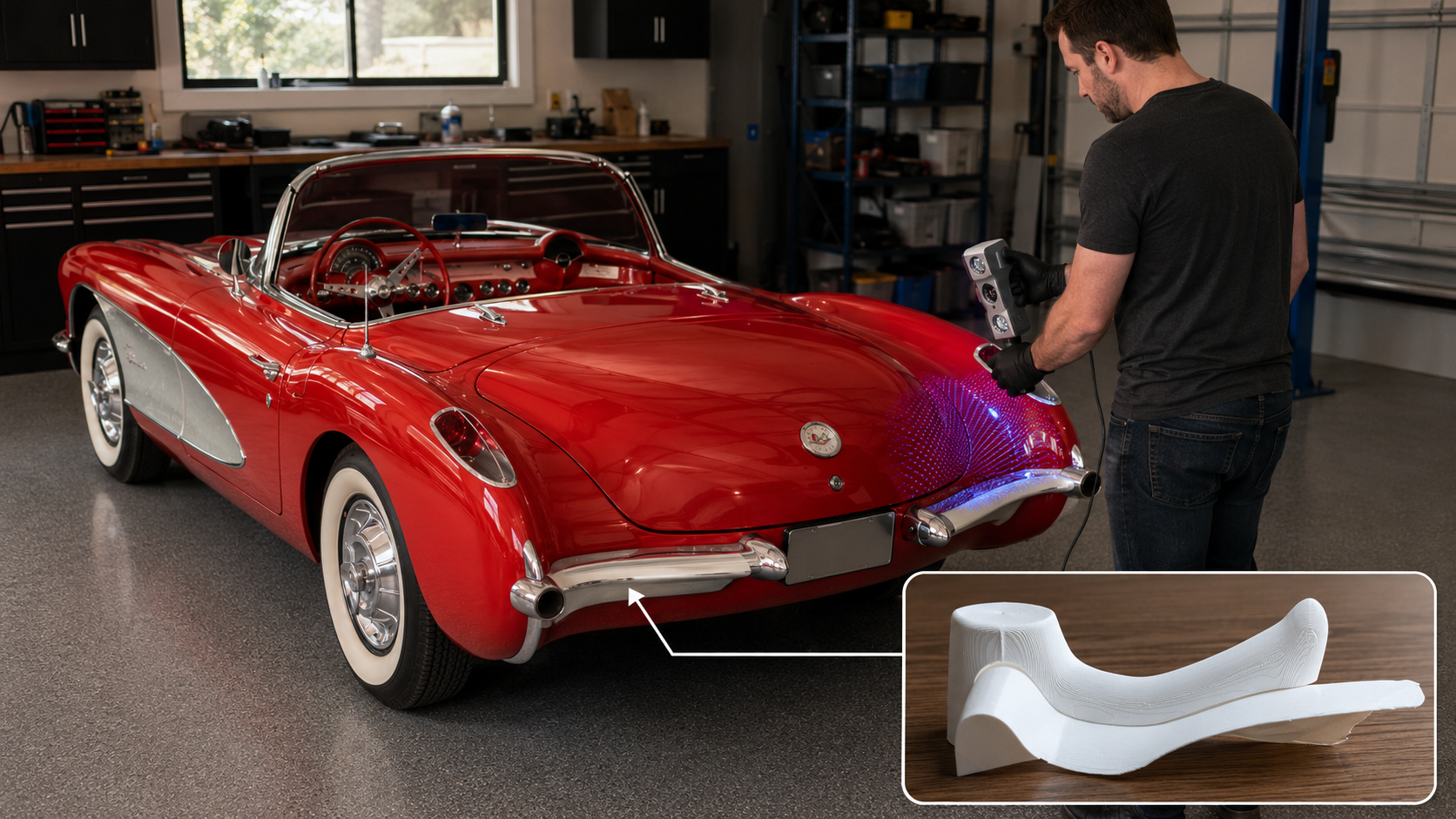
Best $150 I’ve Ever Spent on This Car Classic car projects have a way of turning simple problems into complicated ones. A

Using Development Boards in Early Hardware Prototypes Other Parts of this series: Part 2 – Choosing The Right Development Board Part 3
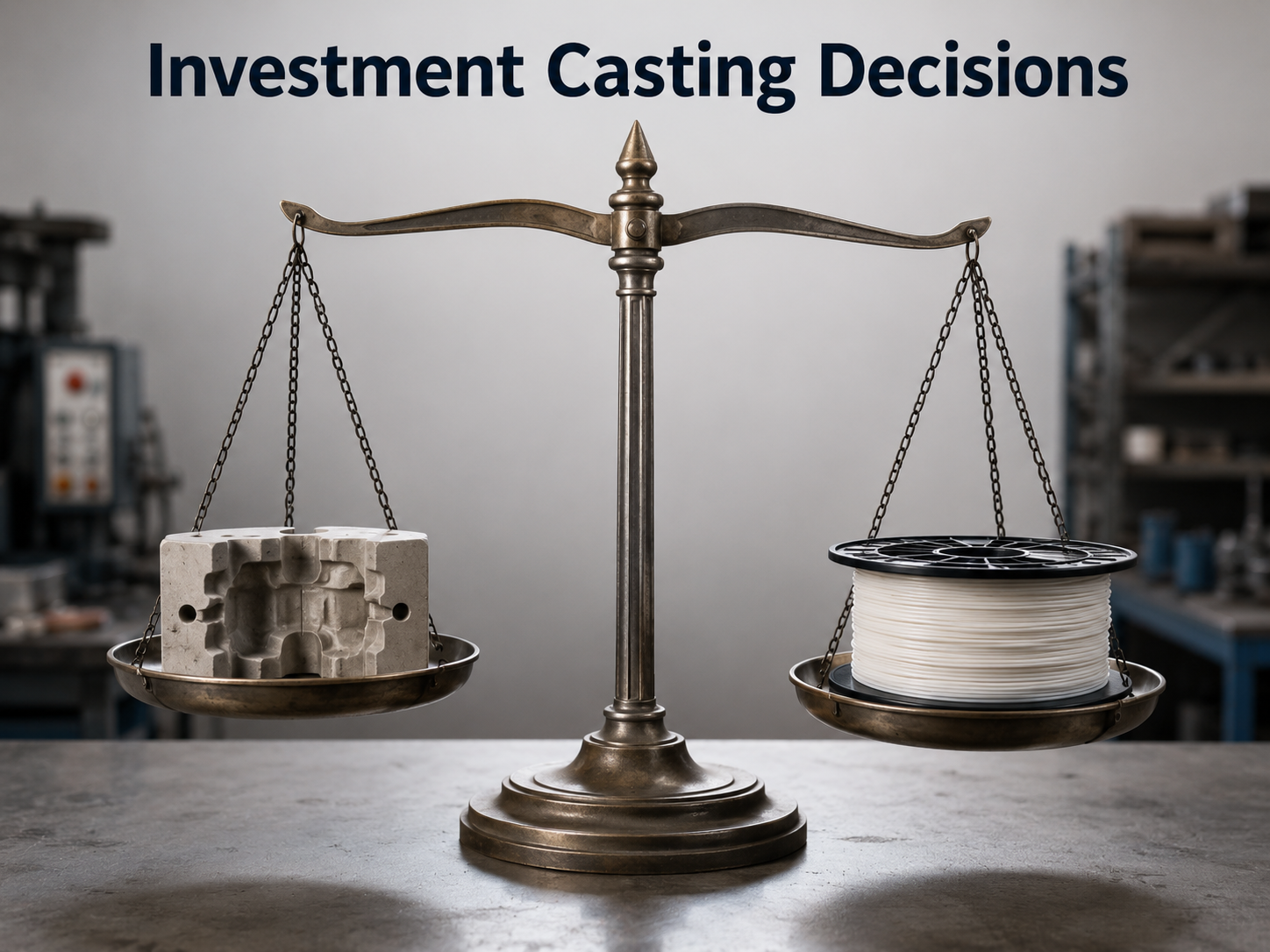
3D Printed Patterns for Investment Casting: Material, Support, and Ceramic Shell Considerations Investment casting has always depended on the quality of the
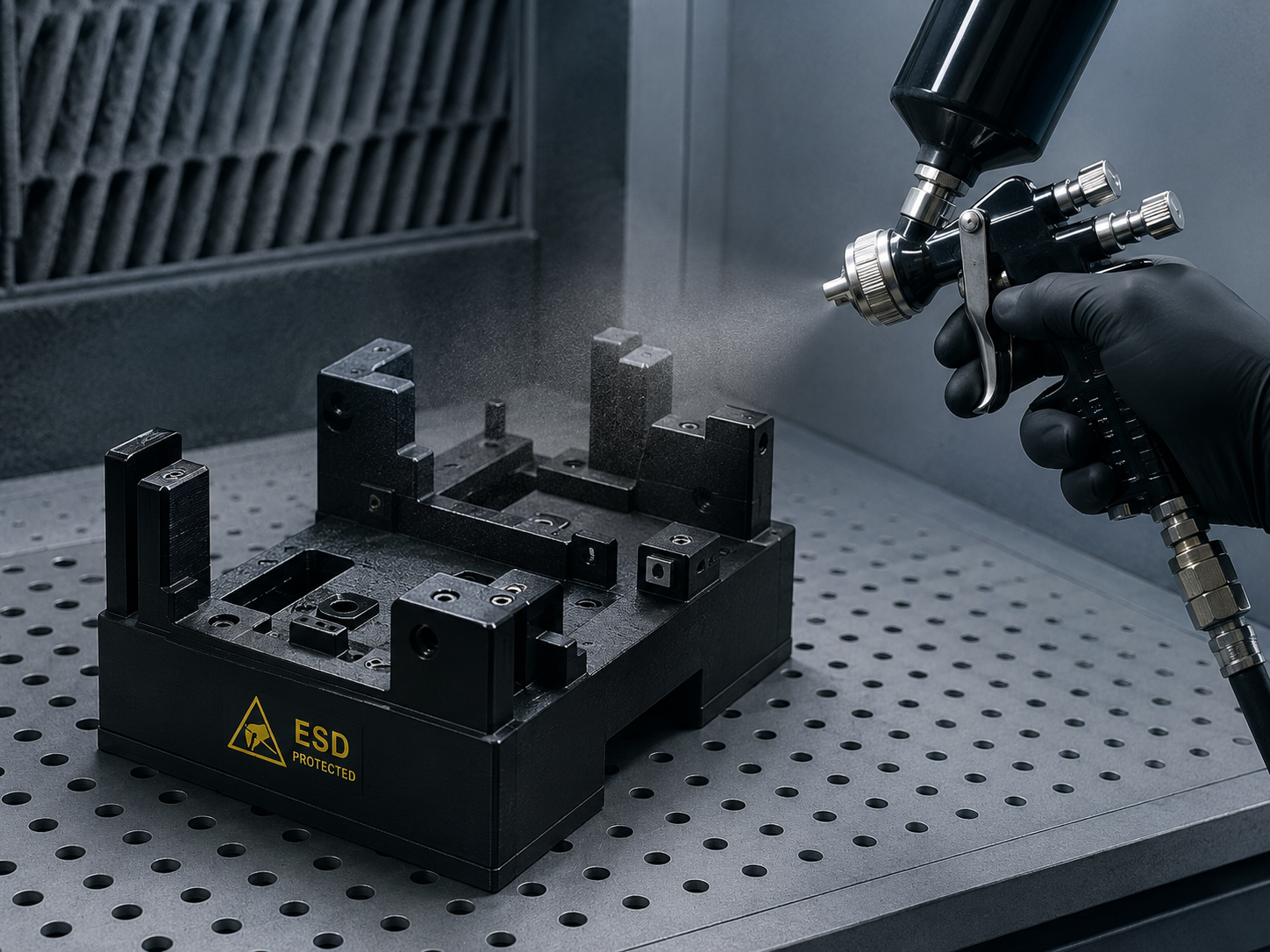
ESD-safe coatings can add static-dissipative behavior, helping reduce the risk of damage to printed parts used around electronics.