Choosing the Right Process: 3D Printing, DMLS, Machining, or Casting
Choosing the right manufacturing process is just as important as choosing the right material. A part that can be made with 3D printing may still be better machined. A part that could be machined may be more practical as a casting. A part that looks impossible to machine may be a good candidate for DMLS or another metal additive manufacturing process.
At Jaeger Technology Group LLC, we help manufacturers, engineers, product developers, machine shops, foundries, and industrial teams evaluate practical manufacturing paths, including polymer 3D printing, large-format additive manufacturing, DMLS/metal additive support, machining support, 3D printed casting patterns, foundry patterns, core boxes, tooling, prototypes, fixtures, and short-run production support.
The best process depends on the part, the material, the quantity, the tolerance, the schedule, and how the part will actually be used.
Start With the Function of the Part
The first question should not be “Can this be 3D printed?” The better question is “What does this part need to do?”
Important questions include:
- Is this a prototype, fixture, tool, pattern, or production component?
- Does it need to be plastic, metal, rubber-like, or composite?
- What loads will it see?
- What temperatures will it see?
- Will it be exposed to chemicals, oils, coolants, UV, or weather?
- Does it need tight tolerances?
- Does it need a specific surface finish?
- How many parts are needed?
- How quickly are they needed?
- Is the design likely to change?
- Is this part regulated, safety-critical, or customer-facing?
Those answers usually point toward the right process.
Polymer 3D Printing
Polymer 3D printing is often a strong choice for prototypes, tooling, fixtures, patterns, covers, guards, production aids, and short-run functional parts.
Polymer 3D printing can be useful for:
- Concept models
- Functional prototypes
- Jigs and fixtures
- Inspection gauges
- Drill guides
- Part nests
- Assembly aids
- Masking fixtures
- Soft jaws
- Packaging trays
- Foundry patterns
- Core boxes
- Large-format tooling
- Short-run production parts
The biggest advantages are speed, flexibility, low tooling cost, and the ability to revise quickly.
Polymer 3D printing is often a good fit when:
- The quantity is low
- The design may change
- Geometry is complex
- The part is a tool or fixture
- The part is oversized but not highly loaded
- The part is a development model
- The timeline is compressed
It may not be the best fit when the part needs very tight tolerances, high wear resistance, high structural loads, metal properties, or certified production performance.
Large-Format 3D Printing
Large-format 3D printing is a subset of polymer additive manufacturing focused on bigger parts, tooling, patterns, molds, and fixtures.
It is useful for:
- Large foundry patterns
- Core boxes
- Vacuum forming tools
- Composite support tooling
- Large assembly fixtures
- Full-size prototypes
- Industrial covers and guards
- Equipment mockups
- Packaging and shipping aids
- Oversized product development models
Large-format parts require planning around sectioning, bonding, stiffness, print orientation, surface finish, material selection, and post-processing.
The process is not just “printing it bigger.” Large parts behave differently than small parts, and the manufacturing strategy matters.
DMLS and Metal Additive Manufacturing
DMLS, or Direct Metal Laser Sintering, is a metal additive manufacturing process used for complex metal parts. It can be useful when the geometry is difficult or impossible to machine conventionally, especially at low volume.
DMLS or metal additive support may make sense for:
- Complex metal prototypes
- Lightweight metal structures
- Internal passages
- Lattice or organic geometries
- Low-volume metal development parts
- Specialized tooling inserts
- Parts where complexity is more important than low cost
DMLS is not automatically cheaper than machining. In many cases, it is more expensive. Its value is strongest when geometry, performance, or development speed justify the process.
DMLS may not be the right choice when:
- The part is simple to machine
- The quantity is high
- Surface finish requirements are demanding without post-processing
- Tolerances require extensive machining afterward
- Cost is the primary driver
- The part can be cast or machined more efficiently
Metal additive manufacturing is powerful, but it should be used where it actually creates value.
Machining
Machining remains one of the most important manufacturing processes for accurate, strong, production-grade parts and tooling.
Machining is often the right answer for:
- Tight tolerances
- Precision surfaces
- Metal components
- High-load parts
- Production tooling
- Wear surfaces
- Flatness and squareness requirements
- Threaded features
- Bearing surfaces
- Parts with simple metal geometry
Machining may be better than 3D printing when strength, precision, surface finish, or material properties matter more than geometric freedom.
Machining can also work well in hybrid projects. A part may use a 3D printed body with machined inserts, machined mounting plates, dowel pins, bushings, or precision surfaces.
Casting
Casting can be a strong option for metal parts, especially when the geometry is complex, the quantity justifies the process, or the part resembles a traditional casting.
Casting may make sense for:
- Replacement metal parts
- Industrial housings
- Pump components
- Brackets
- Machinery parts
- Complex metal shapes
- Short-run or production metal components
- Parts that would be expensive to machine from billet
3D printing can support casting by producing:
- Foundry patterns
- Core boxes
- Loose patterns
- Match plate components
- Prototype casting patterns
- Casting development tooling
This is one of the strongest hybrid uses of additive manufacturing. A 3D printed pattern can reduce the lead time and cost of getting to a cast metal part, especially for prototypes, replacement parts, and short-run production.
3D Printed Casting Patterns
A printed pattern is not just a printed CAD model. A proper casting pattern may need draft, shrinkage allowance, machining allowance, parting-line planning, core prints, fillets, surface finishing, and foundry-floor durability.
3D printed casting patterns can help with:
- Prototype castings
- Short-run casting projects
- Replacement castings
- Legacy part recreation
- Complex geometry
- Large industrial castings
- Casting development
- Core box production
- Bridge tooling before permanent patterns
For many industrial parts, the final component may be cast metal, but the fastest route to that casting may begin with a printed pattern.
Hybrid Manufacturing
Many projects are best handled with more than one process.
Examples of hybrid manufacturing include:
- 3D printed fixture body with machined bushings
- Printed soft jaw with metal fasteners
- Large printed foundry pattern with hand finishing and coating
- Printed prototype followed by machined production parts
- Printed pattern followed by casting and final machining
- DMLS part with post-machined critical surfaces
- Printed mold master used to create another tool
- Printed assembly aid with threaded inserts and rubber pads
Hybrid manufacturing is often the practical answer because each process is used where it performs best.
Process Comparison
| Process | Best For | Limitations |
|---|---|---|
| Polymer 3D Printing | Prototypes, fixtures, gauges, tooling, patterns, short-run parts | Material limits, layer behavior, tolerance limits |
| Large-Format 3D Printing | Oversized tools, patterns, molds, full-size prototypes | Sectioning, bonding, warping, finish planning |
| DMLS / Metal Additive | Complex metal geometry, low-volume metal prototypes | Cost, surface finish, post-machining needs |
| Machining | Precision, strength, tight tolerances, production-grade parts | Cost for complex geometry, longer setup for some jobs |
| Casting | Metal parts, complex shapes, production or replacement components | Pattern/tooling needs, foundry process planning |
| Hybrid Manufacturing | Projects needing multiple strengths | Requires process planning and coordination |
How to Choose
A practical process decision usually comes down to a few factors:
- Geometry: Is the part simple or complex?
- Material: Does it need polymer, metal, flexible material, or specialty material?
- Tolerance: Are loose, functional tolerances acceptable, or does it need precision machining?
- Quantity: Is it one part, ten parts, fifty parts, or thousands?
- Schedule: Is speed more important than unit cost?
- Function: Is it a prototype, fixture, pattern, tool, or final part?
- Environment: Will it see heat, chemicals, wear, UV, or load?
- Risk: Is the part safety-critical, regulated, or production-critical?
A good manufacturing decision considers all of those together.
Why Work With JaegerTech?
JaegerTech brings practical manufacturing judgment, not just printer operation.
We bring:
- 30+ years of industrial and technical experience
- Additive manufacturing experience dating back to the early days of the industry
- Large-format 3D printing capability
- Practical material and process selection knowledge
- Foundry and patternmaking experience
- Jigs, fixtures, prototypes, and production support experience
- Machining, casting, and DMLS/metal additive support where appropriate
- Real-world problem solving, not just file printing
We understand that the best answer may be printed, machined, cast, metal printed, or built using a combination of processes.
Need Help Choosing the Right Manufacturing Process?
If your company needs a prototype, fixture, inspection gauge, foundry pattern, machined component, DMLS/metal additive support, casting pattern, large-format part, production aid, short-run component, or development tool, Jaeger Technology Group LLC can help evaluate the right path.
We support Decatur, Huntsville, Birmingham, North Alabama, the Southeast, and manufacturers across the broader industrial region.
Contact JaegerTech today to discuss your project, request a quote, or find out whether 3D printing, machining, DMLS, casting support, or another manufacturing process is the right path for your application.
About the Author: jaegertechgroup.com

STAY IN THE LOOP
Subscribe to our free newsletter.
Leave A Comment
Best $150 I’ve Ever Spent on This Car Classic car projects have a way of turning simple problems into complicated ones. A
Using Development Boards in Early Hardware Prototypes Other Parts of this series: Part 2 – Choosing The Right Development Board Part 3
3D Printed Patterns for Investment Casting: Material, Support, and Ceramic Shell Considerations Investment casting has always depended on the quality of the
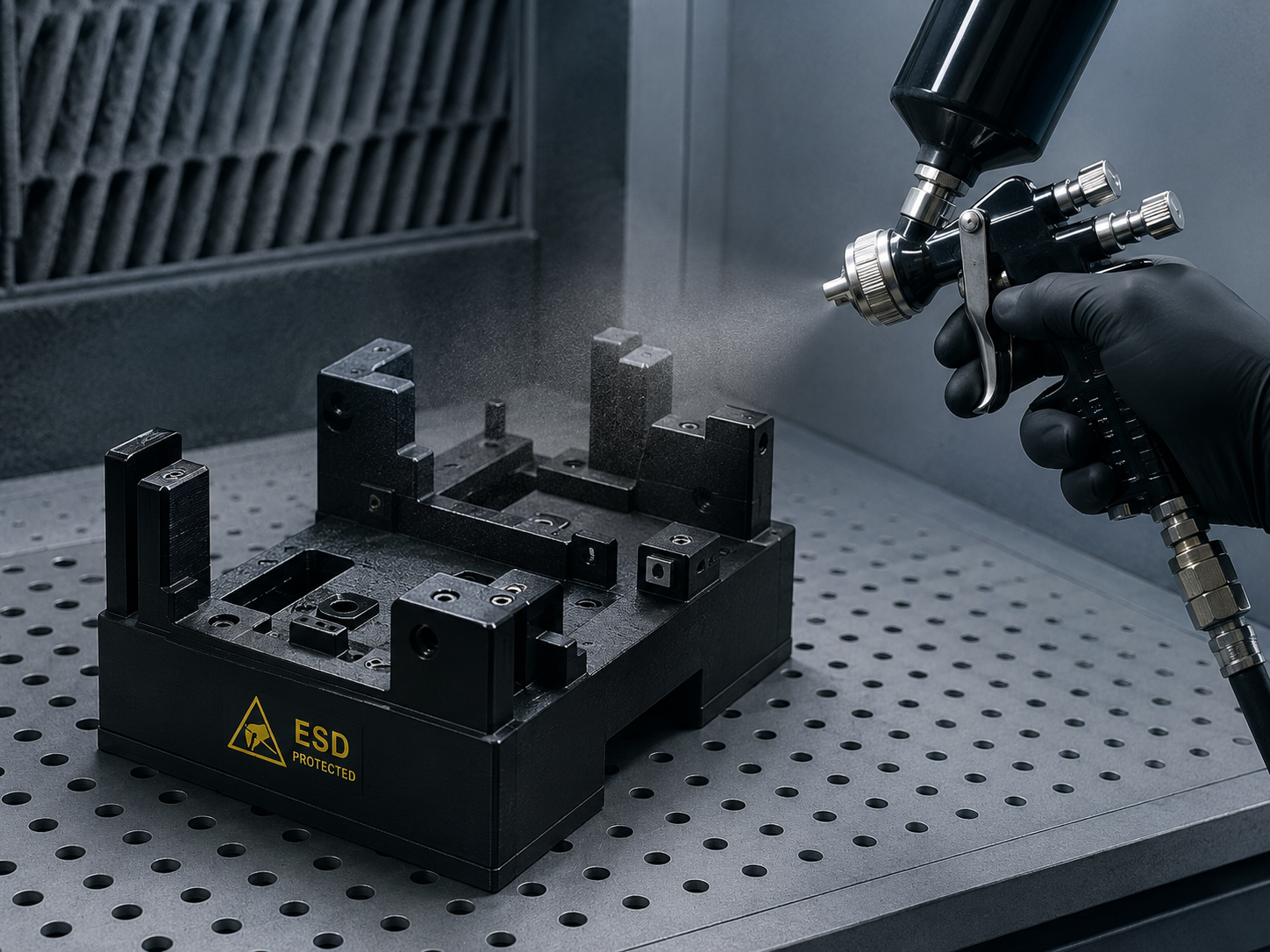
ESD-safe coatings can add static-dissipative behavior, helping reduce the risk of damage to printed parts used around electronics.