
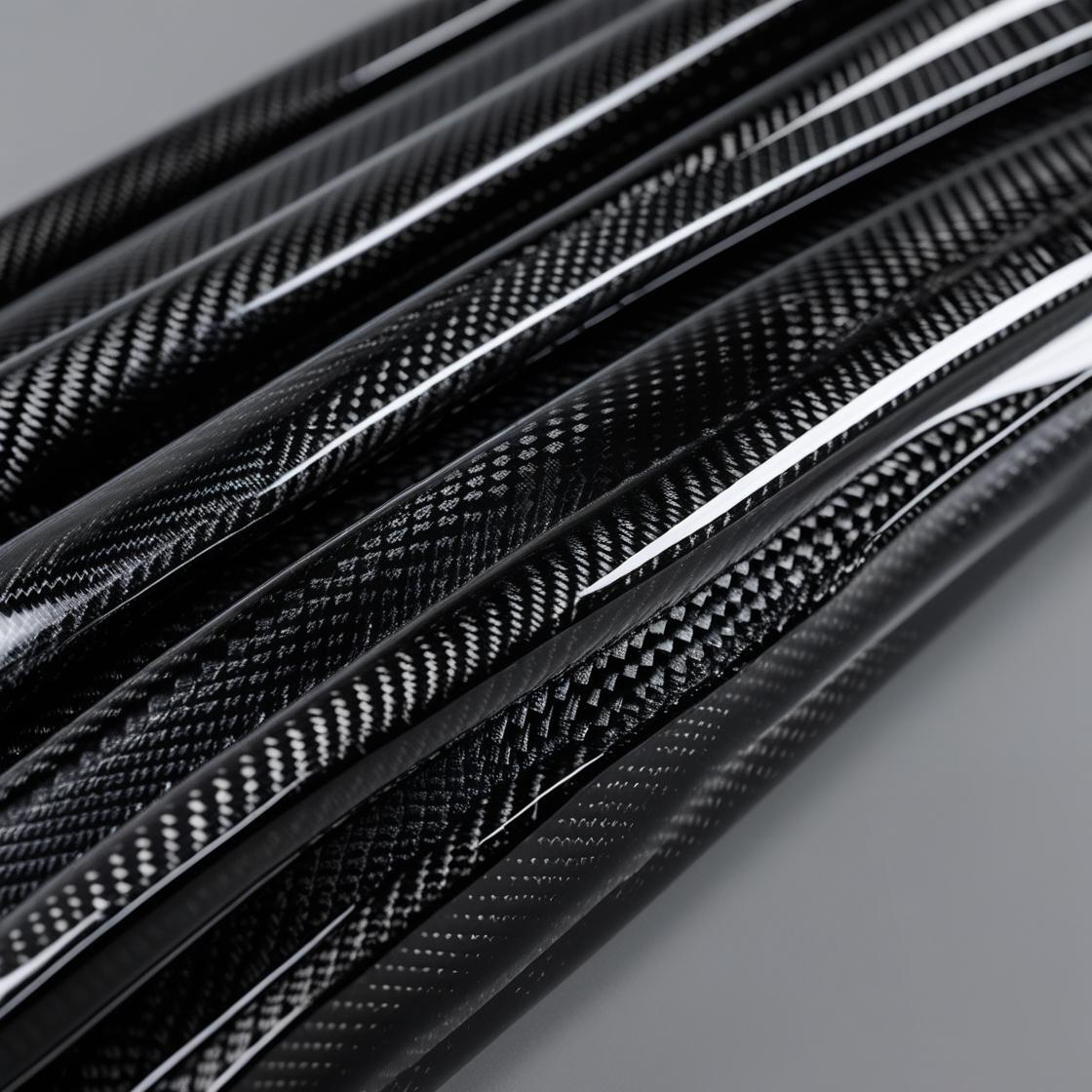
Carbon Fiber and Glass Fiber Filled Filaments for Industrial FDM / FFF 3D Printing
Carbon fiber and glass fiber filled filaments are used when a 3D printed part needs more stiffness, better dimensional stability, improved handling strength, or a more engineering-grade feel than the base polymer can provide by itself. These materials are common in industrial FDM/FFF printing for fixtures, brackets, tooling, production aids, prototypes, and lightweight structural components.
At Jaeger Technology Group LLC, we use fiber-filled materials when the application benefits from added stiffness, reduced warping, improved dimensional behavior, or better functional performance. These materials are useful, but they are not magic. The base polymer, print orientation, fiber type, layer bonding, part geometry, and actual use conditions all matter.
What Are Fiber Filled Filaments?
Fiber filled filaments are base thermoplastics mixed with short chopped fibers.
Common base polymers include:
- PLA
- PETG
- PCTG
- ABS
- ASA
- Nylon / polyamide
- Polycarbonate
- PPS
- PEI / ULTEM-style materials
- PEEK / PEKK in specialized cases
Common reinforcements include:
- Carbon fiber
- Glass fiber
- Aramid fiber
- Mineral fillers
- Ceramic or other specialty fillers
The fiber reinforcement changes how the filament prints and how the final part behaves. In many cases, the printed part becomes stiffer, more dimensionally stable, and less prone to warping. However, it may also become more brittle, more abrasive, and more sensitive to print orientation.
Carbon Fiber Filled Filaments
Carbon fiber filled filaments are widely used for stiff, lightweight, functional parts. The chopped carbon fiber increases stiffness and can improve dimensional stability compared with the unfilled base polymer.
Carbon fiber filled materials can be useful for:
- Jigs and fixtures
- Brackets and mounts
- Inspection aids
- Production tools
- Part nests
- Lightweight tooling
- Functional prototypes
- Drone and robotics components
- Automotive and aerospace support parts
- Industrial covers and guards
- Patternmaking support
- Composite tooling aids
Carbon fiber filled nylon is one of the most common serious industrial materials in this category, but carbon fiber versions of PETG, ASA, ABS, PC, PPS, and other polymers can also be useful.
Glass Fiber Filled Filaments
Glass fiber filled filaments are similar in concept to carbon fiber filled materials, but they use chopped glass fibers instead of carbon fibers. Glass fiber can improve stiffness and strength while sometimes retaining more impact resistance or toughness than carbon fiber filled variants, depending on the base polymer and formulation.
Glass fiber filled materials can be useful for:
- Fixtures
- Brackets
- Industrial prototypes
- Production aids
- Mechanical parts
- Tooling components
- Part nests
- Covers and guards
- Functional housings
- Parts needing stiffness without the same carbon-fiber aesthetic
Glass fiber filled nylon and glass fiber filled polypropylene are common examples in industrial polymer applications, though printability depends heavily on the specific filament.
Carbon Fiber vs. Glass Fiber
Both carbon fiber and glass fiber can improve performance, but they are not interchangeable.
| Factor | Carbon Fiber Filled | Glass Fiber Filled |
|---|---|---|
| Stiffness | Usually very high | High, often slightly less stiff than carbon fiber |
| Weight | Very light | Heavier than carbon fiber |
| Toughness | Can become more brittle | May retain toughness better depending on formulation |
| Appearance | Matte black technical finish common | Often lighter or natural-colored depending on polymer |
| Cost | Often higher | Often lower than carbon fiber |
| Abrasiveness | Abrasive to nozzles | Abrasive to nozzles |
| Electrical behavior | Can be more conductive depending on loading | Generally more insulating |
| Common use | Stiff brackets, tooling, fixtures | Tough fixtures, housings, structural prototypes |
The right choice depends on whether stiffness, toughness, cost, electrical behavior, appearance, or weight matters most.
Base Polymer Matters More Than the Fiber Name
A common mistake is treating “carbon fiber filament” as one material. It is not.
A carbon fiber filled PLA is very different from carbon fiber filled nylon. A carbon fiber filled PETG is different from carbon fiber filled polycarbonate. A carbon fiber filled PPS is different from carbon fiber filled ASA.
The base polymer controls much of the part’s behavior, including:
- Heat resistance
- Chemical resistance
- Moisture behavior
- Toughness
- Layer adhesion
- UV resistance
- Long-term creep
- Print temperature
- Warping tendency
- Cost
- Service environment
The fiber modifies the base polymer. It does not erase the base polymer’s limits.
For example:
- PLA-CF may look great and print stiff, but it is still limited by PLA’s heat resistance and brittleness.
- PETG-CF can be useful for functional prototypes and light-duty tools, but it may not match nylon-CF for toughness or heat performance.
- PA-CF is often a strong choice for industrial fixtures and brackets.
- PC-CF can be useful when heat resistance and stiffness are needed.
- PPS-CF belongs in more advanced industrial applications where chemical and heat resistance justify the cost.
Fiber Filled Nylon / PA-CF and PA-GF
Polyamide, or nylon, is one of the most common base materials for serious fiber-filled FDM parts.
PA-CF can be useful for:
- Strong fixtures
- Brackets and mounts
- Production aids
- Lightweight tooling
- Inspection fixtures
- Part nests
- Industrial prototypes
- Functional shop-floor parts
PA-GF can be useful for:
- Tough fixtures
- Structural prototypes
- Parts needing stiffness and durability
- Brackets
- Housings
- Industrial tools
- Components where carbon fiber is not ideal
Nylon-based filled materials still require moisture control. Drying and storage are critical. Wet nylon can print poorly and produce weaker, rougher, less reliable parts.
Fiber Filled PETG, PCTG, ASA, and ABS
Filled versions of common engineering materials can be practical when nylon is not required.
PETG-CF / PCTG-CF can be useful for:
- Stiffer functional prototypes
- Light-duty fixtures
- Covers and guards
- Brackets
- Production aids
- Low-cost engineering parts
ASA-CF can be useful for:
- Outdoor fixtures
- UV-resistant tooling
- Covers and guards
- Automotive-style prototypes
- Industrial parts exposed to sunlight
ABS-CF can be useful for:
- Tooling
- Housings
- Prototypes
- Industrial support parts
- Finished parts that need post-processing
These materials can be easier or more economical than higher-performance filled polymers, but they still inherit the limits of their base polymer.
Fiber Filled Polycarbonate
PC-CF and other filled polycarbonate materials are used when stiffness, heat resistance, and impact performance are needed.
PC-CF may support:
- Strong brackets
- Functional housings
- Industrial fixtures
- Heat-resistant production aids
- Lightweight tooling
- Durable prototypes
Polycarbonate requires dry filament, higher nozzle temperatures, enclosure control, and careful print tuning. Filled PC is generally more demanding than PETG-CF or PLA-CF.
Fiber Filled PPS and High-Performance Polymers
PPS-CF, PEI-CF, PEEK-CF, and PEKK-CF belong in the high-performance category.
These materials may be considered for:
- Chemical-resistant tooling
- Heat-resistant fixtures
- Advanced aerospace support applications
- Industrial components
- Lightweight high-performance brackets
- Specialized production aids
- Electrically or thermally demanding environments
These materials are expensive and require capable printers, process control, and application-specific validation. They should be used when the job justifies the material and process cost.
Strength Is Directional
FDM printed parts are anisotropic. That means they do not have the same strength in every direction.
Fiber-filled materials make this even more important.
Most chopped fibers align generally with the extrusion path. This can improve stiffness along printed roads, but it does not make the part equally strong through the Z direction. Layer adhesion can still be the weak point.
Important design considerations include:
- Print orientation
- Load direction
- Layer bonding
- Wall thickness
- Infill strategy
- Fiber alignment
- Hole placement
- Sharp corners
- Stress concentrations
- Fastener loads
A fiber-filled part can be very stiff in one direction and still split between layers if designed or printed poorly.
Stiffness vs. Toughness
Carbon fiber filled materials often feel strong because they are stiff. But stiffness is not the same as toughness.
A stiff part resists bending.
A tough part absorbs energy before breaking.
Adding fiber can improve stiffness but sometimes reduce ductility. This means a part may bend less, but when it fails, it may crack more suddenly.
For impact-heavy applications, glass fiber filled or unfilled tough polymers may sometimes be better than carbon fiber filled materials. The right choice depends on how the part will fail, not just how stiff it feels.
Abrasion and Printer Requirements
Carbon fiber and glass fiber filled filaments are abrasive. They can wear out standard brass nozzles quickly.
Printing filled materials usually requires:
- Hardened steel nozzle
- Tungsten carbide nozzle
- Ruby or other wear-resistant nozzle
- Proper extruder drive components
- Higher nozzle temperatures depending on polymer
- Dry material where required
- Enclosure for higher-temp materials
- Slower tuning where needed
- Larger nozzle sizes for some filled materials
Abrasive filaments can also increase wear on extruder gears, filament paths, and other machine components.
Surface Finish and Detail
Fiber-filled materials often produce a matte, technical-looking surface finish. Carbon fiber filled materials, especially, can hide layer lines better than many unfilled plastics.
That can be useful for:
- Professional-looking prototypes
- Fixtures
- Brackets
- Product development models
- Presentation parts
- Tooling
- Housings
However, fiber-filled materials may not capture very fine detail as well as unfilled materials, especially with larger nozzles or highly loaded fiber formulations.
Moisture Control
Many fiber-filled filaments, especially nylon, polycarbonate, and high-performance polymers, are moisture sensitive.
Wet filament can cause:
- Popping and bubbling
- Rough surface finish
- Stringing
- Weak layer bonding
- Inconsistent extrusion
- Poor dimensional control
- Brittle parts
- Reduced mechanical performance
Drying, dry storage, and controlled handling are important for reliable industrial results.
Fiber Filled Filaments for Jigs and Fixtures
Fiber-filled materials are often excellent for production aids and tooling.
Common applications include:
- Assembly fixtures
- Inspection fixtures
- Part nests
- Drill guides
- Brackets
- Holding tools
- Alignment aids
- Lightweight fixture bodies
- Workholding aids
- Gauge supports
- Tooling inserts
- Production support components
For many fixtures, the best design may be hybrid: a printed fiber-filled body with metal pins, bushings, threaded inserts, rubber pads, TPU contact surfaces, or machined components where precision or wear resistance is needed.
Fiber Filled Materials for Foundry Patterns
Fiber-filled materials can be useful for foundry patterns when stiffness, dimensional stability, or handling strength is needed. However, they may also be more abrasive to finish and may not always be the most economical choice.
Potential uses include:
- Large stiff patterns
- Core boxes
- Pattern inserts
- Match plate components
- Durable prototype patterns
- Pattern supports
- Casting development tooling
For foundry patterns, surface finish, durability, draft, shrinkage, core prints, parting lines, and coating strategy matter as much as the material.
When Fiber Filled Filaments Are Not the Best Choice
Fiber-filled materials may not be the right choice when the part needs:
- High ductility
- Maximum impact absorption
- Flexible behavior
- Smooth cosmetic gloss
- Food-safe contact without validation
- Medical compliance without validation
- Low abrasion on printer hardware
- Very low cost
- Easy post-processing
- Excellent Z-direction strength
- Metal-like strength
In those cases, unfilled nylon, TPU, PETG, PCTG, ASA, PC, machining, casting, DMLS, or another process may be more appropriate.
Cost Considerations
Fiber-filled filaments usually cost more than basic PLA, PETG, ABS, or ASA. High-performance filled materials can be much more expensive.
Cost drivers include:
- Base polymer
- Fiber type
- Fiber loading
- Filament brand
- Print difficulty
- Drying requirements
- Nozzle wear
- Machine time
- Failed print risk
- Post-processing needs
A fiber-filled material should be chosen because it solves a real problem, not because it sounds impressive.
JaegerTech View
Carbon fiber and glass fiber filled filaments are valuable industrial materials when used correctly. They are excellent for stiff fixtures, tooling, brackets, production aids, and functional prototypes, especially when the base polymer is selected properly.
Our practical rule is simple: choose the base polymer first, then decide whether fiber reinforcement actually improves the part.
A carbon fiber filled material is not automatically better. It is better only when the application benefits from stiffness, dimensional stability, reduced warping, or weight reduction.
Need Fiber Filled 3D Printed Parts?
If your company needs a stiff fixture, lightweight bracket, production aid, inspection tool, foundry pattern, functional prototype, tooling component, or industrial support part, Jaeger Technology Group LLC can help evaluate whether carbon fiber filled, glass fiber filled, unfilled polymer, machining, casting, DMLS, or a hybrid manufacturing approach is the right fit.
We support Decatur, Huntsville, Birmingham, North Alabama, the Southeast, and manufacturers across the broader industrial region.
Contact JaegerTech today to discuss your project, request a quote, or choose the right material and process for your application.
About the Author: jaegertechgroup.com

STAY IN THE LOOP
Subscribe to our free newsletter.
Leave A Comment
Great Conversations and New Connections at SMD in Huntsville Last week, Janelle and I had the opportunity to attend SMD in Huntsville,
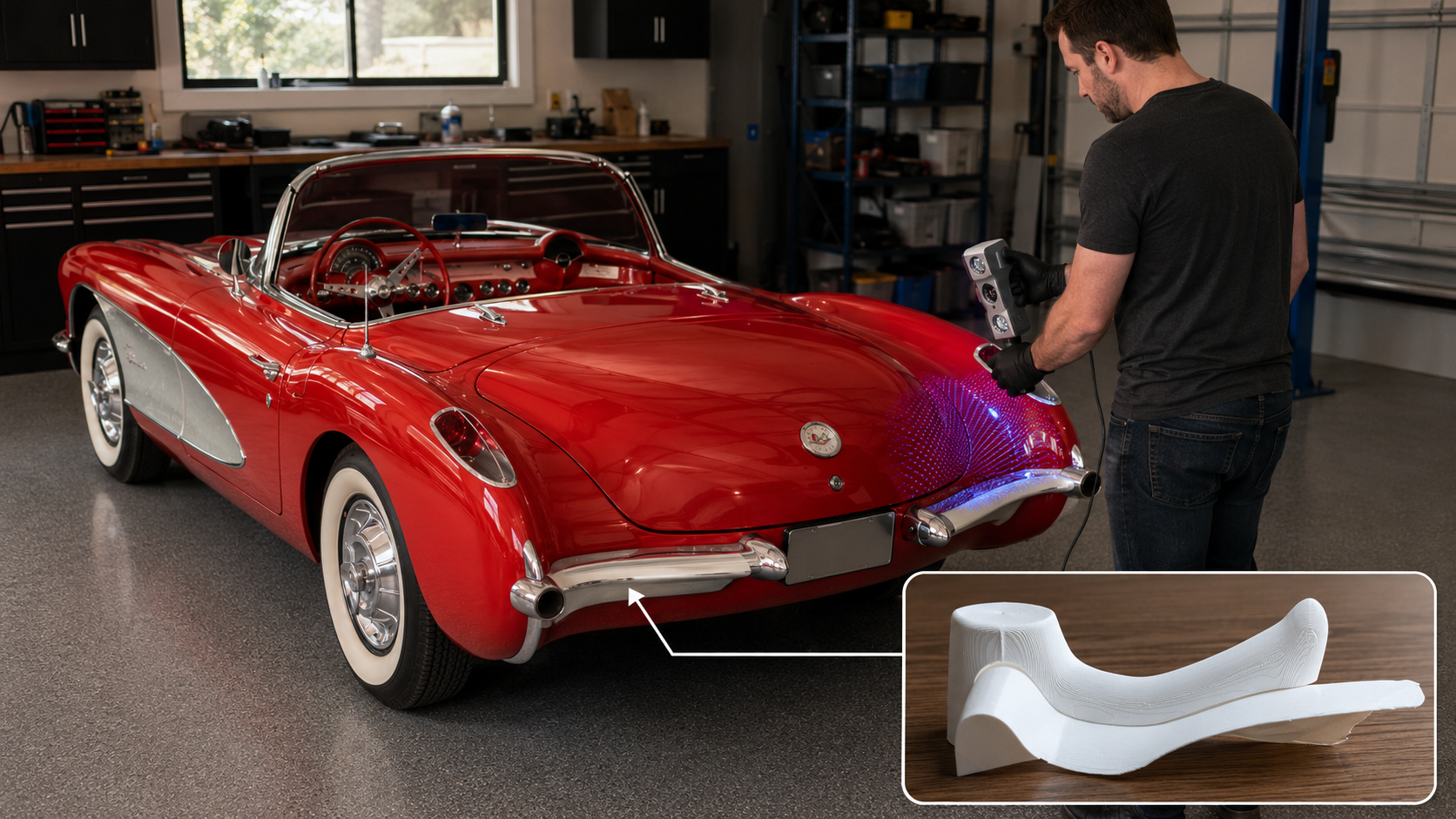
Best $150 I’ve Ever Spent on This Car Classic car projects have a way of turning simple problems into complicated ones. A
Why Domestic Tooling and Prototype Fabrication Still Matter Low-cost overseas tooling can be tempting. When a quote comes in dramatically cheaper than

Using Development Boards in Early Hardware Prototypes Other Parts of this series: Part 2 – Choosing The Right Development Board Part 3