Filler Primer
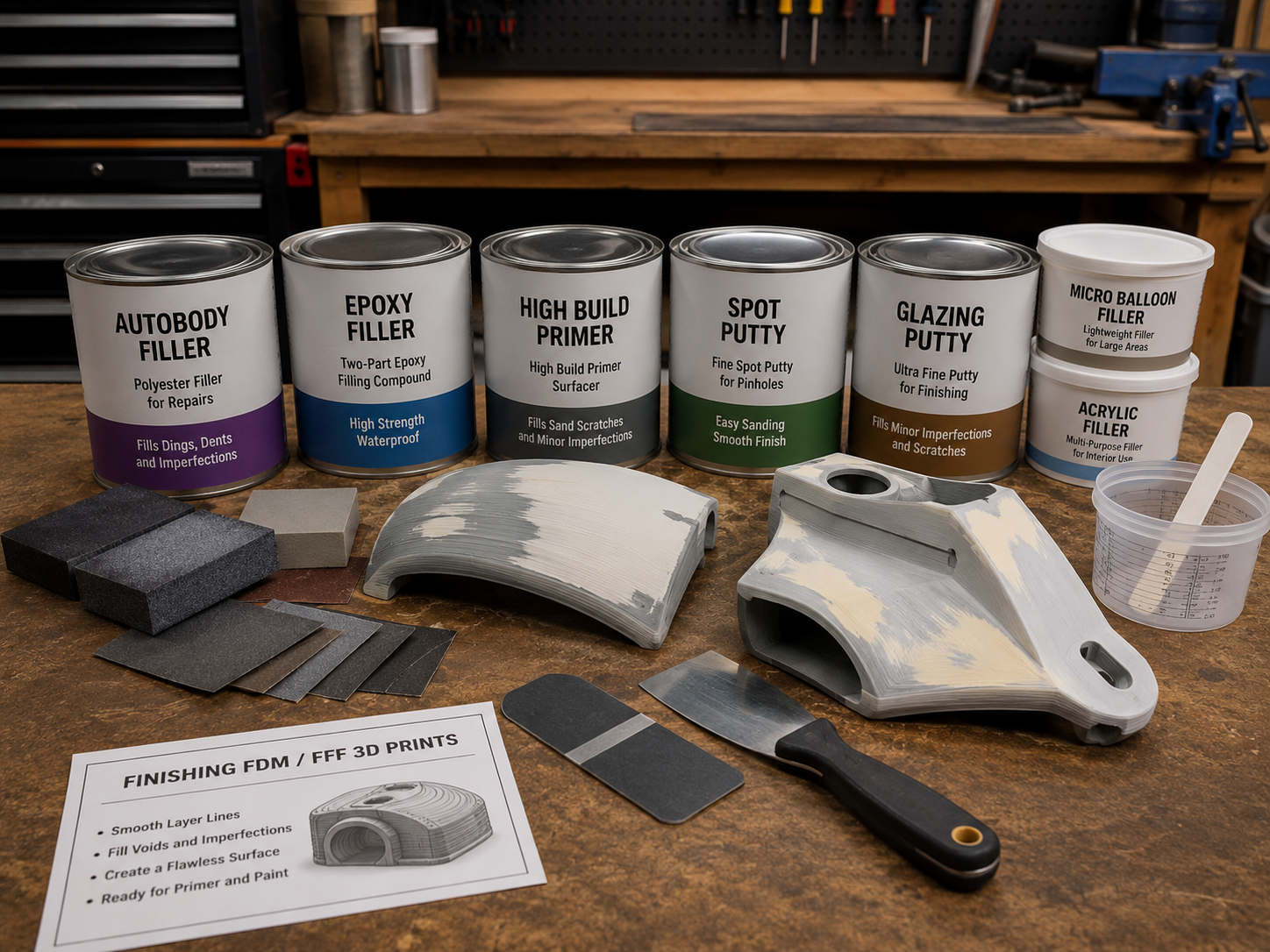
Filler primer is one of the easiest finishing products to understand. It is a primer with more solids than ordinary paint, designed to fill small scratches, sanding marks, and minor surface texture.
Common Uses
Filler primer is useful for:
- Visual prototypes
- Display models
- Light layer-line filling
- Cosmetic parts
- Paint preparation
- Small models
- Final surfacing after heavier filler work
Advantages
Filler primer is popular because it is:
- Easy to apply
- Widely available
- Relatively inexpensive
- Sandable
- Fast compared with heavier coatings
- Good for cosmetic improvement
- Useful between sanding steps
- Compatible with many paint systems
For many PLA, PETG, ABS, ASA, or PVB parts, filler primer can make a printed model look much better with modest effort.
Disadvantages
Filler primer has limits:
- It does not fill deep layer lines quickly
- Multiple coats may be required
- It is not a structural coating
- It may chip or scratch
- Solvents may affect some plastics
- It can obscure fine detail if overapplied
- It does not seal as well as epoxy
- Durability is limited without a proper topcoat
Filler primer is best for light cosmetic surfacing, not heavy industrial protection.
JaegerTech View
Filler primer is a practical finishing step for prototypes and display parts. For foundry patterns, molds, or industrial tools, it is usually part of a larger coating system rather than the entire solution.
High-Build Primer and Spray Putty
High-build primer and spray putty sit between ordinary filler primer and heavier body filler. These products build more material on the surface and can fill more visible layer lines and sanding marks.
Common Uses
High-build products are useful for:
- Large visual models
- Pattern surfacing
- Prototype finishing
- Print section cleanup
- Layer-line reduction
- Cosmetic parts before paint
- Automotive-style finishing workflows
Advantages
Benefits include:
- Higher build than normal primer
- Good sandability
- Faster surfacing of rough prints
- Useful for large parts
- Helps reduce repeated primer cycles
- Good intermediate step before paint
Disadvantages
Limitations include:
- Can obscure detail
- Can crack if applied too thick
- Solvent sensitivity
- Requires sanding
- Not a structural coating
- May need topcoat
- May not bond well to poorly prepared surfaces
JaegerTech View
High-build primer and spray putty are useful for making printed parts look better faster. They are especially helpful on large FDM parts where normal primer would take too many coats.
Body Filler and Glazing Putty
Body filler and glazing putty are used to fill larger defects, seams, gaps, low spots, and layer-line texture that primer alone cannot handle.
Common Uses
These materials are useful for:
- Bonded section seams
- Large print layer lines
- Gaps and low spots
- Pattern repairs
- Cosmetic prototypes
- Mold master finishing
- Surface shaping
- Large-format print cleanup
Advantages
Body filler and glazing putty offer:
- Excellent filling ability
- Fast shaping
- Good sandability
- Familiar automotive workflow
- Useful for large parts
- Good seam correction
- Ability to reshape surfaces
Glazing putty is especially useful for small pinholes, scratches, and final correction before primer.
Disadvantages
Drawbacks include:
- Labor-intensive sanding
- Not structural by itself
- Can crack if applied too thick
- May shrink
- Can detach if surface prep is poor
- Strong odor and PPE requirements
- Can add weight
- Can hide dimensional details
JaegerTech View
For large-format prints, body filler and glazing putty are often unavoidable if the customer needs a smooth cosmetic or pattern-grade surface. They are powerful finishing tools, but they require skilled sanding and shaping.
About the Author: jaegertechgroup.com

STAY IN THE LOOP
Subscribe to our free newsletter.
Leave A Comment
Using 3D Printing to De-Risk Production Tooling Production tooling is expensive for a reason. Whether the final process is injection molding, thermoforming,
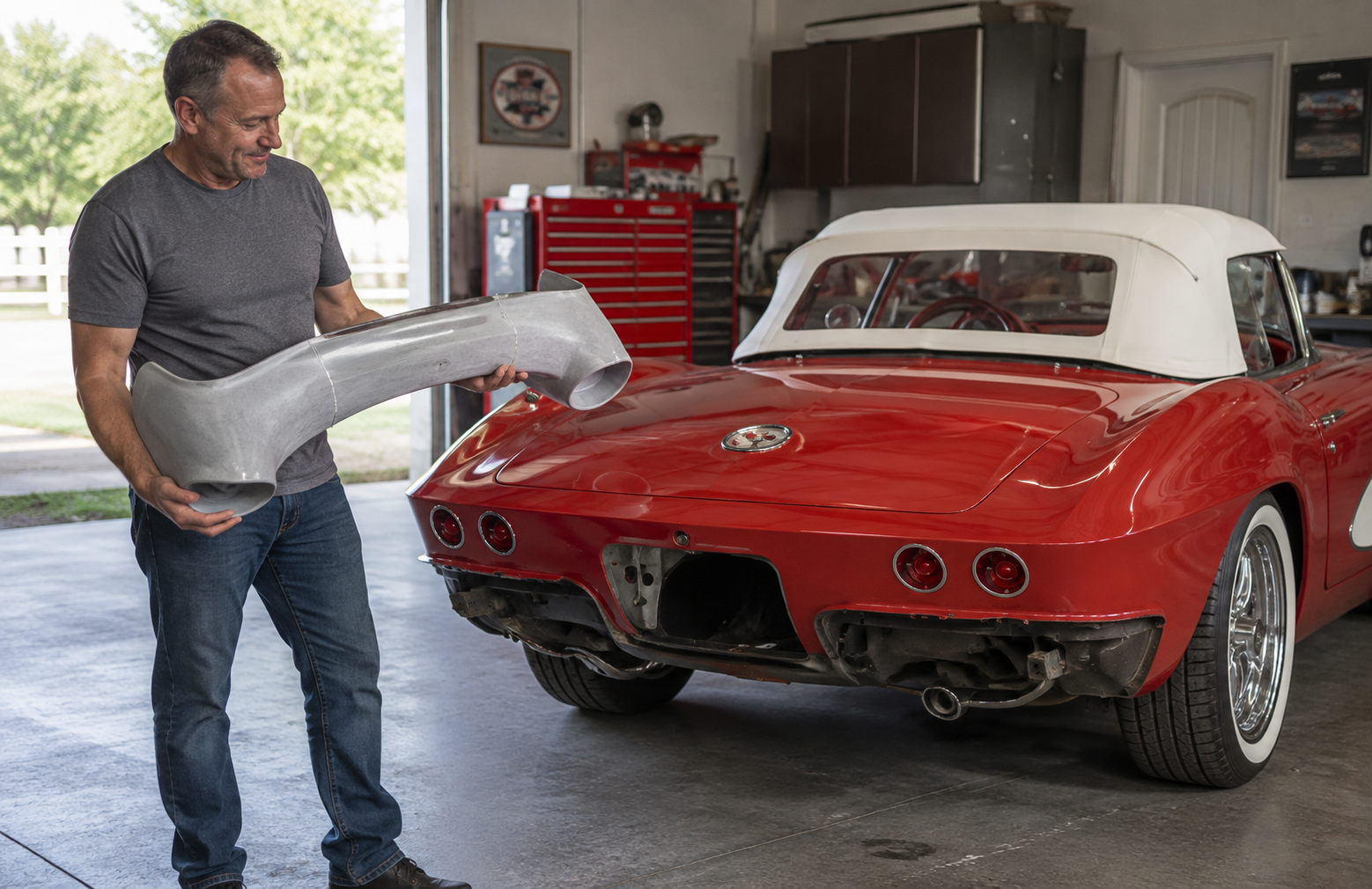
From 3D Scan to Perfect Fit: The Corvette Bumper Project Moves Forward A few weeks ago, we shared a project that demonstrated
Great Conversations and New Connections at SMD in Huntsville Last week, Janelle and I had the opportunity to attend SMD in Huntsville,
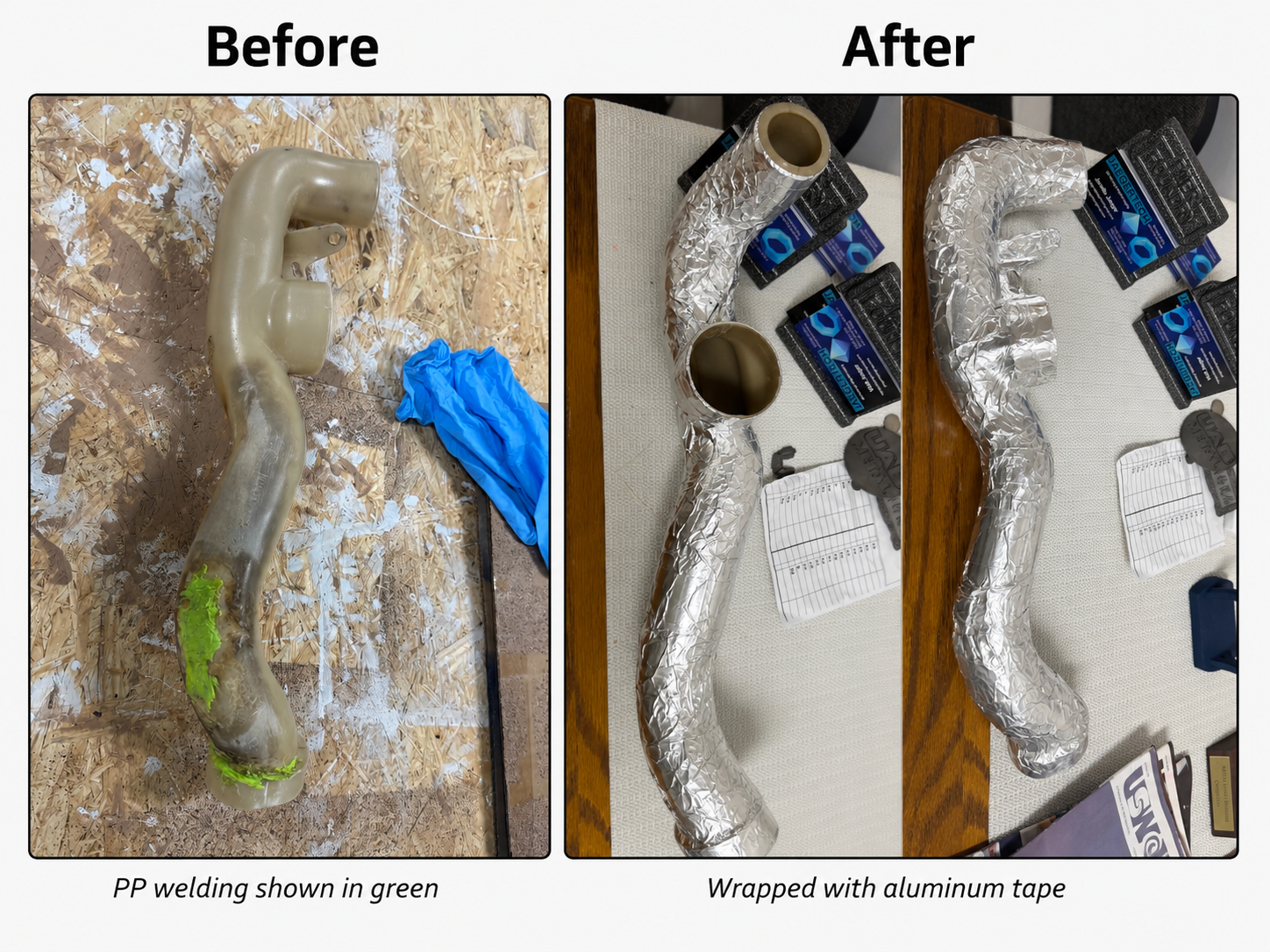
Repairing a Discontinued Polypropylene ATV Snorkel With Plastic Welding When a customer could not locate a replacement snorkel for his 21-year-old ATV,