
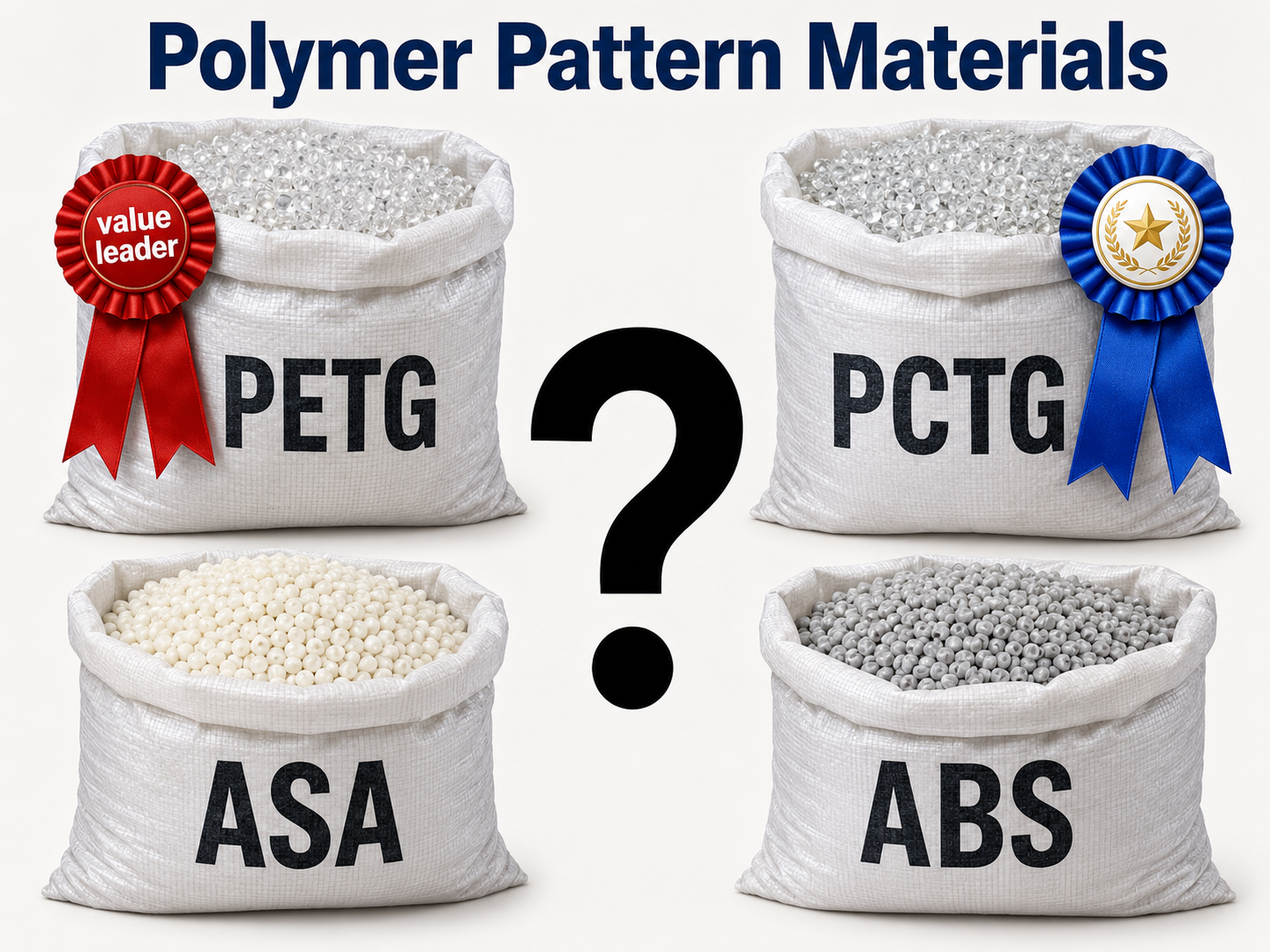
3D Printed Sand Casting Patterns: Choosing the Right Material for Reusable Tooling
By JaegerTech – Practical Guidance for Foundries and Pattern Makers
Over the past several months, we’ve received a steady stream of inquiries from foundries, pattern makers, and 3D printing enthusiasts about the best materials for large, reusable 3D printed sand casting patterns. Questions typically focus on warp resistance, durability, cold-weather performance, sandability, and compatibility with common binder systems.
Because there wasn’t a clear, practical, and authoritative comparison available, we created one. This guide draws from real-world testing, shop experience, and material science to help you make better decisions.
Why Material Choice Matters for Large Printed Patterns
For reusable patterns, especially large ones, the biggest challenges aren’t just tensile strength. They include:
- Print warp and curling
- Layer delamination
- Dimensional stability across temperature swings
- Impact resistance during handling and ramming
- Compatibility with chemically bonded sands (particularly furan and phenolic no-bake systems)
- Long-term durability under repeated use
We evaluated four main families: PETG, PCTG, ABS, and ASA (plus carbon-filled variants).
Material Comparison at a Glance
| Material | Polymer Family | Key Advantages | Main Concerns | Sandability | Warp Risk (Large Prints) | Cold-Weather Suitability | Foundry Recommendation |
|---|---|---|---|---|---|---|---|
| PETG | Copolyester | Low warp, good tolerance, easy to print | Gummy sanding, moderate heat resistance | Fair-Poor | Low | Good | Strong low-cost utility option |
| PCTG | Copolyester | Excellent toughness, impact resistance, low warp | Higher cost, fair sanding | Fair | Low | Very Good | Best overall starting point |
| ABS | Styrenic | Good sandability, machinable, heat resistance | Warp on large parts, binder concerns | Good | Medium-High | Fair | Indoor/controlled use only |
| ASA | Styrenic | Sandability + UV resistance | Similar to ABS + fumes | Good | Medium | Good | Good when UV/sandability matter; test binders |
| Carbon-Filled | Various | Added stiffness | Abrasive, more brittle, directional | Fair | Low–Medium | Good–Very Good | Optional upgrade; not a cure-all |
PCTG stands out as our top recommendation for most large reusable patterns, especially in variable or cold environments. It offers the best balance of low warp, toughness, and durability. PETG remains an excellent lower-cost alternative.
Important Real-World Observations
Cold Weather and Shrinkage All polymers shrink as temperatures drop. There is no magic filament that eliminates cold-weather contraction, condensation when moving patterns into a warm shop, or resulting dimensional variation. Carbon fiber helps with stiffness but does not solve thermal contraction.
Practical solutions that work well:
- A dedicated heated pattern shed (highly recommended)
- Insulated storage
- Simple electric blankets set to low (surprisingly effective for maintaining temperature)
- Proper acclimation before molding
Furan and Phenolic No-Bake Binder Compatibility Clean green sand is generally not aggressive to these plastics. However, chemically bonded no-bake systems (especially furan-based) can be problematic for styrenics.
We’ve observed over time that ABS and ASA patterns can show clouding, surface breakdown, and even matrix degradation when exposed repeatedly to furan resins or their residues. This matches published chemical resistance data that flags furfuryl alcohol (a key component in many furan binders) as incompatible or severely affecting ABS.
PETG and PCTG have proven more predictable in shop use, though we still recommend abrasion, proper cleaning, and coupon testing with your specific sand, binder, and coating system.
Epoxy Coatings and Sealing Coatings help significantly but are not invincible. Wear, chipping, and micro-cracks can occur over repeated use. Always seal backsides, edges, and fastener areas too.
Construction Best Practices for Long-Term Success
Material choice is only part of the equation. For reliable large patterns we recommend:
- Printed geometry faces on a stable backing (plywood, phenolic, aluminum, etc.)
- Mechanical registration (dowels, keys, bolts)
- Adequate wall thickness + ribbing
- Thoughtful print orientation
- Full sealing of all surfaces
- Documented inspection and molding temperature ranges
- Acclimation protocols for cold-stored patterns
Final Recommendations
- Best default for most shops: PCTG
- Budget-friendly workhorse: PETG
- Carbon-filled: Useful upgrade for stiffness on very large or flat surfaces, but expect trade-offs in sanding and cost
The best long-term solution combines smart material selection with good process control and storage practices.
We hope this guide helps answer the questions we’ve been receiving. If you’re working on 3D printed foundry patterns and have specific questions about your setup, sand system, or application, feel free to reach out, — we’re happy to help!
JaegerTech – Building better tooling through practical additive manufacturing.
Want this and more in a downloadable PDF? Click here to download the guide.
About the Author: jaegertechgroup.com

STAY IN THE LOOP
Subscribe to our free newsletter.
Leave A Comment
Beyond ESP32 and Raspberry Pi: Designing Electronics for Real Products Development boards are one of the best tools available for product development.
From MVP to Market: How Consumer Electronics Become Real Products A working MVP is an important milestone. It proves that the idea
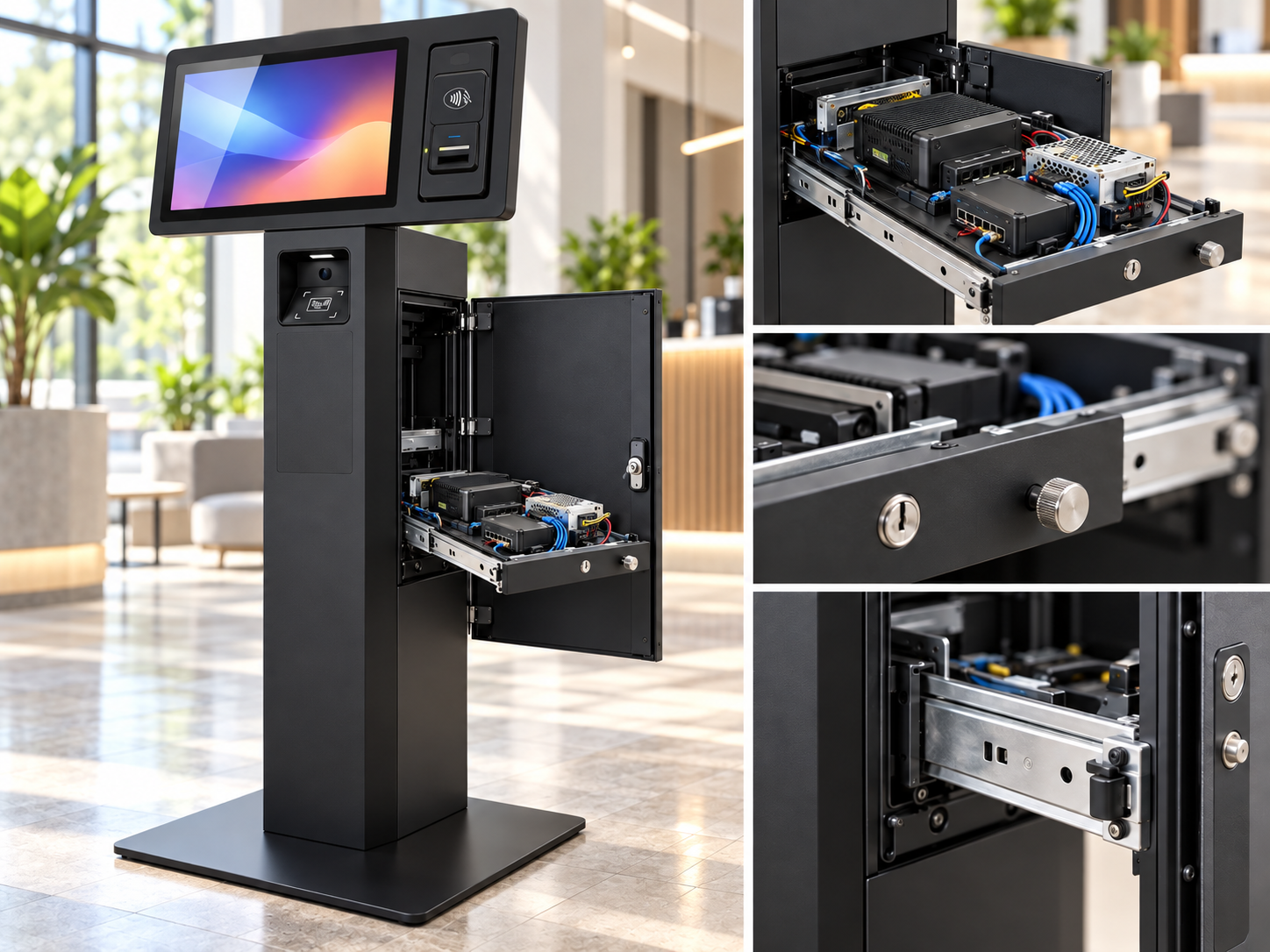
Designing Products for Serviceability, Maintenance, and Field Repair A product can work perfectly on the day it is delivered and still be
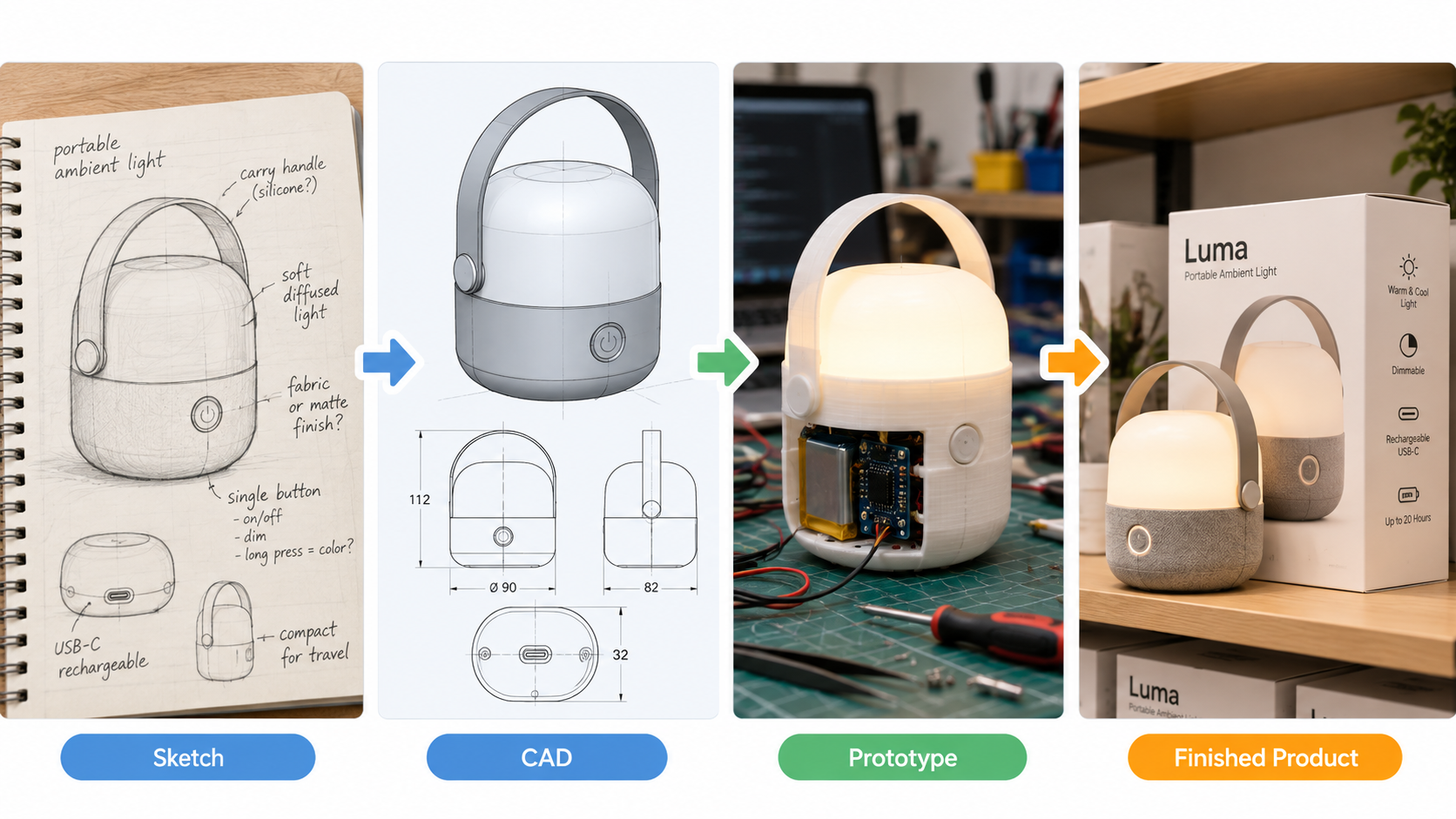
From Prototype to Small-Batch Production: What Changes After the First Part Works Getting the first prototype to work is a major milestone.