
Why 3D Printed Patterns Are Changing Foundry Work
Foundry work has always depended on patternmaking. Before molten metal ever reaches a mold, someone has to create the geometry that defines the casting. That pattern has to account for shrinkage, draft, parting lines, core prints, machining stock, surface finish, sand handling, and the realities of how a foundry actually works.
For decades, that meant skilled patternmakers working with wood, urethane board, metal, fiberglass, or manually modified tooling. Those methods still matter, and in many cases they remain the correct choice. But the industry is changing. Skilled patternmakers are harder to find, legacy tooling is often damaged or missing, and manufacturers increasingly need castings faster than traditional tooling schedules allow.
This is where 3D printed foundry patterns are becoming a serious industrial tool.
At Jaeger Technology Group, we see 3D printed patterns not as a replacement for patternmaking knowledge, but as a way to apply that knowledge faster, more flexibly, and often at much lower upfront cost.
3D Printing Shortens the Distance Between CAD and Casting
Traditional patternmaking can be time-consuming, especially when the part is large, complex, or still under development. If a customer needs one casting, a prototype casting, or a short production run, the cost and lead time of conventional tooling can become difficult to justify.
Large-format 3D printing changes that equation.
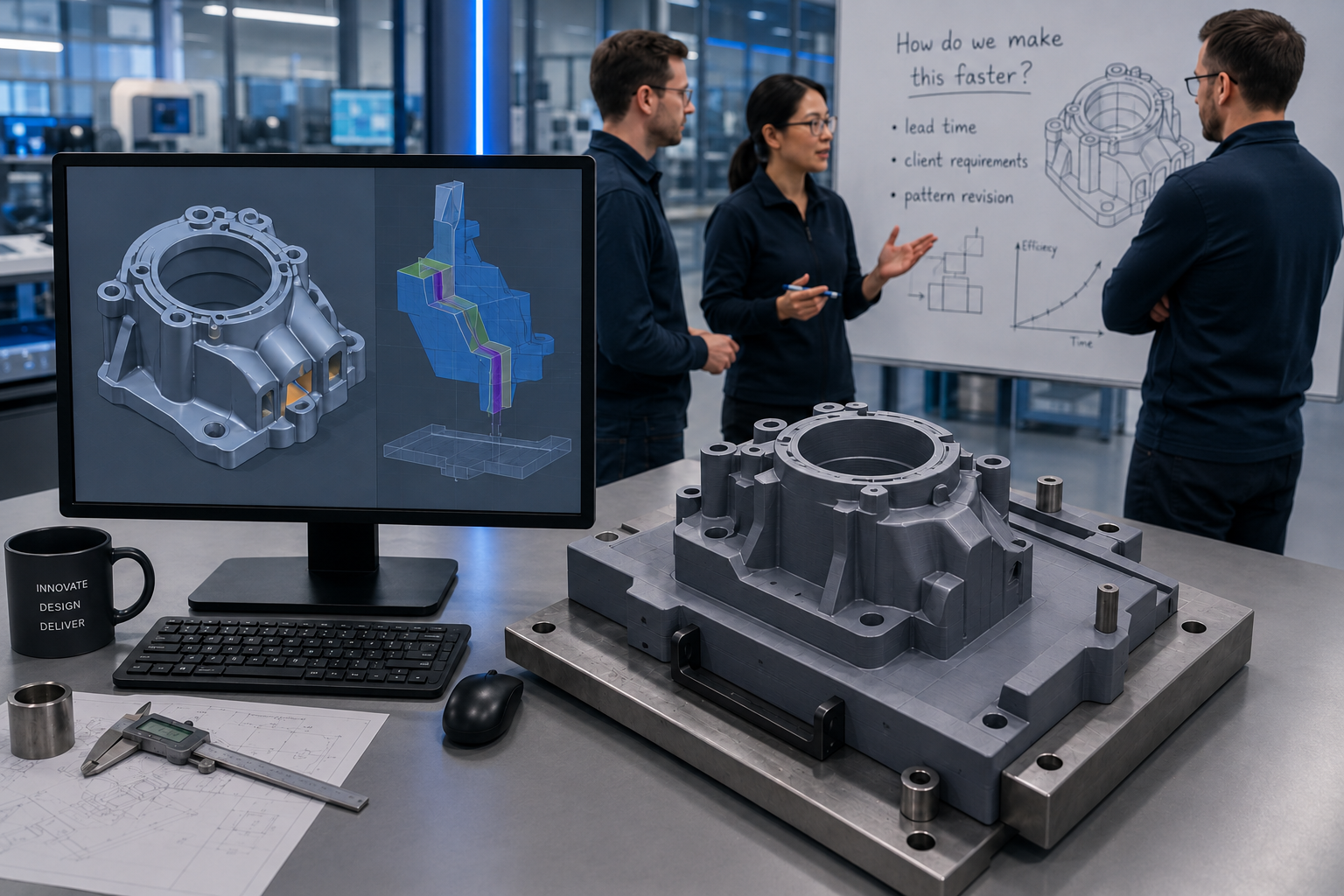
A digital model can be adjusted for casting, printed as a physical pattern, finished, sealed, and delivered to the foundry without first cutting a full pattern from wood or tooling board. This can be especially useful for:
- Replacement parts
- Legacy industrial components
- Pump housings
- Machine repair parts
- Agricultural equipment castings
- Prototype castings
- Short-run production
- Obsolete components
- Core boxes
- Loose patterns
- Match plate development
- One-off or low-volume castings
In many cases, the part does not need to wait for expensive hard tooling before the first casting can be evaluated. That allows manufacturers, engineers, and foundries to test form, fit, and function earlier in the process.
The Real Value Is Not Just the Printer
A common mistake is assuming that 3D printed patternmaking is simply a matter of printing the customer’s CAD file.
That is rarely true.
A part model and a casting pattern are not the same thing. A casting pattern must be modified for the process that will produce the metal part. Depending on the foundry process and alloy, the pattern may need shrink allowance, draft, machining stock, core print geometry, split lines, alignment features, mounting provisions, gating considerations, and finishing allowances.
This is where the difference between a general 3D print shop and an experienced patternmaking partner becomes important.
A 3D printer can reproduce geometry. It does not automatically understand foundry practice.
A good pattern still requires judgment.
Shrink, Draft, and Core Prints Still Matter
Metal shrinks as it cools. Sand molds need draft so the pattern can be removed cleanly. Cores need reliable support. Deep pockets, vertical walls, undercuts, ribs, and internal cavities can create real molding challenges.
Those requirements do not disappear because the pattern is 3D printed.
For example, a customer may send a CAD model of the final machined part. That model may be accurate for machining or assembly, but it may be completely unsuitable as a foundry pattern without changes. The pattern may need to be scaled for the alloy, adjusted for machining stock, split into cope and drag sections, modified for a core, or changed to avoid molding defects.
A printed pattern can only perform well if those details are addressed before printing.
This is one of the major advantages of combining additive manufacturing with real patternmaking knowledge. Digital tools allow us to make those changes directly in CAD before committing material and time to the pattern.
Large-Format Printing Makes Industrial Patterns Practical
Small desktop printers are useful for models and prototypes, but foundry work often requires much larger parts. Many industrial castings are too large for ordinary machines, or they require patterns that must be strong enough to survive handling, ramming, finishing, transport, and repeated molding.
Large-format FDM/FFF printing allows patterns to be built in sections or, when possible, as single large pieces. These parts can then be bonded, reinforced, filled, sanded, coated, and sealed.
At Jaeger Technology Group, we regularly work with large-format 3D printing for foundry and industrial applications. The goal is not simply to print big parts. The goal is to create usable tooling that fits the actual manufacturing process.
That may include:
- Thickened pattern sections for durability
- Internal reinforcement
- Bonded multi-piece construction
- Alignment features
- Replaceable or modular pattern sections
- Epoxy sealing
- Sanding and surface finishing
- Mounting to boards or match plates
- Core box development
- Pattern repair or duplication
The printed part is only one part of the workflow. The finishing and process planning are just as important.
Surface Finish Can Be Engineered
Foundry patterns do not always need a cosmetic finish, but they do need an appropriate surface for the molding process. Raw FDM prints have visible layer lines. For some rough castings, that may be acceptable. For other work, the surface needs to be improved.
Printed patterns can be sanded, filled, primed, epoxy coated, or otherwise sealed to create a smoother and more durable surface. Epoxy coatings are especially useful because they can help seal the printed plastic, reduce porosity, improve abrasion resistance, and create a more mold-friendly surface.
The required level of finishing depends on the casting, the sand system, the foundry’s expectations, and the end use of the part.
A one-off industrial repair casting may not need the same pattern finish as a higher-volume production tool. The key is matching the level of finishing to the project instead of overbuilding or underbuilding the pattern.
3D Printed Patterns Are Ideal for Legacy and Replacement Parts
One of the strongest applications for 3D printed patterns is replacement casting work.
Many manufacturers still rely on old equipment where original tooling no longer exists. Drawings may be incomplete. The original manufacturer may be out of business. The part may be worn, broken, or modified over time. In those cases, recreating a casting pattern can be difficult using only traditional methods.
A modern workflow may include:
- Reviewing the broken or worn part
- Measuring or 3D scanning the geometry
- Rebuilding the model in CAD
- Adding casting allowances
- Designing the pattern or core box
- Printing the tooling
- Finishing and sealing the pattern
- Sending it to the foundry for molding and casting
This can give older equipment a practical path back into service without requiring a full traditional tooling program.
For industries where downtime is expensive, that can be extremely valuable.
Prototype Castings Become More Accessible
Many product development teams need metal parts before they are ready for full production tooling. Machining a prototype from billet may be possible, but it can be expensive, wasteful, or mechanically different from the intended casting. Traditional foundry tooling may be too expensive before the design is proven.
3D printed patterns help bridge that gap.
They allow engineers and manufacturers to test cast geometry earlier. If the first version needs changes, the digital model can be revised and a new pattern can be printed. This is especially helpful for companies developing housings, brackets, mechanical components, manifolds, impellers, art castings, equipment parts, or specialized industrial components.
The ability to iterate is one of the strongest advantages of additive manufacturing in foundry support.
It Helps Foundries Too
3D printed patterns are not just useful for customers. They can also help foundries.
Foundries are often asked to quote jobs where the customer has incomplete drawings, no pattern, a damaged part, or unrealistic expectations about lead time. A capable 3D printed pattern partner can help close that gap by turning digital files or physical parts into usable tooling.
This can help foundries accept jobs they might otherwise turn away.
Instead of spending internal time on every pattern development problem, a foundry can work with a specialized shop that understands CAD, additive manufacturing, finishing, and foundry requirements. That allows the foundry to focus on molding, pouring, metallurgy, and casting quality.
Printed Patterns Are Not Always the Right Answer
3D printing is powerful, but it is not magic.
For very high-volume production, traditional tooling may still be better. Metal patterns, urethane board tooling, fiberglass patterns, or CNC-machined tooling may offer longer life, tighter repeatability, or better economics over many production cycles.
A printed pattern may also need additional reinforcement or finishing if it will be used repeatedly in aggressive molding conditions.
The right answer depends on the project.
Important questions include:
- How many castings are needed?
- What alloy will be poured?
- What molding process will be used?
- How large is the part?
- Does the part need cores?
- Is the customer starting from CAD, drawings, or a physical sample?
- How much machining stock is needed?
- How smooth does the casting need to be?
- Is this a prototype, replacement part, or production job?
- How many molding cycles must the pattern survive?
A good project review should answer those questions before committing to a tooling strategy.
The Best Results Come From Hybrid Thinking
The future of foundry patternmaking is not simply “old methods versus new methods.”
The best results often come from combining both.
A project may use 3D printed pattern sections mounted to a traditional board. It may use printed core boxes with conventional finishing. It may use CNC-cut features combined with printed complex geometry. It may use digital scanning to recreate a damaged component, followed by traditional foundry judgment to make the pattern usable.
That hybrid approach is where 3D printing becomes especially valuable.
It gives patternmakers, engineers, and foundries another tool; one that is fast, flexible, and well suited to complex geometry.
Why This Matters Now
The foundry industry is under pressure. Skilled labor is harder to find. Lead times are tight. Many older industrial parts still need to be made, repaired, or replaced. Manufacturers want lower tooling cost, faster development cycles, and more flexible production options.
3D printed patterns help answer those problems.
They allow companies to move from CAD to casting faster. They make short-run casting projects more practical. They support legacy equipment repair. They allow more design iteration before hard tooling. And when handled correctly, they preserve the essential patternmaking principles that foundry work still depends on.
The printer is not the patternmaker.
But in the hands of someone who understands foundry work, large-format 3D printing is becoming one of the most useful tools in modern patternmaking.
How Jaeger Technology Group Can Help
Jaeger Technology Group works with manufacturers, foundries, engineers, universities, and industrial customers who need practical solutions for real production problems.
Our work includes 3D printed foundry patterns, core boxes, casting support, large-format printing, prototype tooling, short-run production, jigs, fixtures, and applied manufacturing support.
We can help review your part, drawing, damaged casting, or CAD file and determine whether a 3D printed pattern, hybrid pattern, core box, or other tooling approach makes sense.
If you have a casting project, legacy part, damaged pattern, or prototype that needs to move forward, Jaeger Technology Group can help turn the idea into a practical manufacturing path.
Contact Jaeger Technology Group to discuss your next foundry pattern, core box, or industrial casting support project.
About the Author: jaegertechgroup.com

STAY IN THE LOOP
Subscribe to our free newsletter.
Leave A Comment
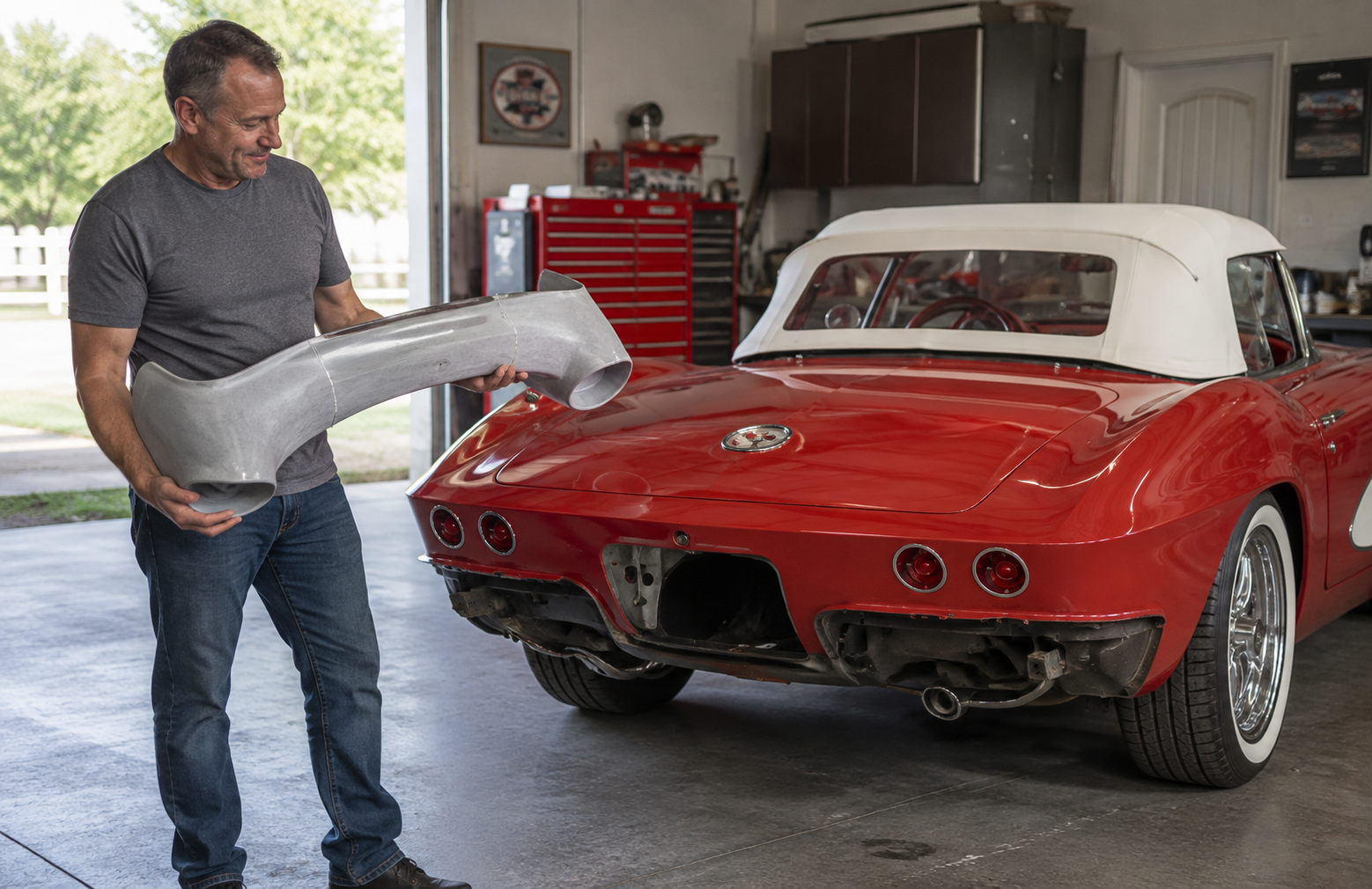
From 3D Scan to Perfect Fit: The Corvette Bumper Project Moves Forward A few weeks ago, we shared a project that demonstrated
Great Conversations and New Connections at SMD in Huntsville Last week, Janelle and I had the opportunity to attend SMD in Huntsville,
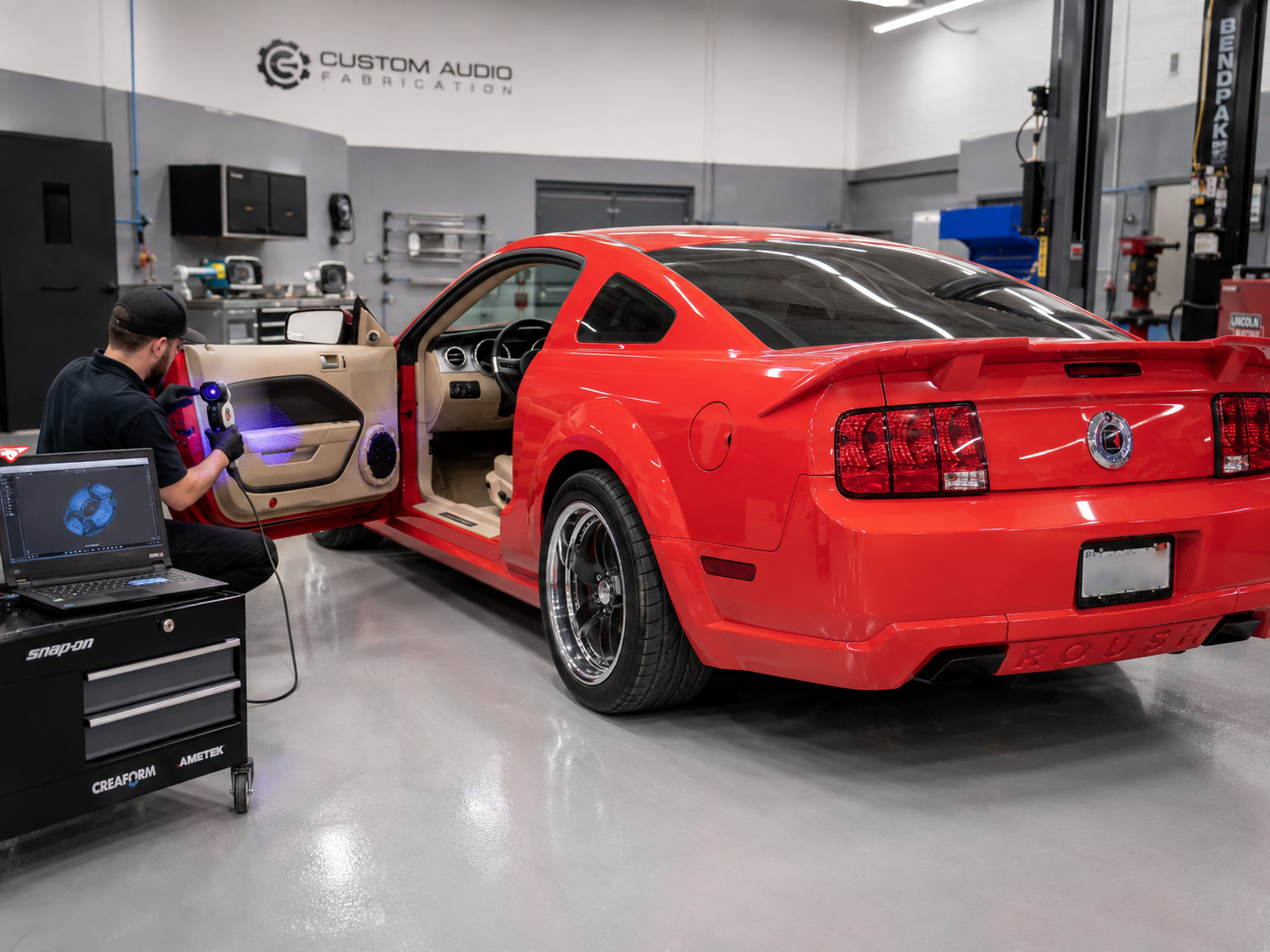
Custom 3D Printed Speaker Pods for a 2005 Ford Mustang Sometimes the problem is not the speaker. It is everything around it.
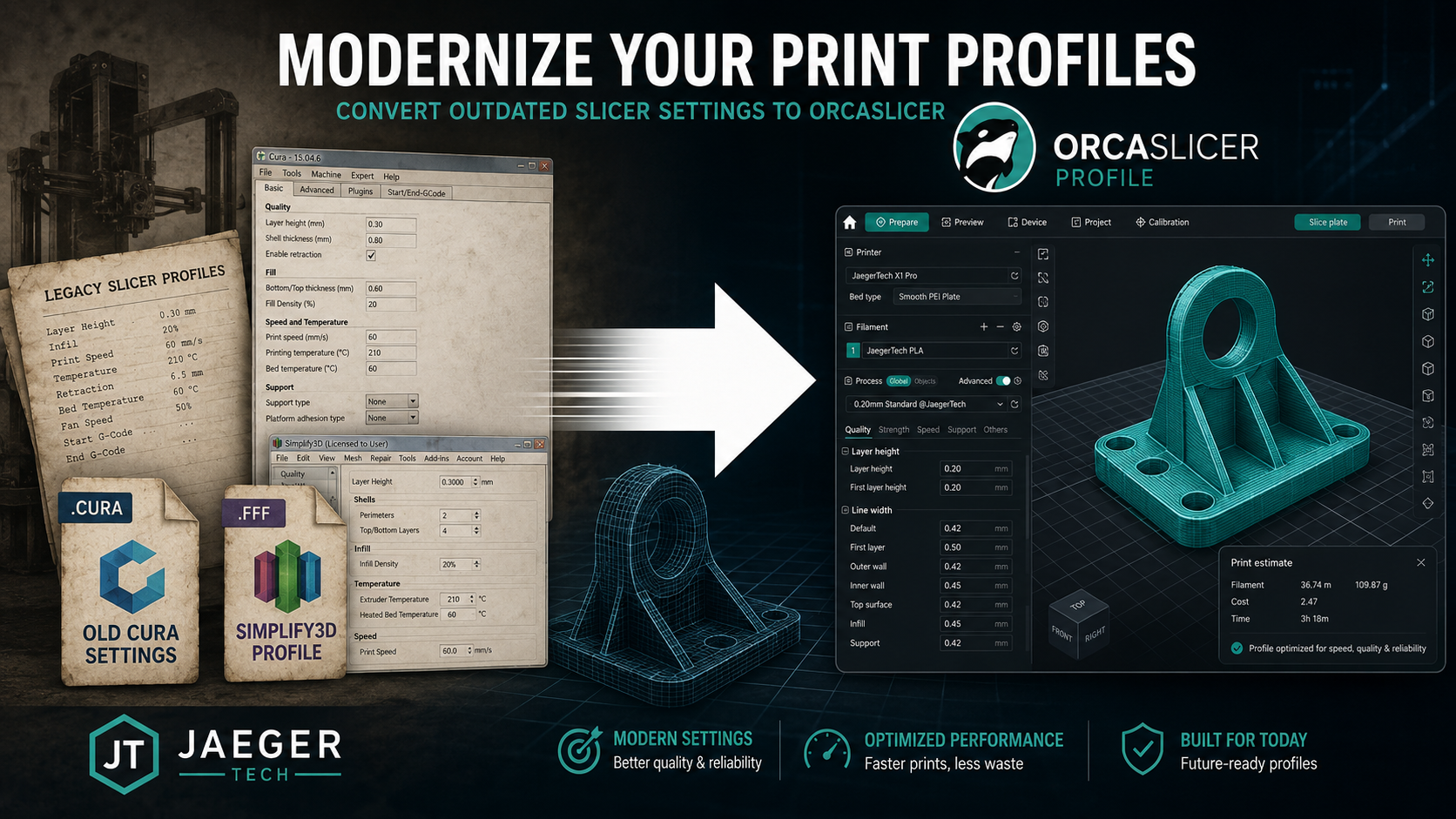
Still Using Cura or Simplify3D? JaegerTech Can Help Build an OrcaSlicer Profile for Your 3D Printer A 3D printer does not become