
3D Printed Masking Fixtures for Painting, Coating, and Finishing
Painting, coating, bonding, plating, and finishing operations often depend on repeatability. If operators have to mask the same area by hand every time, small differences can lead to rework, scrap, uneven coverage, overspray, blocked features, or inconsistent cosmetic results.
At Jaeger Technology Group LLC, we produce 3D printed masking fixtures, paint masks, coating shields, plugs, caps, surface protection tools, spray fixtures, part nests, and finishing aids for manufacturers, machine shops, automotive suppliers, industrial companies, product developers, and production teams.
A good masking fixture helps the operator protect the right area the same way every time.
Why Use 3D Printed Masking Fixtures?
Traditional masking methods can work, but they often rely heavily on operator skill, tape placement, hand trimming, or improvised shop-floor solutions. That may be acceptable for one part, but it becomes a problem when the same operation has to be repeated over and over.
3D printed masking fixtures can help with:
- Repeatable masking
- Faster setup
- Reduced operator variation
- Cleaner paint or coating boundaries
- Less overspray
- Better protection of critical features
- Reduced rework
- Easier training
- More consistent cosmetic results
- Better part handling during finishing
For low-volume production, pilot builds, custom parts, and frequently revised products, 3D printing can be a practical way to create masking tools quickly.
Paint Masks and Coating Shields
Paint masks and coating shields help protect areas that should not receive paint, coating, adhesive, primer, or surface treatment.
3D printed tools can support:
- Paint masking
- Powder coating support
- Spray shielding
- Adhesive masking
- Primer control
- Texture control
- Selective coating
- Logo or label area protection
- Critical surface protection
- Connector and opening protection
These tools are especially useful when the same shape, edge, or feature must be masked repeatedly.
Plugs, Caps, and Feature Protection
Many finishing operations require holes, threads, ports, bosses, slots, connectors, or mating surfaces to be protected.
JaegerTech can produce:
- Hole plugs
- Thread protection caps
- Boss covers
- Port protectors
- Slot masks
- Edge guards
- Connector covers
- Surface shields
- Temporary protective caps
- Custom feature masks
Depending on the application, these parts may be rigid, flexible, reusable, disposable, or designed for a specific production run.
Part Nests and Spray Fixtures
Sometimes the masking problem is not just what to protect. It is also how to hold the part during finishing.
3D printed nests and spray fixtures can help:
- Hold parts at the correct angle
- Improve access for painting or coating
- Keep parts from shifting
- Reduce handling damage
- Support batch processing
- Present parts consistently
- Protect finished surfaces
- Improve operator workflow
A good fixture can reduce setup time and make the finishing process more repeatable.
Masking Fixtures for Automotive and Industrial Parts
Automotive and industrial production often includes repeated finishing steps where consistency matters.
3D printed masking tools can support:
- Trim parts
- Brackets
- Covers
- Housings
- Panels
- Nameplate areas
- Mounting surfaces
- Sealing surfaces
- Decorative features
- Assembly components
- Prototype and pre-production parts
These tools can be especially useful for decal, logo, paint, coating, and finishing operations where appearance and placement matter.
Masking Fixtures for Bonding and Adhesive Operations
Masking is not only for paint. Bonding and adhesive operations also benefit from consistent protection and controlled application areas.
3D printed tools can support:
- Adhesive placement control
- Bond line protection
- Surface preparation masks
- Sealant masking
- Fixture-assisted bonding
- Controlled gap support
- Temporary protection during cure
- Repeatable adhesive application
For manufacturing teams, this can improve consistency and reduce cleanup time.
Materials for Masking Fixtures
The right material depends on the finishing process.
Important questions include:
- Will the fixture contact wet paint, powder, adhesive, or solvent?
- Will it see heat?
- Will it be reused or disposable?
- Does it need flexibility?
- Does it need to avoid scratching the part?
- Does it need chemical resistance?
- Does it need dimensional stability?
- Does it need to be cleaned between uses?
Possible materials include:
- PLA or PETG for simple prototype masks and short-term tools
- ASA for durable and UV-resistant applications
- ABS or ABS blends for general industrial tooling
- PCTG for tough functional fixtures
- TPU for flexible masks, soft contact surfaces, and protective features
- Nylon or carbon-fiber-filled nylon for stronger fixtures
- Specialty materials where heat or chemical resistance is required
For some jobs, a hybrid tool may work best, combining a printed body with rubber pads, metal inserts, fasteners, labels, handles, or replaceable wear surfaces.
Heat, Solvents, and Process Limits
Masking fixtures must be matched to the finishing environment. A tool used near room temperature paint may not need the same material as a tool used near heat, powder coating, aggressive solvent, or repeated cleaning.
A printed masking tool may not be appropriate if the process involves:
- High oven temperatures
- Strong solvents
- Abrasive blasting
- High clamping force
- Critical certified coating requirements
- Long-term chemical immersion
- Tight dimensional control at elevated temperature
In those cases, machining, metal tooling, silicone tooling, or another process may be better. JaegerTech can help evaluate whether a printed, machined, cast, or hybrid masking tool makes sense.
Prototype and Production Masking Support
Masking tools are useful in both development and production.
For prototypes, they can help test:
- Paint layouts
- Coating boundaries
- Adhesive areas
- Cosmetic features
- Surface preparation methods
- Assembly sequencing
For production, they can help:
- Reduce operator variation
- Standardize masking procedures
- Improve training
- Reduce rework
- Speed setup
- Protect critical areas
- Support consistent finishing
This makes masking fixtures a practical bridge between product development and manufacturing.
Large-Format Masking and Finishing Fixtures
Some parts are too large for small-format printers or standard fixtures. JaegerTech has large-format 3D printing capability for bigger masking tools, nests, spray fixtures, and finishing aids.
Large-format tools can support:
- Large covers
- Panels
- Trim pieces
- Industrial housings
- Equipment guards
- Composite parts
- Automotive or aerospace tooling
- Foundry pattern finishing
- Large prototype parts
Large fixtures require planning around stiffness, sectioning, bonding, handling, surface finish, and cleanup.
Why Work With JaegerTech?
JaegerTech brings practical manufacturing experience to masking and finishing tools.
We bring:
- 30+ years of industrial and technical experience
- Additive manufacturing experience dating back to the early days of the industry
- Large-format 3D printing capability
- Practical fixture and tooling design experience
- Jigs, fixtures, prototypes, and production support experience
- Foundry and patternmaking knowledge
- Machining, casting, and DMLS/metal additive support where appropriate
- Real-world problem solving, not just file printing
We understand that a masking fixture has to work for the operator, the process, and the finished part.
Need a 3D Printed Masking Fixture?
If your company needs a paint mask, coating shield, plug, cap, part nest, spray fixture, adhesive mask, finishing aid, or large-format masking tool, Jaeger Technology Group LLC can help.
We support Decatur, Huntsville, Birmingham, North Alabama, the Southeast, and manufacturers across the broader industrial region.
Contact JaegerTech today to discuss your project, request a quote, or find out whether a 3D printed, machined, or hybrid masking fixture is the right solution for your application.
About the Author: jaegertechgroup.com

STAY IN THE LOOP
Subscribe to our free newsletter.
Leave A Comment
Best $150 I’ve Ever Spent on This Car Classic car projects have a way of turning simple problems into complicated ones. A
Using Development Boards in Early Hardware Prototypes Other Parts of this series: Part 2 – Choosing The Right Development Board Part 3
3D Printed Patterns for Investment Casting: Material, Support, and Ceramic Shell Considerations Investment casting has always depended on the quality of the
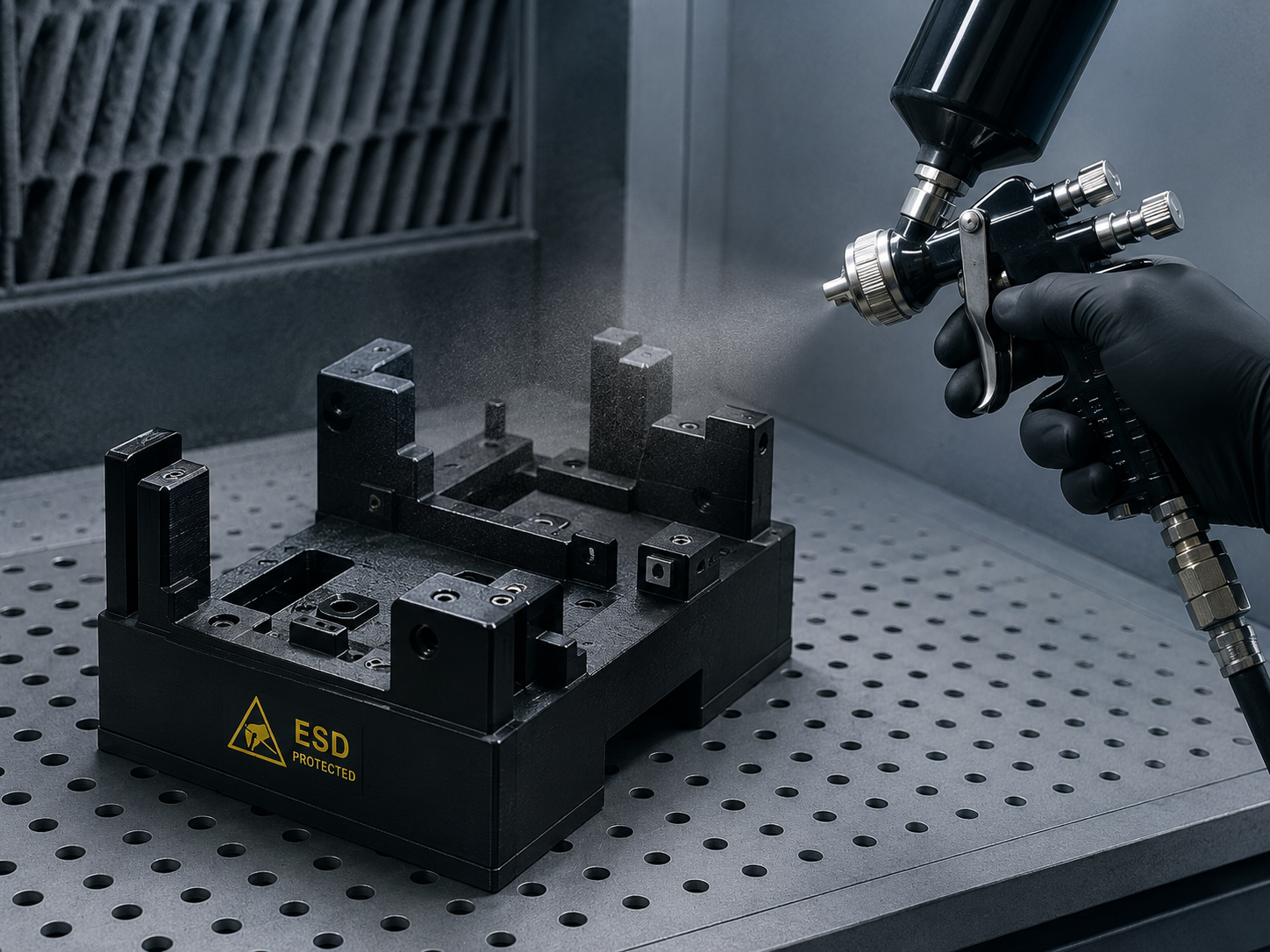
ESD-safe coatings can add static-dissipative behavior, helping reduce the risk of damage to printed parts used around electronics.