The $40 Fixture That Saved a $4,000 Mistake
The part was not expensive.
That was the trap.
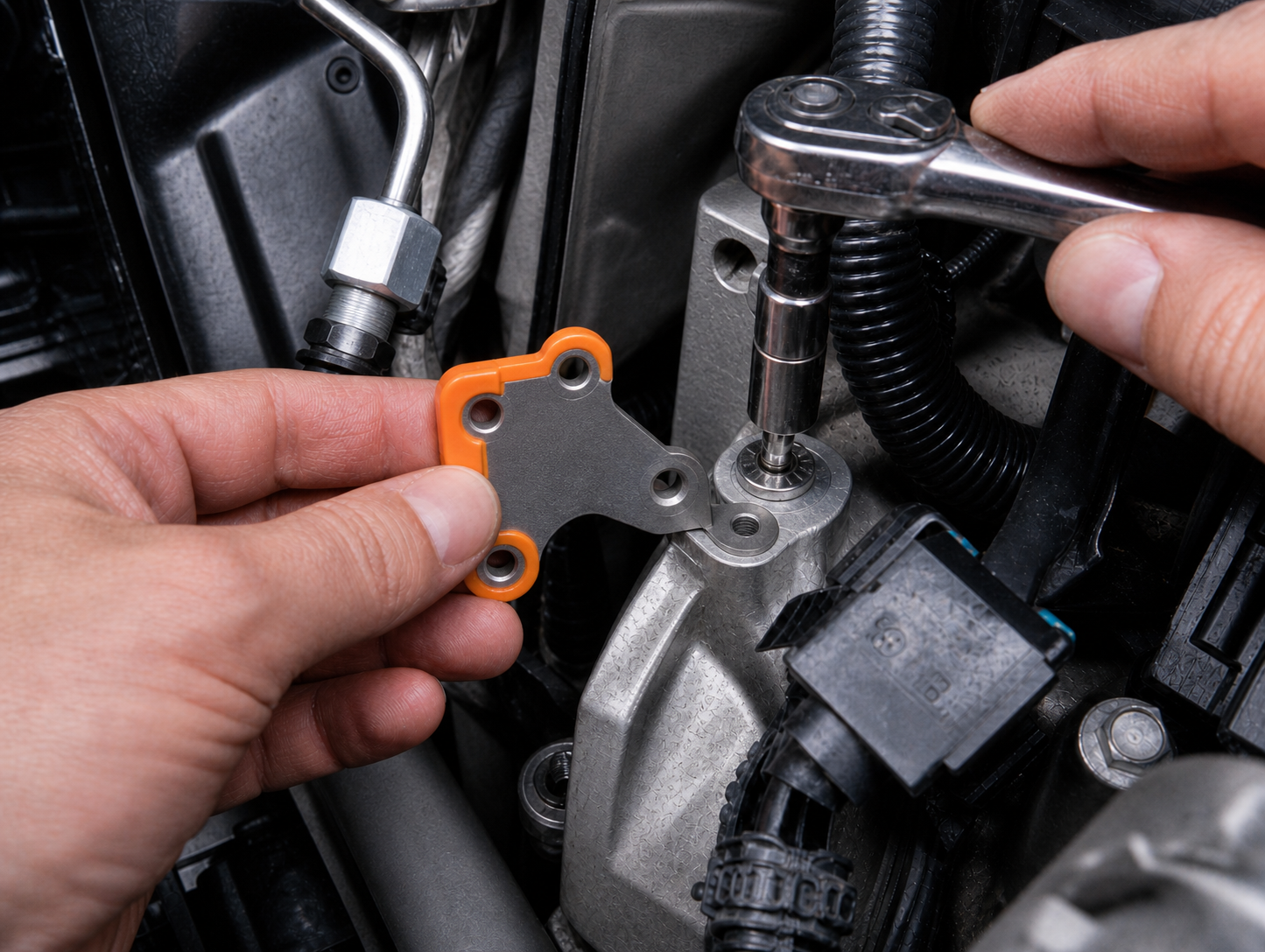
It was a small bracket.
Simple shape.
Easy to install.
Hard to notice when it was wrong.
The manufacturer had a problem on the line. Every so often, an operator would install the part backward. Not because they were careless. Not because they were poorly trained. Because the part could physically fit the wrong way.
That is not an operator problem.
That is a process problem.
One backward part turned into a failed inspection, teardown, rework, delay, and paperwork. By the time everyone touched it, the mistake cost roughly $4,000.
The fix was a $40 3D printed fixture.
Nothing fancy.
No automation.
No sensors.
No software dashboard.
Just a simple poka-yoke nest that only allowed the part to sit in the correct orientation. If the part was backward, it would not seat. If it was right, it dropped in cleanly.
The mistake disappeared.
That is the value of practical production tooling.
Sometimes the best solution is not a meeting, a retraining session, or another warning label. Sometimes the best solution is a small fixture that makes the wrong action impossible.
Jaeger Technology Group LLC helps manufacturers design and produce 3D printed poka-yoke fixtures, assembly aids, inspection gauges, part nests, tool holders, kitting trays, and production support tooling.
Because “just be careful” is not a quality system.
And a $40 fixture is a lot cheaper than a $4,000 mistake.
About the Author: jaegertechgroup.com

STAY IN THE LOOP
Subscribe to our free newsletter.
Leave A Comment
Using 3D Printing to De-Risk Production Tooling Production tooling is expensive for a reason. Whether the final process is injection molding, thermoforming,
Integrating a Tablet, Scanner, and Maintenance Hardware Into One Aerospace Field Tool In aerospace maintenance, the challenge is rarely just collecting information.
From 3D Scan to Perfect Fit: The Corvette Bumper Project Moves Forward A few weeks ago, we shared a project that demonstrated
Great Conversations and New Connections at SMD in Huntsville Last week, Janelle and I had the opportunity to attend SMD in Huntsville,