
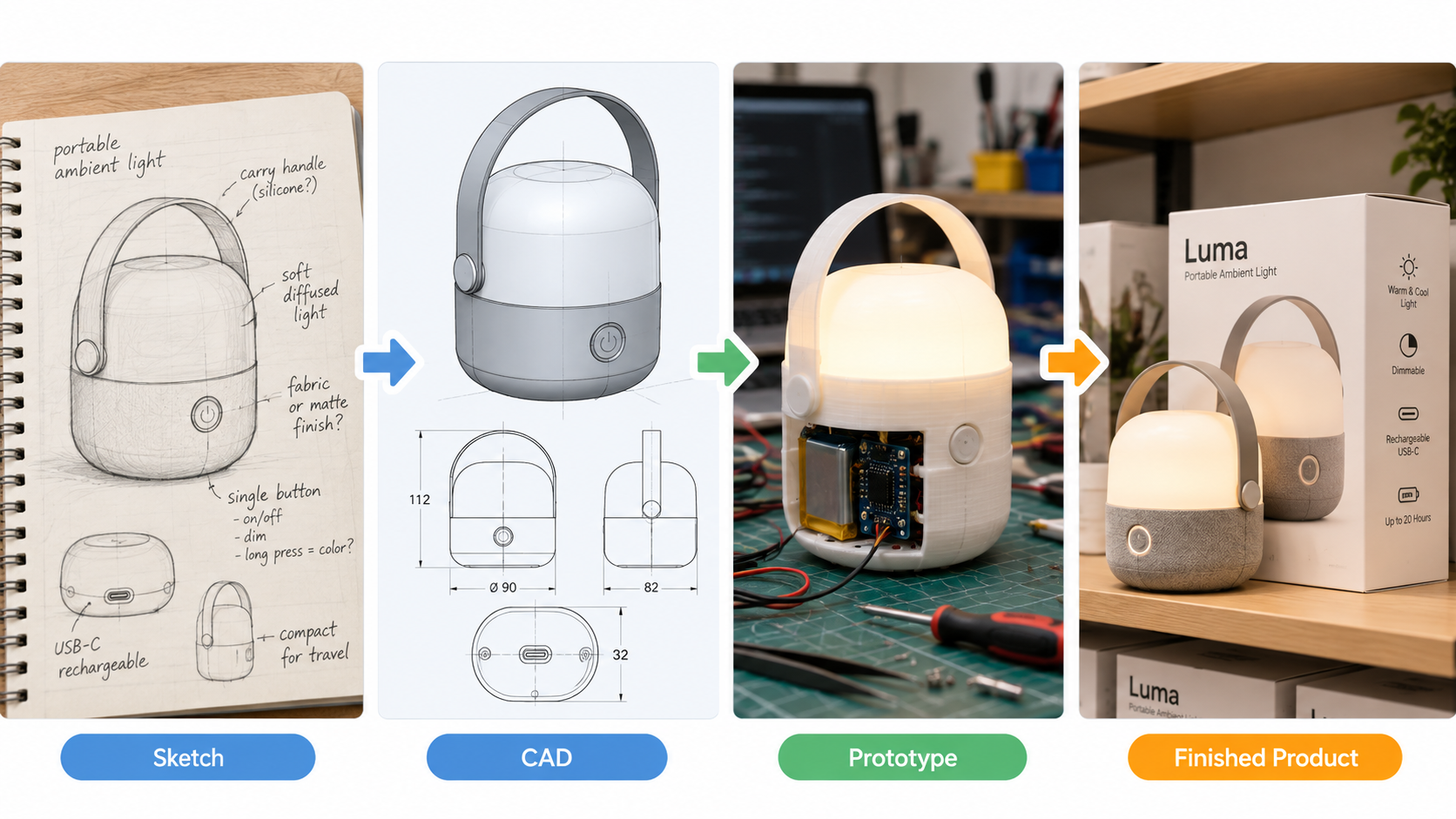
From Prototype to Small-Batch Production: What Changes After the First Part Works
Getting the first prototype to work is a major milestone.
It is also where a lot of product-development teams discover that they are only halfway done.
A prototype proves that an idea can function. Small-batch production asks a different set of questions:
- Can we build it repeatedly?
- Can different people assemble it the same way?
- Can we buy the same components again?
- Can we inspect it consistently?
- Can we repair it?
- Can we build ten, twenty-five, or one hundred without the cost getting out of control?
That transition is where engineering starts turning into manufacturing.
At Jaeger Technology Group, we regularly work with customers who have moved past the “does it work?” stage and need help figuring out what comes next.
A Prototype Is Allowed to Be Inefficient
The first prototype usually has one job: prove the concept.
That often means using whatever components are available, making brackets one at a time, hand-fitting parts, modifying enclosures, running extra wiring, or using development hardware that would never make sense in a production product.
There is nothing wrong with that.
In fact, trying to fully optimize a product before the basic concept is proven can waste more time and money than it saves.
The problem comes when prototype decisions are carried forward into production without being reconsidered.
A system that is perfectly acceptable as a one-off build may become difficult or expensive when repeated ten or fifty times.
The First Big Change: Repeatability
Once a prototype works, the next question is whether it can be built the same way again.
That sounds simple, but it affects nearly every part of the design.
For example:
- Are hole locations fixed and documented?
- Are brackets based on drawings instead of hand fitting?
- Are cable lengths standardized?
- Are fasteners consistent?
- Are connectors keyed or labeled?
- Are purchased components identified by part number?
- Are assembly steps documented?
- Are tolerances realistic for the chosen manufacturing process?
The goal is to eliminate as many “figure it out during assembly” decisions as possible.
If every unit requires interpretation, adjustment, or rework, the design is not yet ready for production.
Component Selection Starts to Matter Much More
Prototype hardware is often selected based on availability and speed.
Production hardware needs to be selected based on availability, cost, reliability, lead time, and long-term support.
A component that is easy to buy today may be a poor production choice if:
- It is frequently out of stock
- It comes from only one supplier
- It has no stable part number
- The manufacturer changes the design regularly
- It is much more expensive than an equivalent production component
- It is difficult to mount, wire, or replace
This is especially important with electronics.
Development boards are excellent for proving functionality, but small-batch production may justify moving toward a more standardized controller, carrier board, harness, or custom PCB.
The right decision depends on volume.
For ten units, a development board may still make sense.
For one hundred units, the labor and packaging penalties may start to outweigh the savings in engineering time.
Assembly Time Becomes a Real Cost
When building one prototype, spending an extra hour making a bracket fit may not matter much.
When building fifty units, that becomes fifty extra labor hours.
That is why assembly time needs to be treated as part of the design.
Small changes can make a large difference.
Examples include:
- Reducing the number of unique fasteners
- Designing self-locating brackets
- Using connectors instead of direct soldering
- Adding access panels
- Standardizing wire lengths
- Using captive hardware
- Reducing the number of assembly steps
- Making orientation obvious
- Avoiding parts that require manual trimming or fitting
A good production design should be difficult to assemble incorrectly.
Enclosures Often Need to Evolve
Prototype enclosures are frequently 3D printed, modified from off-the-shelf housings, or built using a combination of sheet material, brackets, and hardware.
That is often the right approach early on.
As volume increases, the enclosure strategy may change.
Depending on the product, that could mean moving toward:
- Sheet metal
- Machined panels
- Formed plastic
- Cast components
- Production-grade 3D printing
- Hybrid assemblies
The key question is not simply “what process is cheapest?”
The better question is:
What process gives us the best combination of cost, durability, lead time, appearance, and flexibility at this volume?
For small-batch production, additive manufacturing often remains extremely competitive because it avoids tooling cost and allows design changes without scrapping molds or dies.
As volumes rise, that equation may change.
Wiring and Electronics Need More Structure
Prototype wiring can be forgiving.
Production wiring cannot.
A working prototype may contain:
- Individually cut wires
- Temporary terminal blocks
- Hand-labeled connectors
- Development boards
- Breadboards
- Loose power supplies
- Extra cable length
Small-batch production usually needs a more controlled approach.
That may include:
- Defined wire gauges
- Standard connector families
- Crimped harnesses
- Strain relief
- Fuse protection
- Clearly defined power distribution
- Labeled connectors
- Service loops where appropriate
- Documented wiring diagrams
The goal is not just appearance.
Good electrical packaging improves assembly speed, troubleshooting, reliability, and serviceability.
Serviceability Becomes Part of the Product
The first prototype is usually maintained by the people who built it.
Production units may be serviced months or years later by someone who has never seen the original design.
That changes how the product should be built.
Questions worth asking include:
- Can the computer or controller be replaced without dismantling the entire system?
- Can a damaged cable be changed easily?
- Are commonly serviced components accessible?
- Are replacement parts commercially available?
- Are connectors reachable?
- Can technicians identify components without guessing?
- Does opening the enclosure create new failure risks?
A product that is easy to manufacture but difficult to service can become expensive very quickly once it is deployed.
Documentation Stops Being Optional
Prototype knowledge often lives in the heads of the people building it.
That does not scale.
Even small production runs benefit from basic documentation such as:
- Assembly drawings
- Bills of materials
- Wiring diagrams
- Purchased-part lists
- CAD revisions
- Firmware versions
- Fastener specifications
- Assembly instructions
- Inspection checklists
The documentation does not have to become a massive quality system for a ten-unit build.
It does need to be good enough that the product can be reproduced without relying on memory.
Inspection Needs to Be Defined
A prototype either works or it does not.
Production requires a more repeatable definition of acceptable.
That may include checking:
- Critical dimensions
- Fastener torque
- Electrical operation
- Display function
- Button or switch operation
- Power draw
- Fit and finish
- Cable routing
- Software version
- Final functional testing
Even simple inspection checklists can prevent small inconsistencies from turning into customer problems.
Purchasing Changes With Volume
One prototype often means buying components at retail.
Small-batch production creates opportunities to purchase differently.
At modest volumes, savings may come from:
- Quantity discounts
- Vendor negotiation
- Direct manufacturer purchasing
- Alternate suppliers
- Consolidated freight
- Standardizing common parts
- International sourcing where appropriate
But lower component price is not automatically lower total cost.
A cheaper part that requires more labor, more testing, or more rework can easily become the more expensive choice.
Total installed cost matters more than unit price.
The Bill of Materials Becomes a Management Tool
Once a product begins moving toward production, the bill of materials becomes more than a purchasing list.
It becomes one of the most important tools for managing the product.
A useful BOM should identify:
- Part number
- Description
- Quantity
- Supplier
- Cost
- Lead time
- Revision
- Approved alternatives where appropriate
That makes it much easier to identify where costs are concentrated and where future cost reductions are possible.
It also helps prevent a surprisingly common problem: discovering halfway through a build that one small component has a twelve-week lead time.
Small-Batch Production Is About Balance
For early production, the goal is usually not maximum automation.
It is controlled flexibility.
You still want the ability to change the design without making an expensive production system obsolete.
That is why ten-unit, twenty-five-unit, and fifty-unit builds often use a combination of processes.
A product might use:
- 3D-printed internal brackets
- Sheet-metal outer panels
- Commercial electronics
- Custom wiring
- Machined mounting hardware
- Off-the-shelf fasteners
There is nothing wrong with a hybrid approach.
In many cases, that is exactly what makes low-volume production practical.
The Design Should Change as the Volume Changes
The correct manufacturing method for one unit is not necessarily correct for ten.
The correct method for ten may not be correct for one hundred.
That means the product should be allowed to evolve.
For example:
Prototype stage
- Maximum flexibility
- Fast iteration
- Off-the-shelf components
- 3D-printed parts
- Hand assembly
Early production
- Standardized components
- Defined assembly processes
- Better harnessing
- Improved serviceability
- Controlled documentation
Higher volume
- Custom electronics
- Optimized fabrication
- Dedicated tooling
- Vendor qualification
- More formal quality control
Moving through these stages deliberately can keep a company from spending too much money too early.
One of the Most Important Questions: What Should Not Change Yet?
Cost reduction is important, but premature optimization can be dangerous.
If a product is still changing rapidly, investing heavily in hard tooling, custom molds, or specialized production equipment may lock the design too early.
For that reason, some parts should remain flexible during early production.
Additive manufacturing, modular electronics, and configurable assemblies can be extremely valuable at this stage because they allow changes without resetting the entire manufacturing process.
The challenge is knowing which parts are stable enough to optimize and which parts should remain adaptable.
How JaegerTech Approaches the Transition
At Jaeger Technology Group, we tend to look at the transition from prototype to production as a systems problem.
We are not only asking whether the design works.
We are also looking at:
- How it will be assembled
- What it will cost to build
- Which parts are likely to change
- Which components may become difficult to source
- How it will be serviced
- What can be standardized
- What should remain flexible
- Where labor is being wasted
- Where future cost reduction is realistic
That approach is especially useful for low-volume products where traditional mass-production methods may not make financial sense.
The First Part Is the Beginning, Not the End
Building a working prototype is a significant accomplishment.
But the first successful unit proves only one thing:
It can be built once.
Production engineering is the process of proving that it can be built again and again, with predictable quality, cost, and effort.
That is the point where an idea starts becoming a product.
And for many hardware companies, that transition is where the most important engineering work begins.
For JaegerTech, it is also one of the most interesting parts of the job.
About the Author: jaegertechgroup.com

STAY IN THE LOOP
Subscribe to our free newsletter.
Leave A Comment
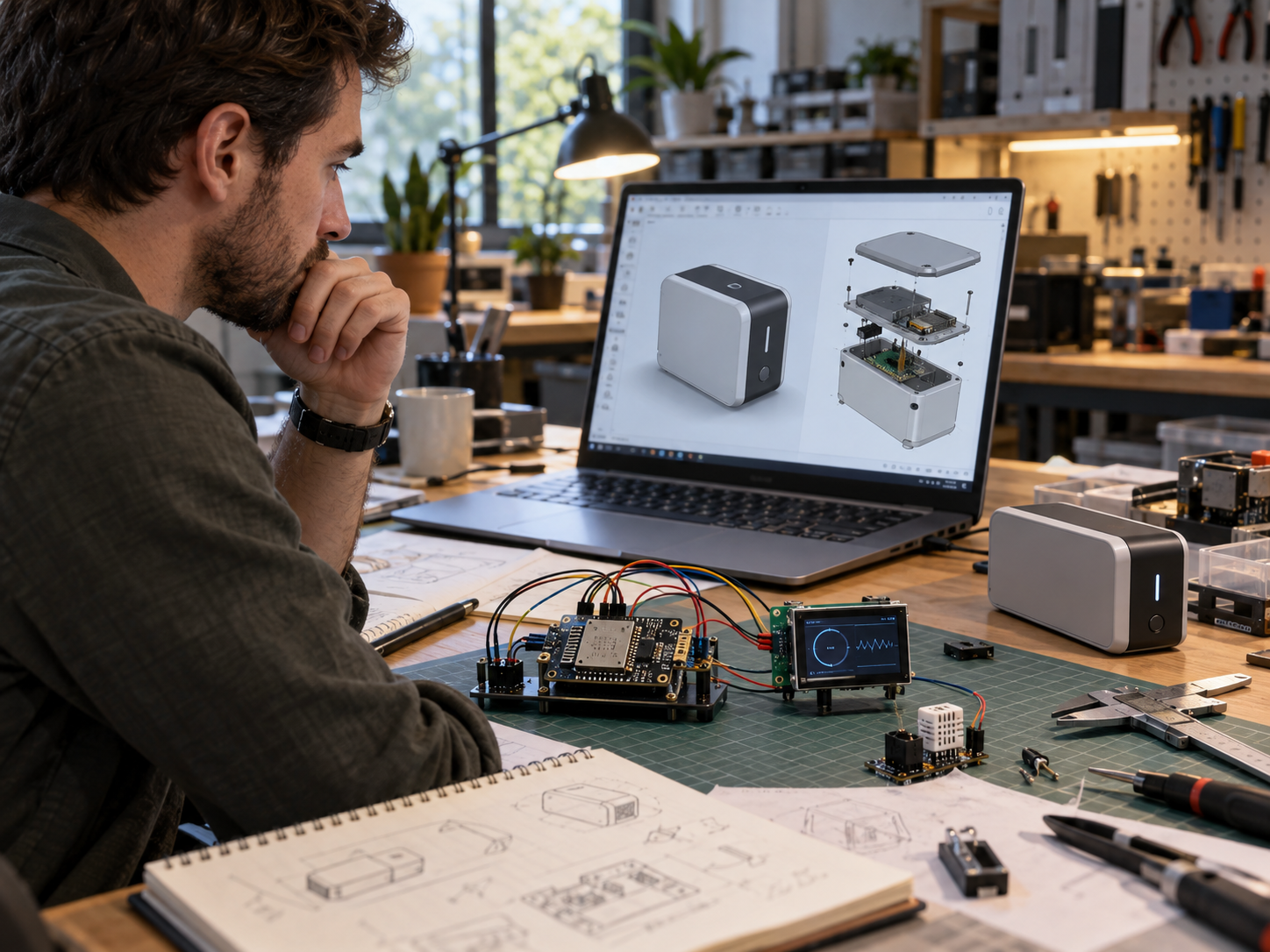
Beyond ESP32 and Raspberry Pi: Designing Electronics for Real Products Development boards are one of the best tools available for product development.
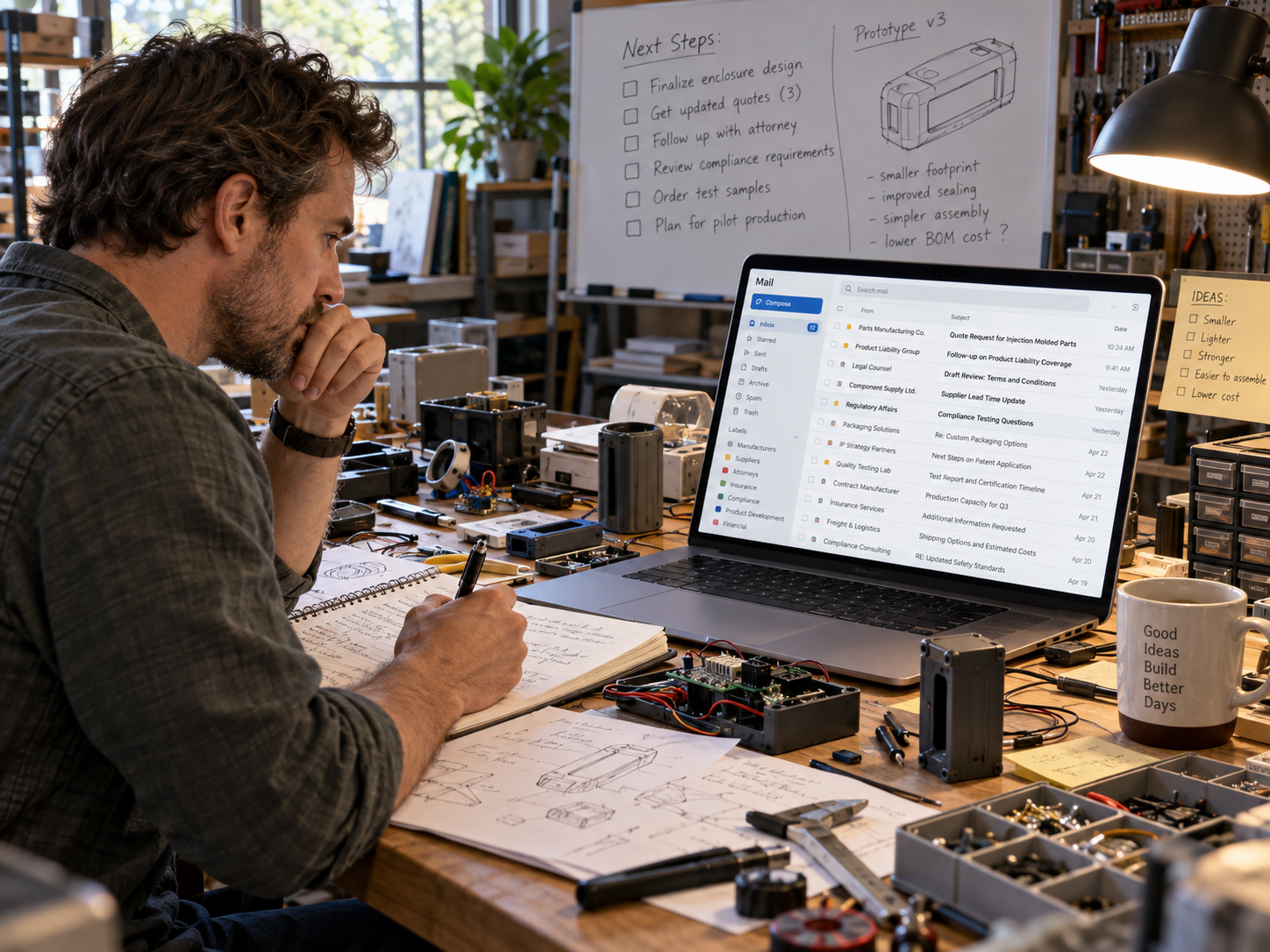
From MVP to Market: How Consumer Electronics Become Real Products A working MVP is an important milestone. It proves that the idea
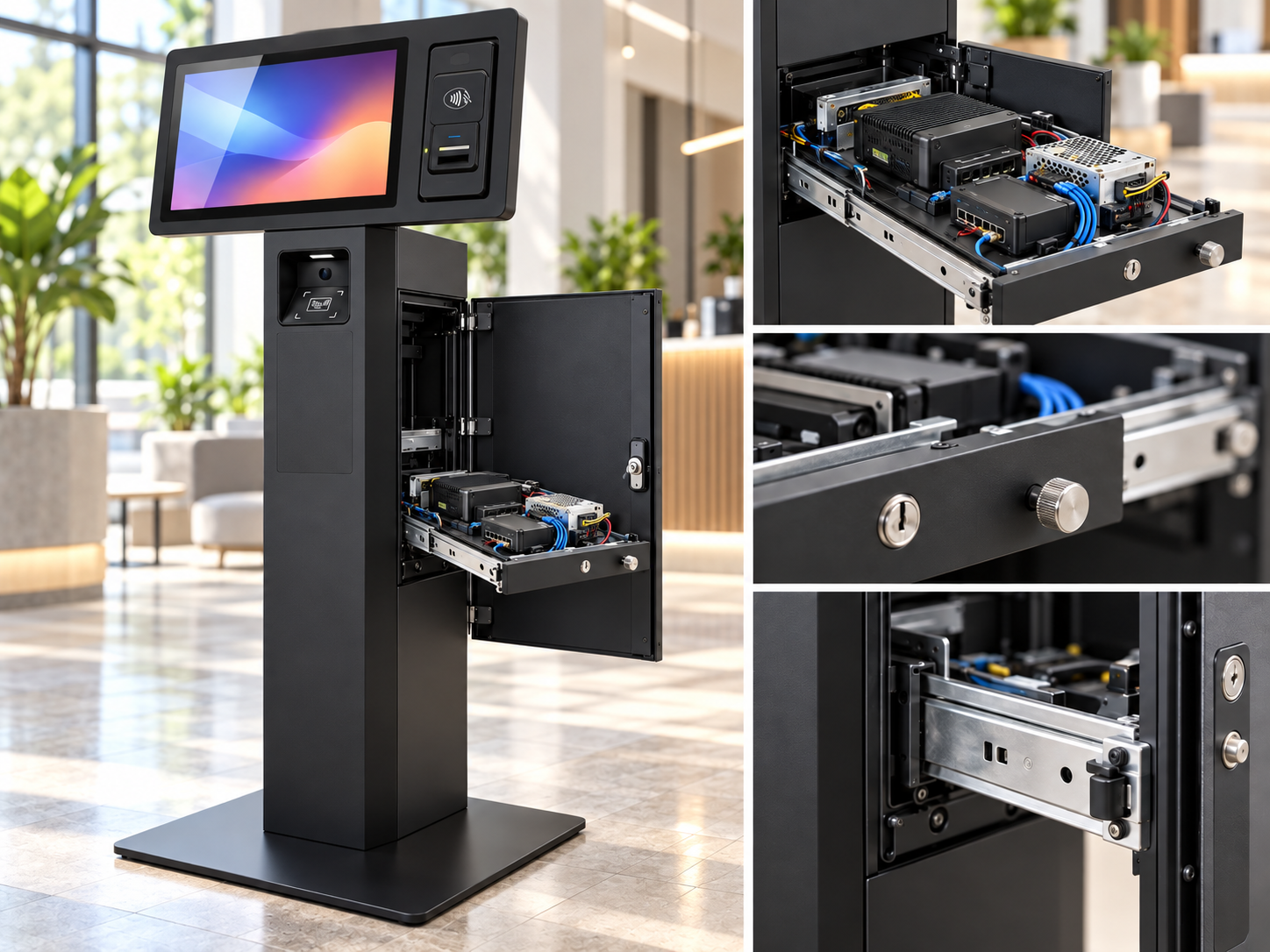
Designing Products for Serviceability, Maintenance, and Field Repair A product can work perfectly on the day it is delivered and still be
When a Customer Has an Idea but No CAD: How Product Development Actually Starts A surprising number of product-development projects do not