
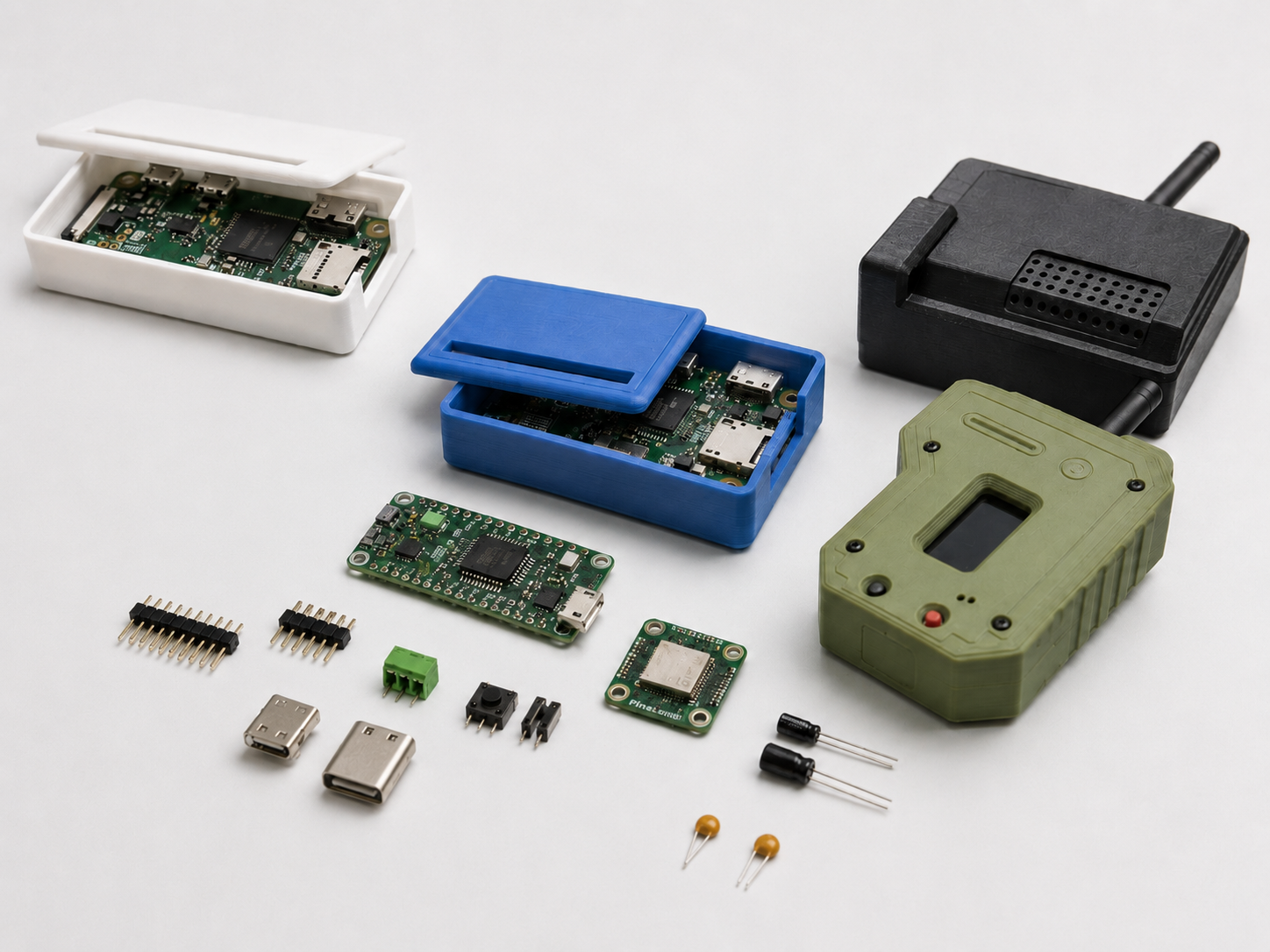
Not Every Hardware Prototype Needs a Complex Electronics System
Simple Controller Boards, Indicator Lights, Local Data Collection, and Small Battery-Powered Devices
When people discuss adding electronics to a hardware prototype, the conversation can quickly become complicated.
Development boards. Wireless communication. Cloud dashboards. Multiple sensors. Mobile applications. Custom printed circuit boards. Industrial networks. Battery-management systems.
All of those subjects may matter for the right product.
But not every product needs all of them.
Sometimes a useful electronic prototype is much simpler:
- A small controller board
- One or two sensors
- A single indicator light
- Local data collection
- A small battery
- A compact enclosure
That may be enough to prove that the product works.
For some projects, the correct engineering decision is not to create a connected device with an elaborate electronics architecture. It is to build the smallest practical system that answers the customer’s question.
At Jaeger Technology Group, we developed a customer prototype of this general type: a compact electronic assembly intended to perform a straightforward function without unnecessary infrastructure. Projects like that are a good reminder that successful prototyping is not about adding the most features. It is about adding the correct features.
Begin With the Simplest Useful Question
A prototype should begin with a clearly defined objective.
Does the product need to:
- Detect that something happened?
- Turn on a light when a condition is present?
- Record a local event?
- Measure a simple condition over time?
- Confirm that a user interacted with the device?
- Track how often an action occurred?
- Provide a small amount of data for later review?
If that is the actual requirement, a compact microcontroller board may be entirely sufficient.
A Raspberry Pi Pico-class board, Arduino Nano-class board, or another small low-power microcontroller platform can often handle basic tasks such as:
- Reading a switch or contact sensor
- Monitoring a simple analog or digital sensor
- Flashing or controlling a small LED
- Counting events
- Recording limited data locally
- Waking briefly, taking a reading, and returning to sleep
This type of architecture can be inexpensive, compact, easy to explain, and relatively quick to prototype.
It can also be the right answer.
A prototype does not become better simply because it contains Wi-Fi, a display, a cloud connection, or several extra sensors. Those features are only worthwhile when they support a real product requirement.
A Simple Example: Sensor, Light, and Local Data Collection
Consider a device with a straightforward purpose:
- A sensor detects a condition.
- A small indicator LED confirms that the condition occurred or that the device is operating.
- The controller records a small amount of information locally.
- The data can later be retrieved for evaluation.
This could be useful in many kinds of prototype work:
- A user-interaction device that records whether a contact area was touched
- A portable test fixture that counts events
- A product concept that confirms movement or position
- A small monitoring device that records occasional temperature or orientation readings
- A laboratory or field-use prototype that needs a simple status light and a basic log
For this kind of project, the engineering challenge is not necessarily building a sophisticated connected system. The real challenge is defining:
- What condition must be detected?
- What should the indicator light communicate?
- What data actually need to be saved?
- How frequently must the device operate?
- How long should it run between battery changes or charges?
- How will the information be retrieved?
- Can the electronics fit in a practical enclosure?
When the answers are modest, the electronics can often remain modest as well.
Pico-Class and Nano-Class Boards for Simple Control
Small microcontroller boards are often well suited for simple electronic prototypes because they can directly interact with sensors and outputs without needing a full operating system.
Raspberry Pi Pico-Class Boards
A Raspberry Pi Pico-class board is a small microcontroller platform intended for embedded control. It is not the same type of device as a full Raspberry Pi computer.
A Pico-class board may be appropriate when the prototype needs to:
- Read a small number of sensors
- Monitor a switch or contact condition
- Turn an LED on or off
- Record simple local events
- Control basic timing
- Operate in a small enclosure
- Avoid unnecessary software complexity
For a project that does not need networking, camera processing, a display-driven user interface, or cloud communication, a Pico-class controller may be a practical starting point.
Arduino Nano-Class Boards
Arduino Nano-class boards are also useful for compact prototypes. The Nano form factor is small, familiar, and supported by a broad development ecosystem.
Depending on the specific Nano-family board selected, a prototype may support:
- Basic sensor reading
- Indicator lights
- Simple local data collection
- Bluetooth Low Energy communication
- Motion sensing
- Compact embedded packaging
The important point is not that every Nano-family board is interchangeable. The important point is that a small microcontroller platform can often provide enough functionality for a simple prototype without requiring a larger computing system.
Why Not Use a Larger Computer?
A full Raspberry Pi computer or similar Linux-based board may be appropriate when a product needs a screen, camera, database, advanced networking, audio processing, or a complex software interface.
But for a small device that reads a sensor, controls an indicator, and records limited information, a larger computer may create unnecessary requirements:
- Greater power consumption
- Longer startup time
- More software complexity
- Storage management
- More difficult battery operation
- Larger packaging needs
For simple hardware functions, a simple controller is often the more appropriate tool.
Local Data Acquisition Does Not Always Mean a Cloud System
Data acquisition, sometimes shortened to DAQ, simply means collecting measurements or events from the device.
In a simple prototype, local data acquisition may be enough.
The device might record:
- Whether an event occurred
- How many times it occurred
- A time-based sequence of basic readings
- Minimum or maximum values
- A small set of test measurements
- A pass/fail condition
- Battery status or operating cycles
That information might be stored temporarily in onboard memory or retrieved during controlled testing.
A simple local data-acquisition device may not need:
- Wi-Fi
- Cellular service
- Cloud storage
- A mobile application
- Remote dashboards
- User accounts
- A software subscription
- Long-term data hosting
Those functions may eventually be useful, but they should not be added automatically.
For an early prototype, local data may be exactly what is needed to answer the first question: Did the concept work, and did it produce useful information?
Indicator Lights Are Useful, but They Consume Power
An LED is one of the simplest and most effective user-interface tools in an electronic prototype.
A small light can show:
- Power is on
- A sensor has detected an event
- A test has completed
- A fault has occurred
- The device is recording
- The battery may need attention
However, even a small LED can become important in a battery-powered design.
If an LED remains continuously lit, it may use more energy than the sleeping controller. For a small coin-cell-powered device, this can dramatically shorten battery life.
A better design may use the LED only when needed:
- Flash briefly when an event occurs
- Illuminate only while a button is pressed
- Blink occasionally as a status indication
- Remain off during long periods of inactive monitoring
- Use a lower brightness appropriate to the application
This is an example of why simple projects still benefit from thoughtful design. The solution does not need to be complicated, but it does need to reflect how the product will actually be used.
Can a Coin Cell Power a Simple Prototype?
A coin-cell battery, such as a CR2032, can be useful in very small, very low-power electronic devices.
Coin cells are attractive because they are:
- Compact
- Inexpensive
- Readily available
- Easy to replace
- Suitable for thin enclosures
- Practical for devices that draw very little power most of the time
A coin-cell-powered prototype may be appropriate when:
- The controller spends most of its time asleep
- The sensor is read occasionally rather than continuously
- The LED flashes briefly rather than staying lit
- The device stores only modest data locally
- There are no motors, speakers, displays, pumps, heaters, or high-power loads
- Wireless communication is absent or used very sparingly
- Long operating life is more important than frequent user interaction
A simple event detector that wakes only when needed, records a small amount of information, briefly flashes a status LED, and returns to a low-power state may be a reasonable coin-cell application.
However, coin cells are not miniature general-purpose power supplies.
They are not a good fit for every small prototype.
Where Coin Cells Become Limiting
A project may quickly exceed what a coin cell can comfortably support when it requires:
- A continuously illuminated LED
- Frequent or bright LED activity
- Continuous sensor measurement
- An SD card or similar higher-current storage method
- A screen or display
- Audio output
- Motors, servos, relays, pumps, or valves
- Frequent Bluetooth communication
- Wi-Fi transmission
- Cellular communication
- Long periods of active processing
The issue is not simply total battery capacity. Small coin cells are also limited in the amount of current they can deliver effectively at one time.
A device may appear to work briefly on a coin cell while becoming unreliable during repeated use, LED activity, storage writes, or communication bursts.
This is why the battery should be chosen according to the entire operating pattern of the prototype:
- How often does it wake?
- How long does it remain active?
- What does it power while awake?
- How frequently does it illuminate the LED?
- How often does it store data?
- Does it ever communicate wirelessly?
- How long is it expected to operate before battery replacement?
For extremely simple, low-duty-cycle products, a coin cell can be an elegant solution. For more active products, a small rechargeable battery may be the better engineering choice.
Small Lithium-Ion or Lithium-Polymer Batteries for More Active Devices
Small rechargeable lithium-ion or lithium-polymer batteries are often useful when a prototype needs more energy than a coin cell can reasonably provide while still remaining compact.
These batteries may be appropriate for devices that require:
- More frequent sensor sampling
- Longer active operating periods
- Brighter or more frequent indicator lighting
- Bluetooth communication
- Occasional wireless data transmission
- Small displays
- More substantial local data logging
- Rechargeable portable operation
A small rechargeable battery gives the designer more freedom, but it also creates additional responsibilities.
The prototype may need:
- A charger designed for the selected battery type
- Overcharge and over-discharge protection
- A suitable connector
- A safe enclosure location for the battery
- Access for charging
- Battery-condition monitoring
- Protection from puncture, crushing, overheating, or incorrect wiring
A rechargeable battery should not be treated as something that can simply be connected to any prototype circuit without consideration.
For a small portable product, however, a properly designed lithium-ion or lithium-polymer power system may provide a practical balance between size, runtime, user convenience, and available power.
Coin Cell or Rechargeable Battery?
A simple decision table can help establish an appropriate starting point.
| Prototype Requirement | Coin Cell May Be Appropriate | Small Rechargeable Lithium Battery May Be Better |
|---|---|---|
| Occasional button or contact detection | Yes | Also possible |
| Brief LED flash after an event | Yes | Also possible |
| Small event counter or limited local data | Yes, if designed for low power | Yes |
| Frequent sensor sampling | Possibly, depending on duty cycle | Often better |
| Continuously lit LED | Usually poor fit | Better |
| Regular Bluetooth communication | Marginal depending on design | Often better |
| Wi-Fi reporting | Generally poor fit | Better |
| Display or bright status lighting | Poor fit | Better |
| Repeated data logging with higher-current storage | Poor fit | Better |
| Motors, speakers, pumps, heaters, or actuators | Not appropriate | May still require larger power design |
| User-rechargeable portable device | No | Yes |
The simplest power source that reliably supports the actual device requirements is generally the correct place to start.
Where a Low-Power ESP32 Fits
An ESP32-class board can also be useful in a small prototype, particularly when the product may eventually need wireless communication.
An ESP32 may allow the device to:
- Read sensors
- Control a status LED
- Sleep between events
- Communicate through Bluetooth
- Connect through Wi-Fi when needed
- Send measurements periodically
- Provide a path toward a connected product concept
However, wireless capability changes the battery discussion.
An ESP32 may consume very little power while sleeping, but it consumes substantially more energy while awake and communicating. A design that sleeps most of the time and only transmits occasionally may be practical with a compact battery.
A device that maintains continuous Wi-Fi communication, transmits frequently, or remains active for long periods will usually need a more substantial power source than a small coin cell.
For that reason, an ESP32 is often a good choice when the prototype needs a path toward wireless operation, but the designer should still decide whether wireless capability is required in the current phase.
A simple local device may be better served initially by local data storage and a low-power controller. Wireless communication can always be evaluated later if it creates real value.
Keep the First Prototype Focused
A simple prototype should remain simple when simplicity answers the question.
For an early device that needs only an indicator light and local data collection, the first version may require nothing more than:
- A compact microcontroller board
- One sensor or switch
- A small LED
- Limited local data storage
- A coin cell or small rechargeable battery
- A 3D-printed enclosure or mounting fixture
- A straightforward method for retrieving results
That prototype can still be highly valuable.
It can answer:
- Does the sensor detect the intended event?
- Is the indicator useful to the user?
- Is the device small enough?
- Does the battery approach appear practical?
- Is the data worth collecting?
- Does the customer need anything more sophisticated?
Only after those questions are answered should the project automatically expand into wireless communication, cloud storage, multiple sensors, dashboards, custom electronics, or production design.
This is not underbuilding a product. It is managing development responsibly.
A Small Prototype Can Still Lead to a Real Product
Starting with simple electronics does not limit the future of the product.
A small local device may later become:
- A refined battery-powered product
- A Bluetooth-enabled tool
- A wireless monitoring device
- A product with a custom printed circuit board
- A data-logging research instrument
- A connected industrial sensor
- A customer-facing commercial device
The important point is that those later capabilities should be added because the prototype and the market justify them.
A simple device that does its job reliably may be more valuable than a complicated device that attempts to do too much too early.
In product development, restraint can be an engineering strength.
JaegerTech Can Help Build Simple, Practical Electronic Prototypes
At Jaeger Technology Group, we help customers develop hardware prototypes at the level of complexity their project actually requires.
Not every concept needs an advanced connected system. Some projects are best served by a compact controller, a well-selected sensor, a simple status light, local data collection, a small battery, and a practical enclosure.
That work may include:
- Selecting an appropriate small development board
- Integrating basic sensors and indicator lights
- Developing local data-acquisition concepts
- Evaluating coin-cell or rechargeable battery operation
- Designing and 3D printing compact enclosures
- Packaging electronics for customer evaluation
- Determining whether more advanced features are justified later
The goal is not to add complexity for its own sake.
The goal is to build the simplest useful prototype, gather the information that matters, and make the next product-development decision with confidence.
About the Author: jaegertechgroup.com

STAY IN THE LOOP
Subscribe to our free newsletter.
Leave A Comment

From 3D Scan to Perfect Fit: The Corvette Bumper Project Moves Forward A few weeks ago, we shared a project that demonstrated
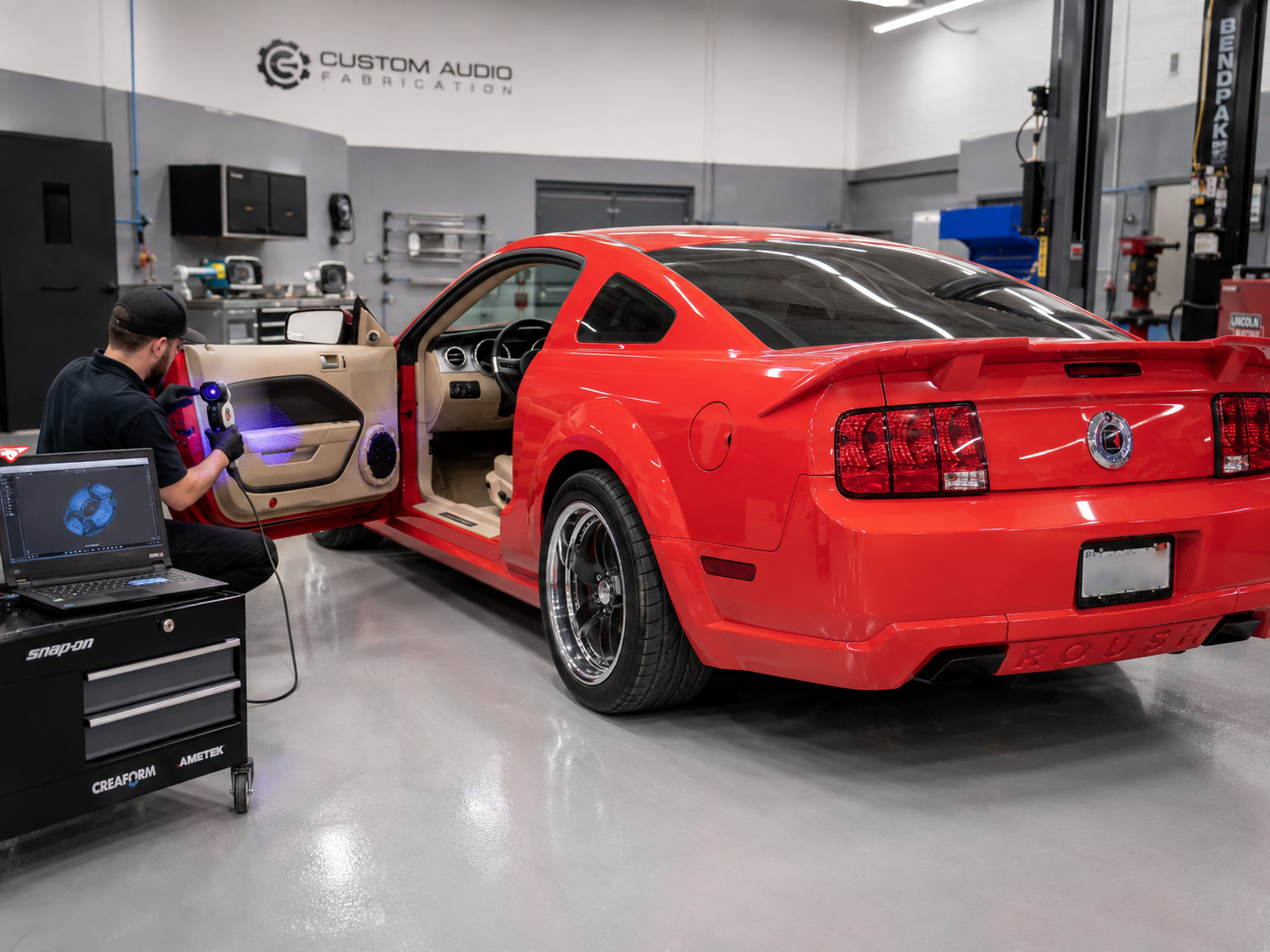
Custom 3D Printed Speaker Pods for a 2005 Ford Mustang Sometimes the problem is not the speaker. It is everything around it.
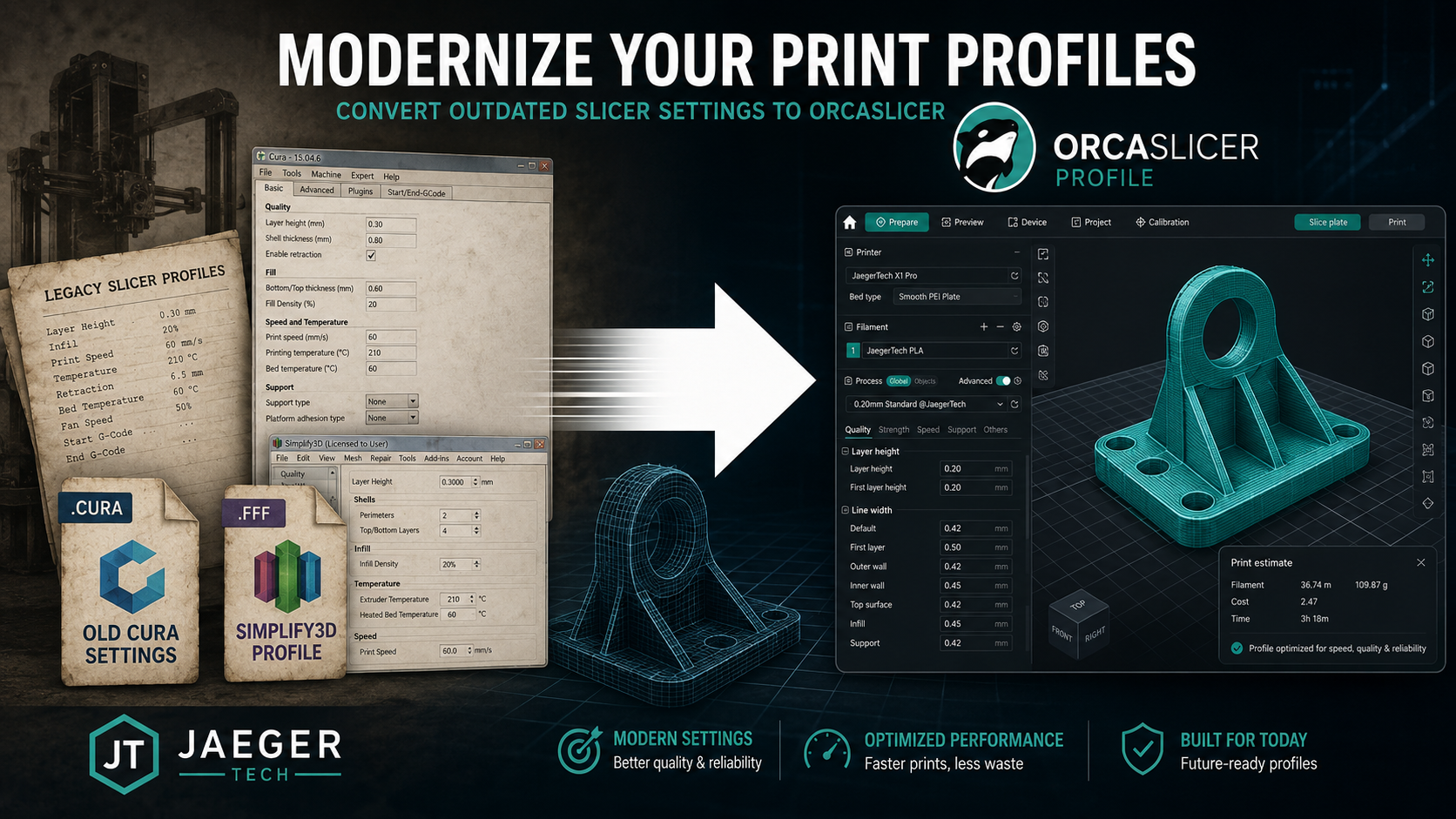
Still Using Cura or Simplify3D? JaegerTech Can Help Build an OrcaSlicer Profile for Your 3D Printer A 3D printer does not become
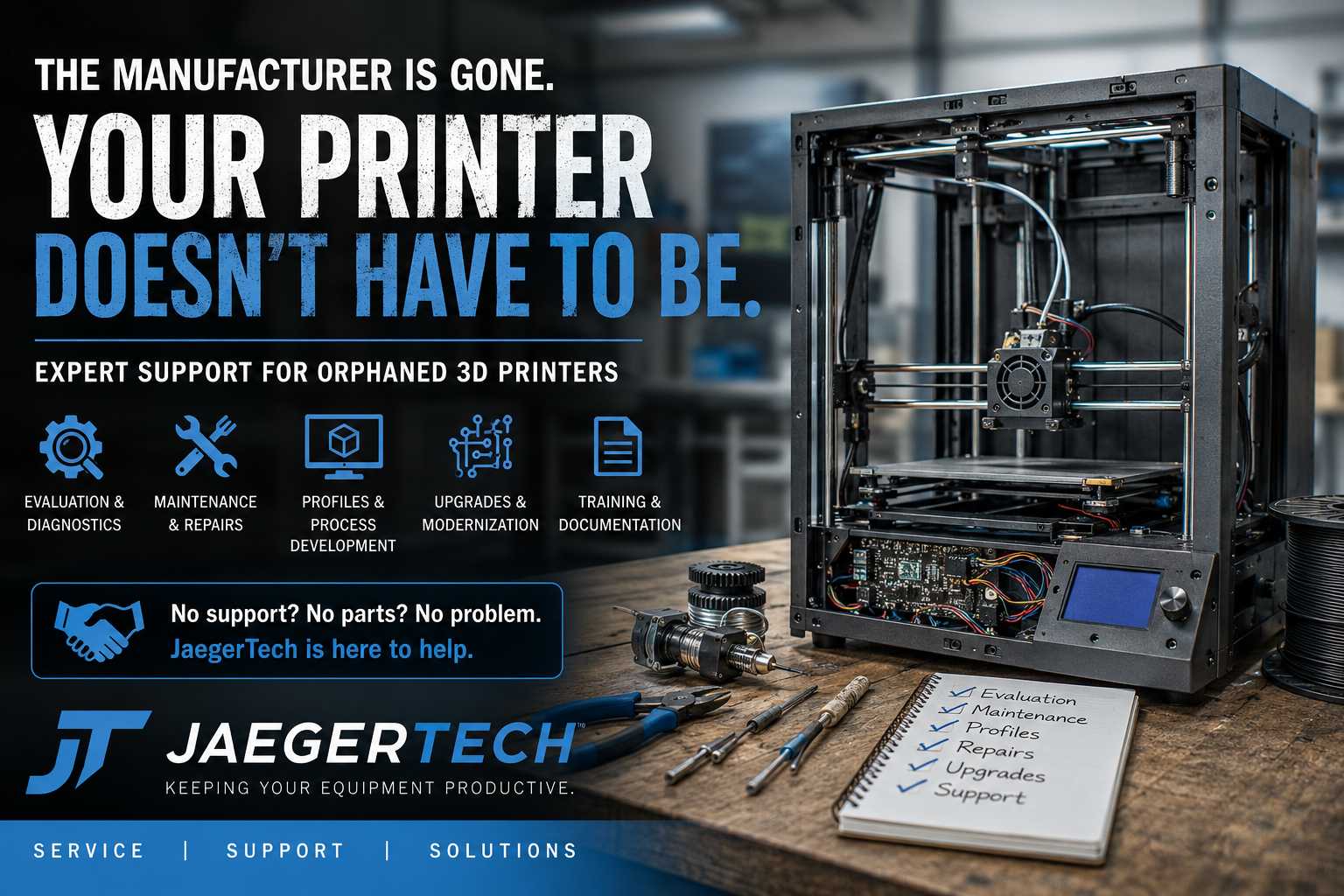
When the Manufacturer Disappears: Support for Orphaned 3D Printers Industrial 3D printers are often purchased with the expectation that they will remain