
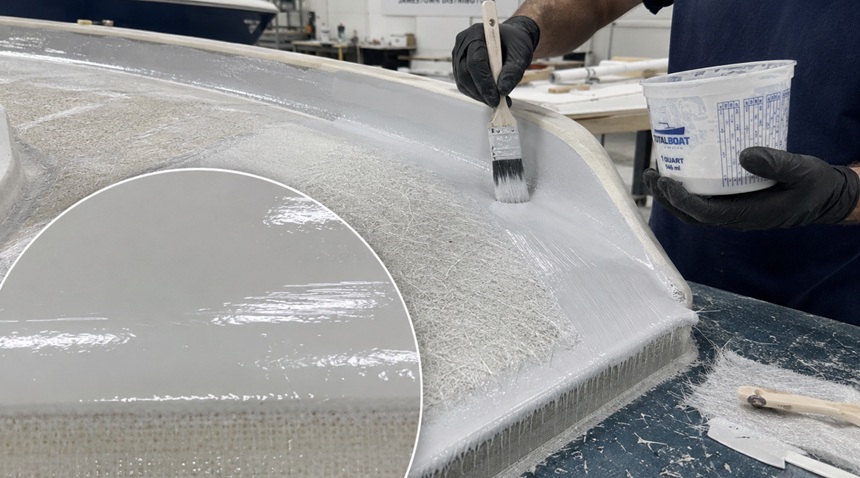
Gelcoat
Gelcoat is common in composite and marine work. It can create a smooth, durable surface and is often used in mold-related workflows.
Common Uses
Gelcoat may be useful for:
- Composite mold masters
- Fiberglass tooling
- Marine-style parts
- Smooth pattern surfaces
- Large display models
- Tooling surfaces
- Mold preparation workflows
Advantages
Gelcoat can provide:
- Smooth surface
- Durable finish
- Composite workflow compatibility
- Good appearance
- High-build surface
- Sanding and polishing potential
- Mold-friendly surface when properly applied
Disadvantages
Gelcoat is process-sensitive:
- Material compatibility matters
- Cure and catalyst control are important
- Styrene exposure concerns in polyester gelcoats
- Shrinkage
- Cracking if applied incorrectly
- Surface prep required
- Not ideal over all 3D printed plastics without testing
- Can be labor-intensive
JaegerTech View
Gelcoat is useful for composite-adjacent work, but it should be tested with the printed material and coating stack. For many 3D printed masters, epoxy surfacing may be the safer first layer.
About the Author: jaegertechgroup.com

STAY IN THE LOOP
Subscribe to our free newsletter.
Leave A Comment

Great Conversations and New Connections at SMD in Huntsville Last week, Janelle and I had the opportunity to attend SMD in Huntsville,
Best $150 I’ve Ever Spent on This Car Classic car projects have a way of turning simple problems into complicated ones. A

Why Domestic Tooling and Prototype Fabrication Still Matter Low-cost overseas tooling can be tempting. When a quote comes in dramatically cheaper than

Using Development Boards in Early Hardware Prototypes Other Parts of this series: Part 2 – Choosing The Right Development Board Part 3