
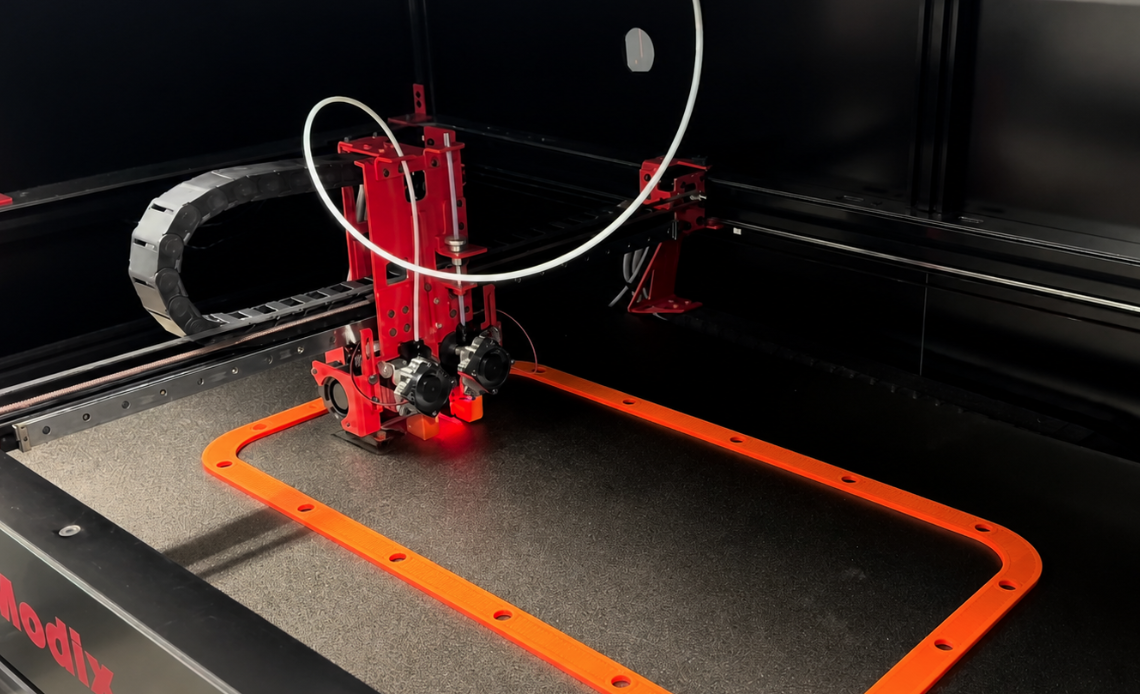
TPU and TPE for Flexible FDM / FFF 3D Printed Parts
TPU and TPE are flexible thermoplastic materials used in FDM/FFF 3D printing when a part needs bend, grip, cushioning, impact absorption, vibration resistance, or soft contact with another surface. These materials are very different from rigid plastics like PLA, PETG, ABS, ASA, or nylon.
At Jaeger Technology Group LLC, we use flexible materials for practical industrial applications such as protective pads, grips, soft fixture contact points, boots, covers, flexible guards, vibration-damping components, non-critical gasket prototypes, and custom production aids.
Flexible materials can be extremely useful, but they need to be selected carefully. Not every flexible part is a good candidate for FDM printing, and very soft materials can be slow, difficult, and expensive to produce.
TPU vs. TPE: What Is the Difference?
TPE stands for thermoplastic elastomer. It is a broad family of rubber-like thermoplastics.
TPU stands for thermoplastic polyurethane. TPU is one type of TPE, and it is one of the most common flexible materials used in FDM/FFF 3D printing.
In practical shop terms:
- TPE is the broad category.
- TPU is a common, printable, industrially useful member of that category.
- Most flexible FDM printing jobs use TPU rather than very soft generic TPE.
- Softer materials are harder to print, especially on large parts or Bowden-style extrusion systems.
Where TPU Works Well
TPU is useful when a part needs flexibility, toughness, grip, or impact resistance.
Common TPU applications include:
- Flexible pads
- Protective bumpers
- Soft fixture contact surfaces
- Grips and handles
- Boots and covers
- Vibration-damping components
- Cable strain reliefs
- Protective caps
- Non-marring part supports
- Wear pads
- Flexible guards
- Non-critical gasket and seal prototypes
- Custom feet, bumpers, and spacers
For fixtures and manufacturing aids, TPU is often useful as a soft contact material. It can protect painted, polished, machined, or delicate surfaces from damage during assembly, inspection, or handling.
Where TPE May Be Used
TPE may be used when the application needs a softer, more rubber-like feel than common TPU grades. However, softer TPE materials are usually more difficult to print.
TPE-style materials may be considered for:
- Very soft pads
- Flexible skins
- Soft grips
- Rubber-like prototypes
- Cushioning components
- Specialty ergonomic parts
- Experimental flexible components
The softer the material, the more challenging the print. Very soft filaments can buckle, jam, string, stretch, under-extrude, or require very slow print speeds.
Shore Hardness Matters
Flexible materials are commonly described by Shore hardness, usually on the Shore A scale.
Typical examples:
| Shore Hardness | General Feel | Practical FDM Notes |
|---|---|---|
| 95A | Firm flexible | Usually the easiest flexible material range to print |
| 90A | Flexible but still manageable | Good for many pads, covers, and grips |
| 85A | Softer rubber-like feel | More difficult; slower printing |
| 75A | Very flexible | Much harder to print reliably |
| 65A | Extremely soft | Often very slow and problematic on FDM machines |
For industrial FDM printing, 95A TPU is often the practical starting point. It provides flexibility without becoming unmanageable. Very soft materials such as 65A TPU/TPE can be possible in some cases, but they can be slow, difficult, and poor candidates for large parts.
Why Flexible Materials Are Harder to Print
Rigid filament behaves like a solid rod. It is easier for the extruder to push through the hot end.
Flexible filament behaves more like cooked spaghetti. It can compress, buckle, kink, stretch, or escape the filament path if the printer is not designed for it.
Common TPU/TPE printing challenges include:
- Slow print speeds
- Stringing
- Oozing
- Poor retraction behavior
- Filament buckling
- Inconsistent extrusion
- Feeding problems
- Difficulty with Bowden extruders
- Moisture sensitivity
- Longer print times
- Less crisp detail than rigid plastics
Direct-drive extruders are usually better for flexible materials than long Bowden systems.
Design Considerations for TPU and TPE Parts
Flexible parts should be designed differently than rigid parts. Wall thickness, infill, geometry, and print orientation all affect how flexible the part feels.
Important design factors include:
- Shore hardness
- Wall thickness
- Infill percentage
- Infill pattern
- Part thickness
- Bend direction
- Layer orientation
- Contact pressure
- Compression set
- Tear resistance
- Wear surface
- Attachment method
A thick 95A TPU part may feel almost rigid. A thin 95A TPU part may bend easily. Geometry often matters as much as the material itself.
TPU for Jigs, Fixtures, and Production Aids
TPU can be very useful in manufacturing support tooling.
Examples include:
- Soft jaws for light-duty holding
- Fixture pads
- Non-marring contact points
- Protective part nests
- Grippy inserts
- Vibration-damping pads
- Temporary covers
- Handling aids
- Cart bumpers
- Assembly supports
In many cases, the best tool is a hybrid fixture: a rigid printed or machined body combined with TPU pads or soft contact features.
TPU for Protective Covers, Boots, and Caps
TPU is often a good choice for parts that need to protect another part from damage.
Applications include:
- Dust covers
- Protective caps
- Connector covers
- Edge guards
- Temporary shipping protection
- Tool covers
- Equipment bumpers
- Cable relief boots
- Flexible guards
For short-run or custom industrial protection parts, TPU can be a useful alternative to molded rubber when tooling is not justified.
TPU for Gasket and Seal Prototypes
TPU can be used for non-critical gasket and seal prototypes, but it should be handled carefully.
TPU may help test:
- Shape
- Fit
- Compression behavior
- Assembly clearance
- Contact area
- Installation process
- Prototype sealing concept
However, FDM printed TPU may not perform like molded rubber. Layer lines, porosity, surface finish, compression set, and material chemistry can all affect sealing performance.
Avoid assuming printed TPU is suitable for:
- Certified seals
- High-pressure sealing
- Food-contact sealing
- Medical sealing
- Chemical sealing without testing
- Long-term compression-critical applications
- Safety-critical gasket use
For serious sealing applications, molded elastomers or properly specified commercial gasket materials may be required.
Chemical, Heat, and Wear Considerations
TPU can be tough, but it is not universal. Different TPU grades vary significantly.
Important application questions include:
- Will the part contact oil, grease, coolant, fuel, solvent, or cleaner?
- Will it see continuous heat?
- Will it be compressed for long periods?
- Will it rub or slide against another surface?
- Will it be outdoors?
- Will it need to resist tearing?
- Will it need to meet a specific regulatory or safety requirement?
A TPU part that works well as a bumper may not work well as a chemical seal, high-temperature pad, or long-term loaded component.
When TPU / TPE Is Not the Right Choice
Flexible FDM printing may not be a good fit when the part requires:
- Large size and very soft durometer
- Tight dimensional control
- High-pressure sealing
- Long-term compression resistance
- High heat resistance
- Strong chemical compatibility
- Food-safe or medical-grade compliance
- Smooth molded-rubber surface finish
- High-volume production economics
- Certified elastomer performance
In those cases, urethane casting, silicone molding, rubber molding, machining, die cutting, waterjet cutting, or another process may be better.
Materials and Process Selection
TPU/TPE should be selected based on the application, not just the desire for a flexible part.
Important selection factors include:
- Shore hardness
- Flexibility
- Tear resistance
- Abrasion resistance
- Chemical exposure
- Heat exposure
- Surface finish
- Printability
- Part size
- Quantity
- Cost
- Required tolerance
- Whether the part is a prototype or final-use component
For many industrial jobs, the best first choice is a printable 90A–95A TPU. Softer materials should be used only when the extra flexibility is worth the added print difficulty.
Why Work With JaegerTech?
JaegerTech brings practical manufacturing judgment to flexible 3D printed parts.
We understand that flexible materials are not just “soft plastic.” They require thought around geometry, durometer, wall thickness, infill, print speed, support strategy, and real-world use.
JaegerTech brings:
- 30+ years of industrial and technical experience
- Practical FDM/FFF material knowledge
- Experience with jigs, fixtures, pads, covers, and production aids
- Large-format 3D printing capability
- Hybrid tooling experience
- Understanding of when TPU is useful and when another process is better
- Real-world manufacturing problem solving, not just file printing
Need Flexible 3D Printed Parts?
If your company needs a flexible pad, protective cover, grip, boot, bumper, fixture insert, non-marring support, gasket prototype, soft jaw, or custom production aid, Jaeger Technology Group LLC can help evaluate whether TPU, TPE, urethane, silicone, machining, casting, or another process is the right path.
We support Decatur, Huntsville, Birmingham, North Alabama, the Southeast, and manufacturers across the broader industrial region.
Contact JaegerTech today to discuss your project, request a quote, or find out whether flexible 3D printing is the right fit for your application.
About the Author: jaegertechgroup.com

STAY IN THE LOOP
Subscribe to our free newsletter.
Leave A Comment

Great Conversations and New Connections at SMD in Huntsville Last week, Janelle and I had the opportunity to attend SMD in Huntsville,
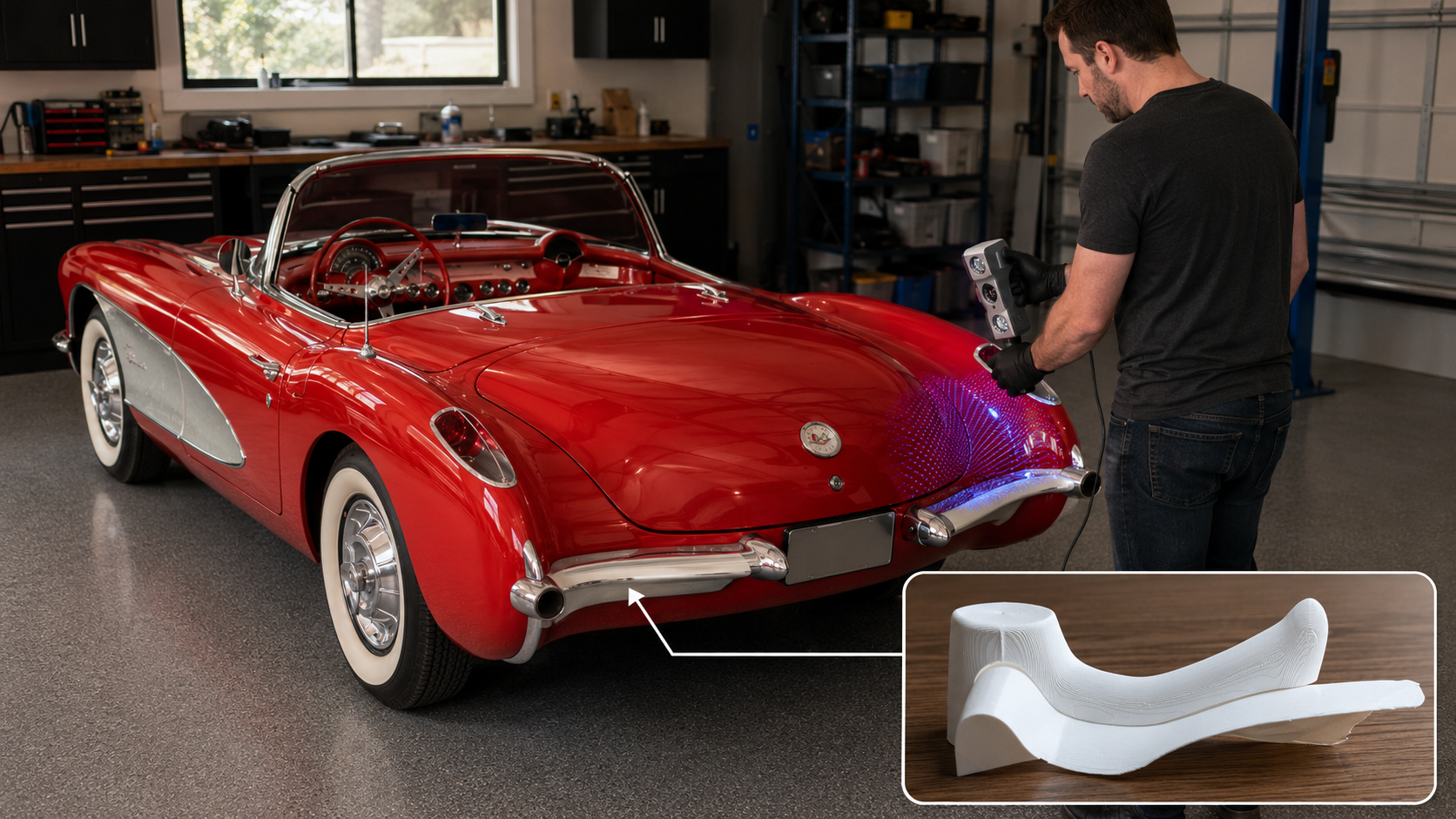
Best $150 I’ve Ever Spent on This Car Classic car projects have a way of turning simple problems into complicated ones. A
Why Domestic Tooling and Prototype Fabrication Still Matter Low-cost overseas tooling can be tempting. When a quote comes in dramatically cheaper than

Using Development Boards in Early Hardware Prototypes Other Parts of this series: Part 2 – Choosing The Right Development Board Part 3