
3D Printing Materials for Industrial Applications
Choosing the right 3D printing material is one of the most important decisions in any additive manufacturing project. A part that looks good on the printer may still fail if the material is wrong for heat, load, chemical exposure, UV, wear, impact, or dimensional stability.
At Jaeger Technology Group LLC, we help manufacturers, engineers, product developers, machine shops, foundries, and industrial teams select practical materials for prototypes, jigs, fixtures, inspection gauges, foundry patterns, production aids, large-format parts, short-run components, and development tooling.
Material choice should be based on how the part will actually be used.
Start With the Application
The first question should not be “What material can you print?” The first question should be “What does the part need to do?”
Important material questions include:
- Is the part a prototype, fixture, pattern, tool, or production component?
- Will it see heat?
- Will it be used indoors or outdoors?
- Will it contact chemicals, oils, coolants, solvents, or cleaners?
- Does it need to be stiff or flexible?
- Will it be loaded, clamped, dropped, or handled repeatedly?
- Does it need to protect a finished surface?
- Does it need dimensional stability?
- Is appearance important?
- Is the part temporary or long-term?
- Does the job require polymer printing, machining, casting, DMLS, or a hybrid process?
A good material decision starts with the job, not the datasheet.
PLA and PETG for Prototypes and Fit Checks
PLA and PETG are common choices for prototypes, concept models, fit-check parts, and light-duty tooling.
PLA can be useful for:
- Concept models
- Visual prototypes
- Short-term fit checks
- Display models
- Pattern development
- Low-stress mockups
PETG can be useful for:
- Tougher prototypes
- General shop aids
- Fit-check parts
- Light-duty fixtures
- Protective covers
- Basic functional components
These materials are often economical and fast, but they are not always the best choice for heat, high load, long-term wear, or demanding industrial environments.
ASA for Outdoor and UV-Resistant Applications
ASA is useful when a part needs better outdoor durability and UV resistance than many common printing materials.
ASA can be a good fit for:
- Outdoor fixtures
- Equipment covers
- Guards
- Housings
- Signage components
- Industrial prototypes
- Parts exposed to sunlight
For outdoor or shop-floor use, ASA can be a practical choice when the part needs durability, weather resistance, and better environmental performance than basic prototype materials.
ABS and ABS Blends for Industrial Tooling
ABS and ABS blends remain useful for many industrial tooling and prototype applications. They can provide a good balance of toughness, temperature resistance, post-processing options, and practical performance.
ABS-style materials can support:
- Jigs and fixtures
- Prototype housings
- Foundry pattern work
- Shop-floor tools
- Equipment covers
- Assembly aids
- General industrial prototypes
Material choice depends on the specific formulation, part geometry, and expected use. ABS is not automatically right for every industrial part, but it remains a useful option when chosen carefully.
PCTG for Tough Functional Components
PCTG can be useful for tough, functional parts where impact resistance, durability, and chemical resistance are important.
PCTG can support:
- Functional prototypes
- Durable shop aids
- Production support parts
- Covers and guards
- Fixtures
- Handling tools
- Transparent or semi-transparent parts when appropriate
For many applications, PCTG offers a practical balance between printability and functional performance.
TPU for Flexible and Protective Parts
TPU is useful when the part needs flexibility, grip, cushioning, or impact protection.
TPU can be used for:
- Flexible pads
- Protective bumpers
- Grips
- Covers
- Boots
- Gaskets and seals for non-critical applications
- Vibration-damping components
- Surface protection features
- Soft contact areas in fixtures
TPU selection depends heavily on hardness, geometry, print time, and use case. Very soft TPU can be slow and difficult to print, especially on large parts.
Nylon and Carbon-Fiber-Filled Nylon for Stronger Fixtures
Nylon and carbon-fiber-filled nylon are often strong candidates for functional fixtures, shop-floor tooling, brackets, and parts that need more toughness or stiffness than basic prototype materials.
These materials can support:
- Stronger jigs and fixtures
- Workholding aids
- Part nests
- Inspection tools
- Production aids
- Brackets and mounts
- Tough functional prototypes
- Wear-resistant shop tools
Carbon-fiber-filled nylon can improve stiffness and dimensional stability, but the right choice depends on load direction, environment, moisture exposure, surface finish, and expected service conditions.
Carbon-Fiber and Glass-Filled Materials
Filled materials can improve stiffness, reduce warping, and improve handling strength in some applications. They can be useful for fixtures, tooling, brackets, and structural prototypes.
Possible uses include:
- Stiff fixtures
- Lightweight tooling
- Prototype brackets
- Industrial aids
- Alignment tools
- Production support components
- Composite tooling support
Filled materials are not magic. Fiber fill can improve some properties while affecting others, including surface finish, layer behavior, brittleness, tool wear, and cost.
ESD-Safe Materials and Coatings
Electronics manufacturing and sensitive assembly environments may require electrostatic discharge control.
ESD-safe additive manufacturing options can support:
- Electronics handling trays
- Assembly fixtures
- Tool holders
- Work-cell organizers
- Protective nests
- Test fixtures
- Inspection aids
Depending on the application, ESD performance may come from the printed material, a coating, or a hybrid approach. For critical ESD applications, the required performance should be verified against the customer’s process requirements.
High-Temperature and Specialty Materials
Some applications require better heat resistance, chemical resistance, stiffness, or long-term performance than common materials can provide. Depending on the machine, part geometry, and application, high-temperature and specialty materials may be considered.
These may include:
- PPS
- PEI/ULTEM-style materials
- PEEK
- PEKK
- High-temperature nylons
- Specialty reinforced polymers
These materials require more careful process control and are not always economical or necessary. They should be selected when the application justifies the added cost, difficulty, and production requirements.
Materials for Foundry Patterns
3D printed foundry patterns need to survive handling, molding, finishing, and foundry-floor use. The material choice depends on pattern size, number of pulls, finish requirements, and process conditions.
Pattern materials may include:
- PLA for short-term prototype patterns
- PETG for tougher general-use patterns
- ASA for durable patterns and environmental exposure
- ABS and ABS blends for industrial pattern work
- PCTG for tough functional tooling
- Carbon-fiber-filled materials for stiffness where appropriate
- Coatings and surface treatments for finish and durability
A pattern may also need sanding, sealing, coating, filleting, bonding, or reinforcement depending on the casting process.
Materials for Jigs, Fixtures, and Gauges
Jigs and fixtures need materials chosen around use conditions.
A fixture may need:
- Stiffness
- Toughness
- Wear resistance
- Chemical resistance
- Heat resistance
- Surface protection
- Dimensional stability
- Threaded inserts
- Metal bushings
- Dowel pins
- Soft contact pads
- ESD-safe behavior
Many industrial fixtures are best built as hybrids: printed body geometry with metal inserts, bushings, pins, fasteners, rubber pads, or machined components added where they make sense.
When Machining, Casting, or DMLS Makes More Sense
3D printing is powerful, but not every part should be printed. Sometimes the best answer is machining, casting, DMLS/metal additive manufacturing, or a hybrid manufacturing path.
Machining may be better for:
- Tight tolerances
- Precision surfaces
- High-load parts
- Metal components
- Production-grade tooling
- Wear surfaces
Casting may be better for:
- Metal parts
- Complex industrial shapes
- Replacement components
- Short-run or production metal parts
- Parts where a 3D printed pattern can reduce tooling lead time
DMLS/metal additive may be better for:
- Complex metal geometry
- Internal passages
- Lightweight metal structures
- Low-volume development parts
- Specialized metal prototypes
The right process depends on geometry, material, tolerance, quantity, cost, schedule, and expected service conditions.
Why Work With JaegerTech?
JaegerTech brings practical material and manufacturing experience, not just printer operation.
We bring:
- 30+ years of industrial and technical experience
- Additive manufacturing experience dating back to the early days of the industry
- Large-format 3D printing capability
- Practical material selection knowledge
- Foundry and patternmaking experience
- Jigs, fixtures, prototypes, and production support experience
- Machining, casting, and DMLS/metal additive support where appropriate
- Real-world problem solving, not just file printing
We understand that material selection affects whether the part works in the real world.
Need Help Choosing the Right 3D Printing Material?
If your company needs a prototype, fixture, inspection gauge, foundry pattern, production aid, large-format part, short-run component, or development tool, Jaeger Technology Group LLC can help you choose a practical material and manufacturing path.
We support Decatur, Huntsville, Birmingham, North Alabama, the Southeast, and manufacturers across the broader industrial region.
Contact JaegerTech today to discuss your project, request a quote, or find out whether 3D printing, machining, DMLS, casting support, or another process is the right fit for your application.
About the Author: jaegertechgroup.com

STAY IN THE LOOP
Subscribe to our free newsletter.
Leave A Comment
Best $150 I’ve Ever Spent on This Car Classic car projects have a way of turning simple problems into complicated ones. A

Using Development Boards in Early Hardware Prototypes Other Parts of this series: Part 2 – Choosing The Right Development Board Part 3
3D Printed Patterns for Investment Casting: Material, Support, and Ceramic Shell Considerations Investment casting has always depended on the quality of the
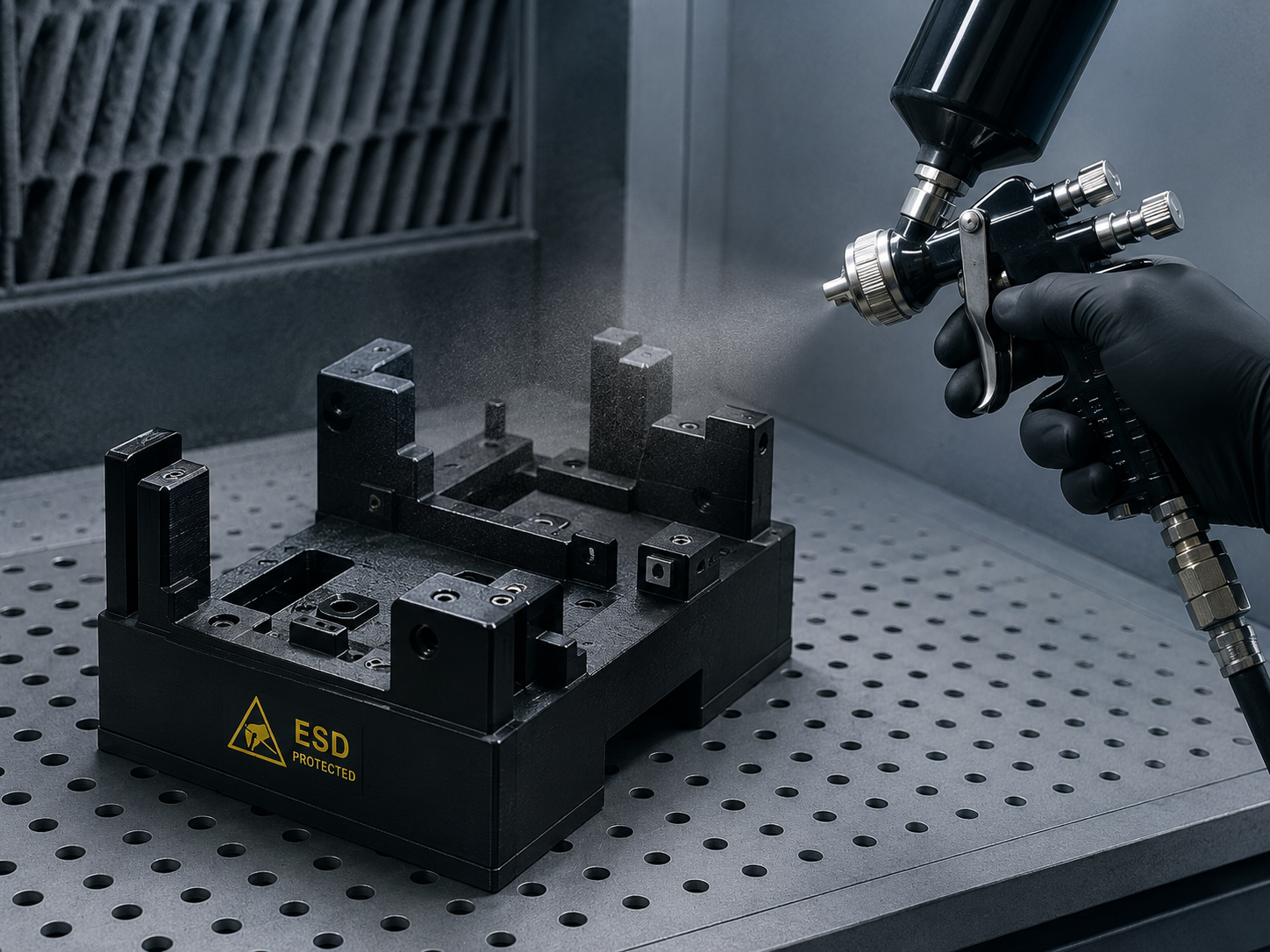
ESD-safe coatings can add static-dissipative behavior, helping reduce the risk of damage to printed parts used around electronics.