
3D Printed Foundry Patterns, Core Boxes, and Casting Tooling
Foundry patternmaking is one of the strongest industrial uses for large-format 3D printing. Traditional wood and metal patterns still have an important place in casting work, but 3D printed patterns can give foundries, machine shops, manufacturers, and product developers a faster path for prototype castings, replacement parts, short-run production, and complex geometry.
At Jaeger Technology Group LLC, we produce 3D printed foundry patterns, core boxes, loose patterns, match plate components, casting development tooling, large-format patterns, prototype casting patterns, and short-run foundry support tooling from our facility in Decatur, Alabama.
We combine additive manufacturing with practical foundry and patternmaking knowledge so the pattern is more than just a printed shape.
Why Use 3D Printed Foundry Patterns?
A casting project can stall when a traditional pattern takes too long, costs too much, or requires geometry that is difficult to build by hand. 3D printing gives casting teams another option.
3D printed foundry patterns can be useful for:
- Prototype castings
- Replacement castings
- Short-run production
- Low-volume industrial parts
- Legacy part recreation
- Complex geometry
- Large patterns
- Core boxes
- Casting development
- Engineering validation
- Bridge tooling before final pattern equipment is built
The goal is not to replace every traditional pattern. The goal is to choose the right tooling method for the casting, schedule, quantity, and foundry process.
Patternmaking Is More Than Printing the CAD Model
A foundry pattern is not usually the same as the finished part. A practical pattern may need changes that account for how the casting will actually be made.
Pattern design may require:
- Draft
- Shrinkage allowance
- Machining allowance
- Parting-line planning
- Core prints
- Fillets and radii
- Pattern pull direction
- Surface finish
- Strength for handling
- Foundry-floor durability
- Molding process requirements
This is where experience matters. A printed model that looks correct may still be a poor pattern if it ignores draft, core support, parting strategy, shrinkage, or finishing requirements.
Core Boxes and Core Print Design
Core boxes and core prints are critical when the casting has internal cavities, passages, recesses, or features that cannot be formed by the outside mold alone.
JaegerTech can support:
- 3D printed core boxes
- Core print geometry
- Core support features
- Split core box designs
- Core alignment considerations
- Large-format core tooling
- Prototype core development
- Iterative casting development
Good core design helps the foundry place and support the core correctly. Poor core print design can create casting defects, handling problems, or assembly difficulties during molding.
Loose Patterns and Match Plate Components
Not every casting project requires the same tooling format. Depending on the foundry process and production volume, a project may need a loose pattern, match plate components, core box, or other support tooling.
JaegerTech can produce:
- Loose patterns
- Split patterns
- Match plate components
- Pattern halves
- Gated pattern elements
- Core boxes
- Prototype pattern tooling
- Replacement pattern components
For many short-run or prototype jobs, this can reduce the time required to move from part concept to mold-ready tooling.
Large-Format 3D Printed Patterns
Large casting patterns often become expensive or slow when built traditionally. Large-format 3D printing can help produce oversized patterns, molds, masters, and tooling components more quickly.
Large-format 3D printed patterns are useful for:
- Pump housings
- Industrial covers
- Equipment parts
- Machinery components
- Large brackets
- Replacement castings
- Complex housings
- Prototype tooling
- Production support patterns
- Casting development masters
Large printed patterns require careful planning around sectioning, bonding, stiffness, surface finish, handling, and coating. A large pattern has to survive the practical realities of molding and foundry use.
Shrinkage, Draft, and Machining Allowance
A casting pattern must account for the metal and the foundry process. That may include shrinkage allowance, draft angles, machining stock, and practical cleanup requirements.
Important considerations include:
- Material shrinkage rate
- Foundry-specific process requirements
- Machined surfaces
- Pattern pull direction
- Mold release
- Surface finish expectations
- Dimensional control
- Finishing and coating strategy
JaegerTech can help customers think through these practical details before the pattern is printed.
Surface Finish and Pattern Coating
Surface finish matters in foundry work. A printed pattern may need sanding, filling, sealing, coating, or other finishing steps depending on the casting process and required mold finish.
Finishing options may include:
- Sanding
- Filler primer
- Epoxy coating
- Surface sealing
- Pattern paint
- Bonded section cleanup
- Fillet cleanup
- Texture management
The level of finish depends on the job. A prototype pattern may not need the same finish as a longer-term production pattern, but it still needs to function properly in the mold-making process.
3D Printed Patterns vs. Traditional Wood Patterns
Traditional wood patterns are still valuable, especially for durable production tooling, large established jobs, and foundries that already have proven pattern workflows.
3D printed patterns can be especially useful when:
- The geometry is complex
- The quantity is low
- The schedule is compressed
- The design may change
- The part is a prototype
- The original pattern is missing
- A replacement casting is needed
- A CAD model already exists
- Large-format printing reduces manual build time
In many cases, the best answer may be hybrid: 3D printed components, wood backing, machined features, inserts, coatings, or traditional patternmaking techniques combined with modern additive manufacturing.
Casting Development and Engineering Support
Casting projects often require iteration. A part may need to be printed, reviewed, adjusted, cast, machined, tested, and revised before the final tooling path is clear.
JaegerTech can support casting development with:
- Pattern design input
- Prototype patterns
- Core box development
- Foundry communication support
- Fit-check parts
- Large-format printing
- Machining support where appropriate
- DMLS/metal additive support where appropriate
- Hybrid manufacturing planning
- Short-run production support
The goal is to help customers move from idea to usable casting with fewer delays and better practical decisions.
Materials for 3D Printed Patterns
Material selection depends on the pattern size, foundry process, expected use, finish requirements, and budget.
Possible pattern materials include:
- PLA for prototype patterns and short-term use
- PETG for tougher general-use pattern applications
- ASA for durable and UV-resistant applications
- ABS and ABS blends for industrial pattern work
- PCTG for tough functional tooling
- Carbon-fiber-filled materials for stiffness where appropriate
- Coatings and surface treatments to improve durability and finish
The right material depends on temperature exposure, handling, abrasion, mold process, surface requirements, and expected number of pulls.
When 3D Printed Patterns Are a Good Fit
3D printed patterns are often a strong fit when a customer needs:
- Faster casting development
- A prototype casting
- A replacement part
- A low-volume production run
- A pattern from CAD data
- A large pattern without long traditional tooling lead time
- A core box for a complex internal feature
- A bridge solution before permanent tooling
- A way to test casting geometry before committing to final tooling
They are not the right answer for every casting job, but they are a powerful option when used correctly.
Why Work With JaegerTech?
JaegerTech brings:
- 30+ years of industrial and technical experience
- Additive manufacturing experience dating back to the early days of the industry
- Large-format 3D printing capability
- Practical foundry and patternmaking knowledge
- Experience with core prints, draft, shrinkage, and casting support
- Work across industrial, automotive, aerospace, medical, educational, and casting applications
- Real-world manufacturing problem solving, not just file printing
We understand that a foundry pattern has to work in the mold, at the foundry, and in the hands of the people using it.
Need a 3D Printed Foundry Pattern or Core Box?
If your company needs a foundry pattern, core box, loose pattern, match plate component, prototype casting pattern, replacement casting support, large-format pattern, or casting development tooling, Jaeger Technology Group LLC can help.
We support Decatur, Huntsville, Birmingham, North Alabama, the Southeast, and manufacturers, machine shops, foundries, and product developers across the broader industrial region.
Contact JaegerTech today to discuss your casting project, request a quote, or find out whether a 3D printed pattern, traditional pattern, machined tool, DMLS part, or hybrid manufacturing approach is the right path for your application.
About the Author: jaegertechgroup.com

STAY IN THE LOOP
Subscribe to our free newsletter.
Leave A Comment
Best $150 I’ve Ever Spent on This Car Classic car projects have a way of turning simple problems into complicated ones. A
Using Development Boards in Early Hardware Prototypes Other Parts of this series: Part 2 – Choosing The Right Development Board Part 3
3D Printed Patterns for Investment Casting: Material, Support, and Ceramic Shell Considerations Investment casting has always depended on the quality of the
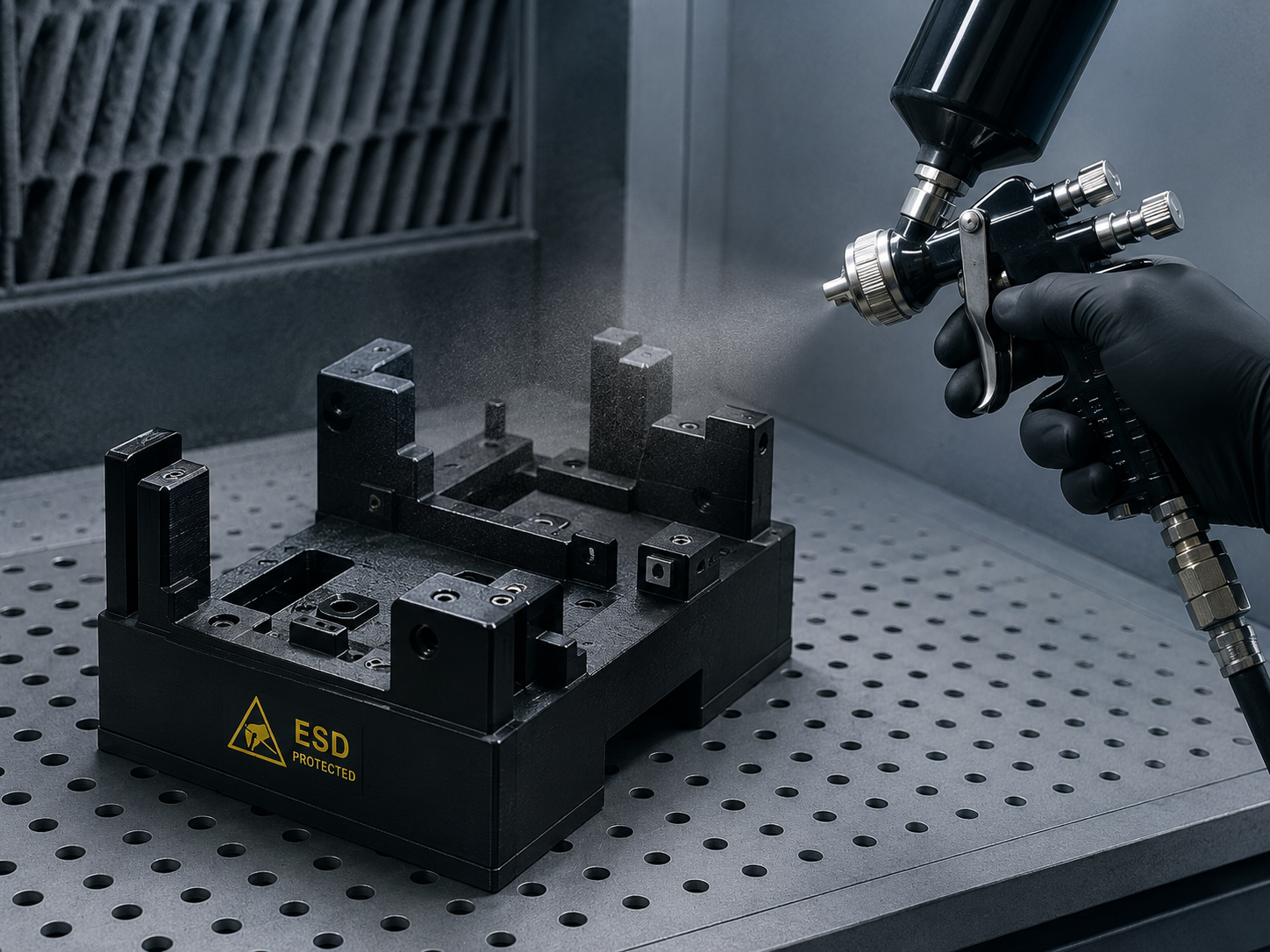
ESD-safe coatings can add static-dissipative behavior, helping reduce the risk of damage to printed parts used around electronics.