Large-Format 3D Printing for Tooling, Patterns, Fixtures, and Industrial Parts
Large-format 3D printing gives manufacturers, engineers, foundries, machine shops, and product developers a practical way to produce oversized parts, tooling, patterns, molds, and prototypes without waiting for every project to go through traditional tooling or machining.
At Jaeger Technology Group LLC, we provide large-format 3D printing, industrial additive manufacturing, foundry patterns, core boxes, jigs, fixtures, prototype parts, molds, tooling, short-run production support, machining support, DMLS/metal additive support, and 3D printed casting patterns from our facility in Decatur, Alabama.
For large industrial parts, the printer size matters — but experience matters more.
Large-Format Printing Is Different From Desktop Printing
Large-format additive manufacturing is not simply “regular 3D printing, but bigger.” Large parts bring their own challenges.
A large printed part may require careful planning around:
- Print orientation
- Sectioning and bonding
- Material selection
- Warping and shrinkage
- Bed adhesion
- Internal structure
- Shell thickness
- Stiffness
- Handling strength
- Surface finish
- Post-processing
- Final use conditions
A small part may print successfully with basic settings. A large part may fail because of thermal movement, poor sectioning, weak bonding strategy, insufficient wall thickness, or the wrong material.
JaegerTech brings practical additive manufacturing experience to those decisions.
Large-Format 3D Printing Applications
Large-format 3D printing is useful when the part is too large, too complex, too low-volume, or too early-stage for traditional manufacturing methods to make sense.
We support applications such as:
- Foundry patterns
- Core boxes
- Loose patterns
- Match plate components
- Large jigs and fixtures
- Vacuum forming tools
- Composite layup support tools
- Full-size prototype parts
- Equipment covers and guards
- Industrial housings
- Large product mockups
- Packaging and shipping aids
- Large assembly tools
- Trim and fit-check parts
- Casting development tooling
- Short-run industrial components
These parts often support the manufacturing process rather than becoming the final product. That is one of the strongest uses of large-format additive manufacturing.
Foundry Patterns and Core Boxes
Large-format 3D printing is especially useful for foundry and casting work. Traditional patternmaking remains valuable, but 3D printed patterns can reduce lead time and support complex or low-volume casting projects.
JaegerTech produces:
- 3D printed foundry patterns
- Core boxes
- Loose patterns
- Match plate components
- Prototype casting patterns
- Replacement patterns
- Casting development tooling
A practical foundry pattern may need more than the shape of the final casting. Patternmaking may require:
- Draft
- Shrinkage allowance
- Parting-line planning
- Core prints
- Fillets and radii
- Surface finishing
- Pattern durability
- Foundry-floor usability
This is where large-format 3D printing and real patternmaking knowledge work together.
Large Fixtures and Production Aids
Many manufacturing problems involve parts too large for standard fixture plates, small desktop printers, or simple shop-made tools. Large-format 3D printing can help produce custom tools quickly.
Examples include:
- Large assembly fixtures
- Part nests
- Drill templates
- Inspection aids
- Holding fixtures
- Masking fixtures
- Alignment tools
- Forming supports
- Trim placement tools
- Packaging and handling fixtures
- Custom shop-floor tools
For manufacturers, these tools can improve repeatability, reduce rework, make operator tasks easier, and help production move faster.
Vacuum Forming, Composite, and Mold Support
Large-format 3D printing can also support tooling for forming and composite work. Depending on the material, temperature, pressure, and finish requirements, printed tooling may be useful for development, short-run production, or bridge manufacturing.
Possible applications include:
- Vacuum forming tools
- Composite layup support tools
- Mold masters
- Trim tools
- Checking fixtures
- Bonding fixtures
- Prototype forming tools
- Large pattern masters
Tooling like this requires attention to surface finish, heat resistance, stiffness, coating, release strategy, and expected production quantity. In some cases, a printed tool is the final tool. In other cases, it is a master, pattern, or development aid.
Full-Size Prototypes and Fit-Check Parts
Large-format printing is useful when the team needs a physical part at real scale. A full-size prototype can expose issues that a CAD model or small sample cannot.
Large printed prototypes can help with:
- Fit checks
- Assembly review
- Customer demonstrations
- Ergonomic review
- Packaging development
- Clearance testing
- Visual presentation
- Installation planning
- Design verification
- Early manufacturing review
For product development and industrial design, full-size parts can reduce uncertainty before committing to expensive tooling.
Sectioning, Bonding, and Finishing Large Parts
Very large parts may need to be printed in sections. That is not a weakness if it is planned correctly.
Sectioned prints may require:
- Strategic seam placement
- Mechanical interlocks
- Lap joints or bonded joints
- Alignment features
- Reinforcement
- Surface filling
- Sanding and coating
- Epoxy or adhesive bonding
- Post-machining or hand finishing
The goal is to build the part in a way that matches its use. A display model, foundry pattern, fixture, or forming tool may each require a different sectioning and finishing strategy.
Materials for Large-Format 3D Printing
We select materials around the job, not just the printer.
Common material considerations include:
- Strength
- Stiffness
- Heat exposure
- UV exposure
- Chemical exposure
- Wear
- Impact resistance
- Dimensional stability
- Surface finish
- Cost
- Lead time
- Post-processing requirements
Possible materials include:
- PLA and PETG for prototypes and fit-check parts
- ASA for durable and UV-resistant applications
- ABS and ABS blends for industrial tooling
- PCTG for tough functional parts
- TPU for flexible or protective components
- Nylon and carbon-fiber-filled nylon for stronger fixtures
- High-temperature and specialty materials where appropriate
The right material depends on how the part will actually be used.
DMLS, Machining, Casting, and Hybrid Manufacturing
Large-format 3D printing is powerful, but it is not always the final manufacturing answer. Sometimes the large printed part is a pattern, fixture, master, prototype, or temporary tool that supports another process.
JaegerTech can help evaluate practical paths such as:
- Large-format polymer printing for patterns, tooling, and prototypes
- 3D printed casting patterns for metal parts
- Machining support for accurate tooling and fixture components
- DMLS/metal additive support for complex metal development parts
- Casting support for prototype or short-run metal components
- Hybrid workflows using multiple processes where appropriate
The best manufacturing process depends on geometry, tolerance, material, surface finish, strength, quantity, cost, and schedule.
Industries That Use Large-Format 3D Printing
Large-format additive manufacturing can support many industries, including:
- Foundry and casting
- Automotive manufacturing
- Aerospace and defense-related manufacturing support
- Medical device development
- Industrial maintenance
- Machine shops
- Product development
- Universities and research groups
- Composite tooling
- Manufacturing and assembly operations
The common thread is practical problem solving. Large-format 3D printing helps when teams need something big, custom, fast, low-volume, or difficult to source through traditional methods.
Why Work With JaegerTech?
JaegerTech brings:
- 30+ years of industrial and technical experience
- Additive manufacturing experience dating back to the early days of the industry
- Large-format 3D printing capability
- Foundry and patternmaking knowledge
- Practical manufacturing and product development experience
- Experience with jigs, fixtures, patterns, molds, tooling, and industrial prototypes
- Work across automotive, aerospace, medical, industrial, educational, and casting applications
- Real-world problem solving, not just file printing
We understand that large parts have to work in real environments — in the foundry, on the shop floor, in the fixture station, in the lab, in production, and in the hands of the people using them.
Need Large-Format 3D Printing?
If your company needs a large prototype, foundry pattern, core box, fixture, mold, forming tool, industrial part, production aid, casting pattern, or tooling support, Jaeger Technology Group LLC can help.
We support Decatur, Huntsville, Birmingham, North Alabama, the Southeast, and manufacturers across the broader industrial region.
Contact JaegerTech today to discuss your project, request a quote, or find out whether large-format 3D printing, machining, DMLS, casting support, or another manufacturing process is the right path for your application.
About the Author: jaegertechgroup.com

STAY IN THE LOOP
Subscribe to our free newsletter.
Leave A Comment
Best $150 I’ve Ever Spent on This Car Classic car projects have a way of turning simple problems into complicated ones. A
Using Development Boards in Early Hardware Prototypes Other Parts of this series: Part 2 – Choosing The Right Development Board Part 3
3D Printed Patterns for Investment Casting: Material, Support, and Ceramic Shell Considerations Investment casting has always depended on the quality of the
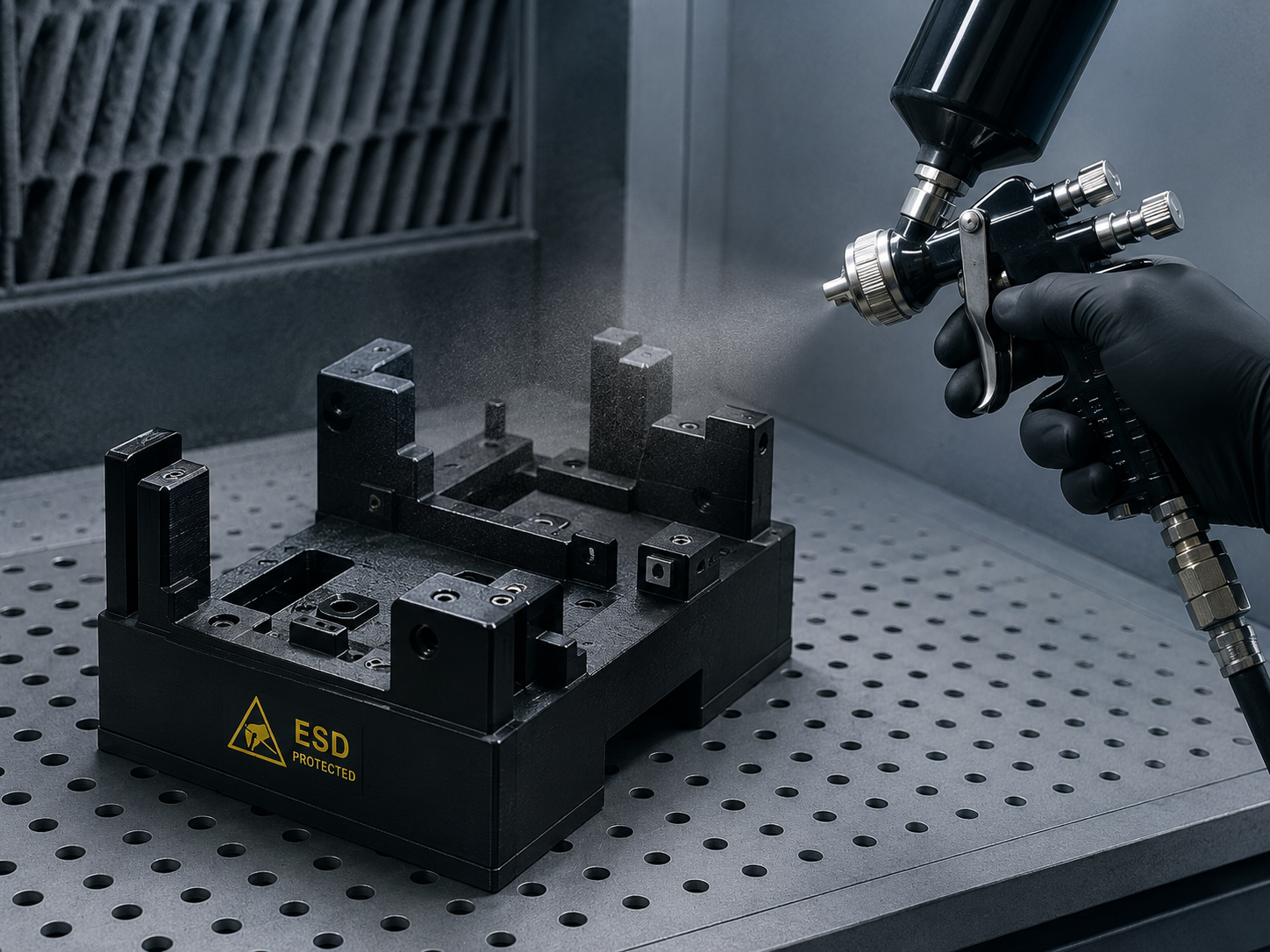
ESD-safe coatings can add static-dissipative behavior, helping reduce the risk of damage to printed parts used around electronics.