
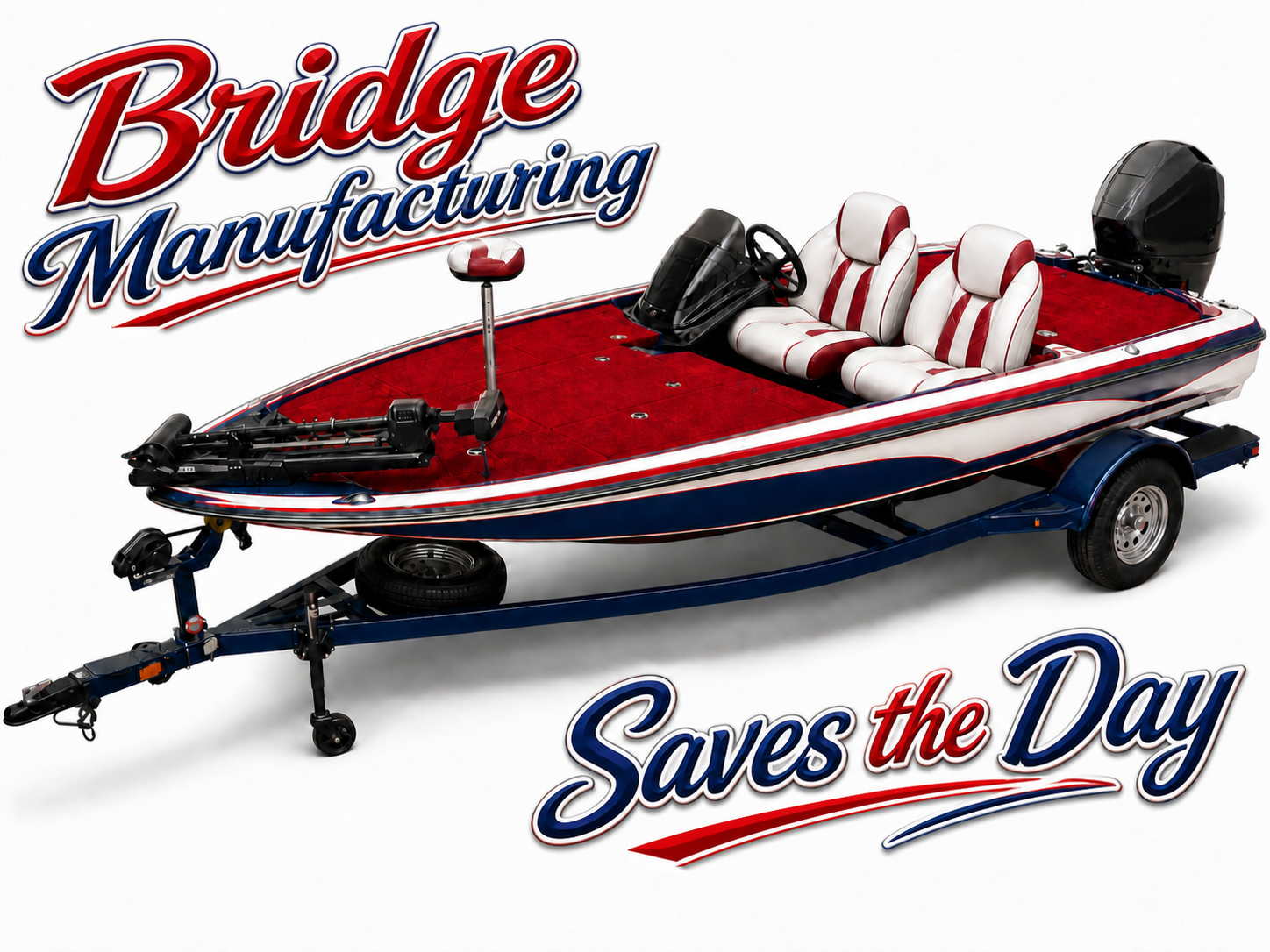
The Boat Was Ready. The Trim Wasn’t.
The boat manufacturer had a problem.
The boat was moving forward.
The schedule was real.
The customer expectations were real.
But the interior trim pieces were not ready.
Tooling delays. Supplier timing. Final production parts still in limbo. The kind of problem that can hold up an otherwise finished product over a handful of visible components.
Someone asked the obvious question:
“So are we really going to delay the boat because of trim?”
That is where Jaeger Technology Group LLC came in.
This was not a forever solution. It was bridge manufacturing — making functional, good-looking parts to keep production moving until the final parts were ready.
We produced the trim pieces using 3D printed ASA and PCTG, both practical thermoplastics for durable prototype and short-run components.
ASA made sense where UV resistance, exterior exposure, and toughness mattered.
PCTG made sense where impact resistance, clean appearance, and dimensional stability were important.
The goal was simple:
Make parts good enough to install.
Good enough to evaluate.
Good enough to keep the boat moving.
Good enough that the schedule did not collapse waiting on traditional tooling.
That is the value of bridge manufacturing.
It gives a company breathing room.
When injection molded parts are late, machined trim is too expensive, or production tooling is not ready yet, 3D printing can fill the gap with real parts made from real engineering materials.
Not mockups.
Not excuses.
Parts.
For boat interiors, trim panels, brackets, covers, bezels, fixtures, and low-volume production components, 3D printed ASA and PCTG can help manufacturers avoid delays while final tooling catches up.
Jaeger Technology Group LLC helps manufacturers with bridge manufacturing, 3D printed production support parts, ASA parts, PCTG parts, prototype trim, and short-run manufacturing.
Because sometimes the most expensive missing part is the one holding up everything else.
About the Author: jaegertechgroup.com

STAY IN THE LOOP
Subscribe to our free newsletter.
Leave A Comment
Using 3D Printing to De-Risk Production Tooling Production tooling is expensive for a reason. Whether the final process is injection molding, thermoforming,
From 3D Scan to Perfect Fit: The Corvette Bumper Project Moves Forward A few weeks ago, we shared a project that demonstrated
Great Conversations and New Connections at SMD in Huntsville Last week, Janelle and I had the opportunity to attend SMD in Huntsville,
Repairing a Discontinued Polypropylene ATV Snorkel With Plastic Welding When a customer could not locate a replacement snorkel for his 21-year-old ATV,