
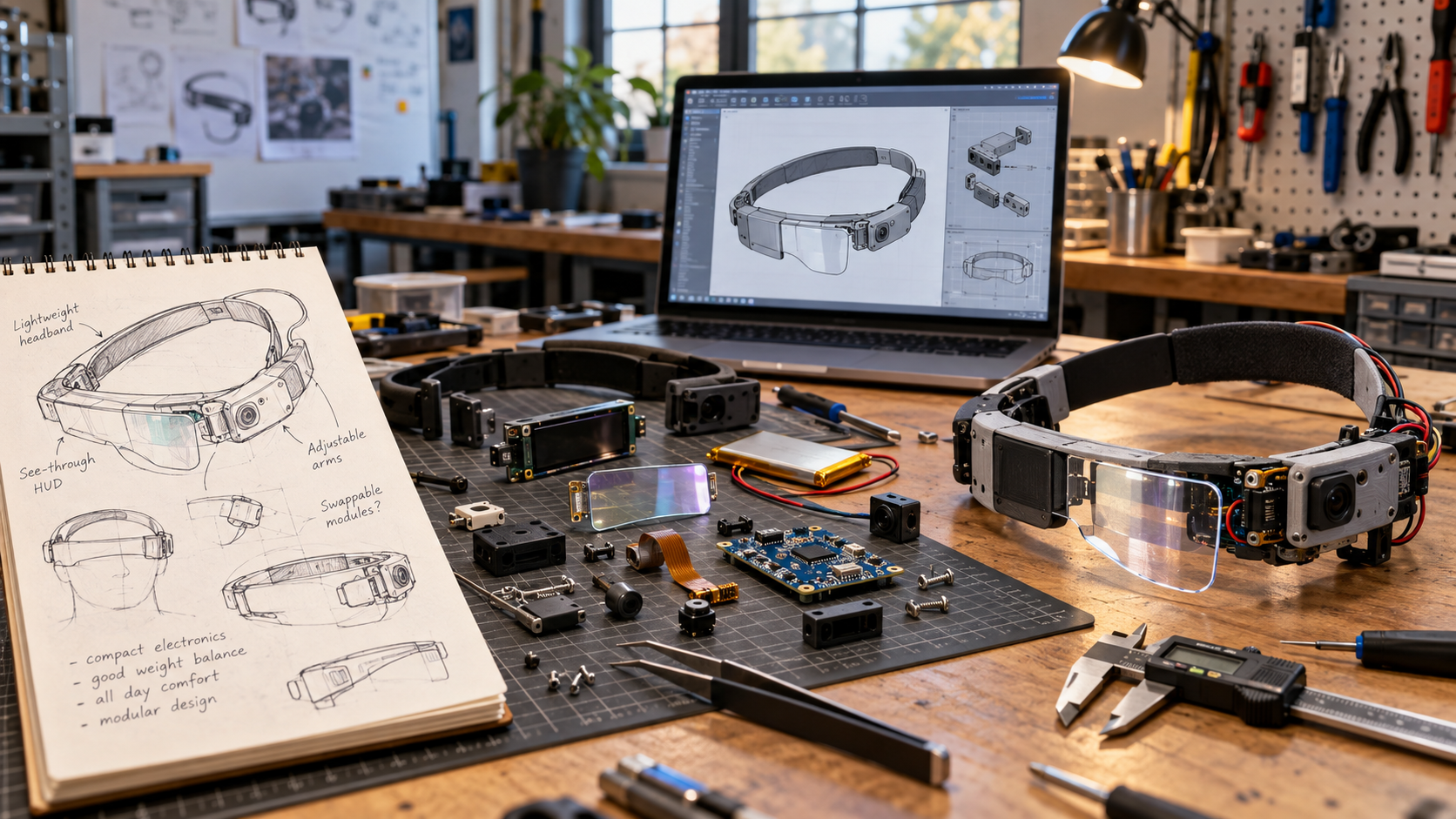
When a Customer Has an Idea but No CAD: How Product Development Actually Starts
A surprising number of product-development projects do not begin with a finished CAD file.
They begin with a sketch.
Or a photo.
Or a broken part.
Or a rough description of what someone wants the product to do.
Sometimes the customer has a napkin drawing. Sometimes they have a PowerPoint slide, a cardboard mockup, or a box full of components. Sometimes they have nothing more than an idea they have been thinking about for years.
That is normal.
Product development does not start with CAD. CAD is one of the tools used after the problem begins to take shape.
At Jaeger Technology Group, a large part of our work involves helping customers move from an idea to something that can actually be designed, built, tested, and eventually manufactured.
Start With the Problem, Not the Shape
One of the biggest mistakes in early product development is jumping immediately into geometry.
Before deciding what the enclosure looks like or how big the product should be, it is usually more important to understand what the product must actually do.
That means asking questions such as:
- Who is going to use it?
- Where will it be used?
- What problem is it solving?
- What needs to fit inside it?
- Does it need power?
- Does it need a display?
- Does it need buttons, sensors, cameras, motors, or communications?
- Will it be handheld, worn, mounted, or freestanding?
- Does it need to survive heat, moisture, impact, vibration, or chemicals?
- How many units might eventually be produced?
- What does the customer want the first prototype to prove?
Those answers start defining the product long before the first CAD model is created.
A Rough Sketch Can Be Enough to Start
Customers sometimes apologize because their drawing is crude.
They should not.
A rough sketch can be extremely useful if it communicates intent.
It may show:
- Approximate size
- Major components
- User interaction
- Where a screen should go
- Where a button or connector belongs
- How something mounts
- How it opens
- How the user holds or accesses it
The sketch does not need to be dimensionally accurate.
Its job is to communicate the idea.
From there, the engineering process begins turning that idea into something more defined.
Existing Hardware Often Drives the Design
Many products are not designed from a completely blank sheet of paper.
They are built around components that already exist.
For example, a product may need to contain:
- A specific display
- A microcontroller
- A battery
- A camera
- A motor
- A card reader
- A sensor package
- A power supply
- A particular connector
- A commercially available module
Those components become physical constraints.
Their size, mounting points, cable locations, cooling needs, and service requirements all affect the eventual enclosure.
That is why it is often useful to identify major hardware early.
If the electronics package changes dramatically after the enclosure is designed, the mechanical design may need to be rebuilt around it.
The First CAD Model Is Usually Not the Final Design
Once the basic requirements are understood, CAD becomes a way to organize the product.
The first model may be little more than a packaging study.
It might answer questions such as:
- Will everything fit?
- Is there enough room for connectors?
- Can the enclosure actually be assembled?
- Is the display at the correct angle?
- Is there clearance for wiring?
- Can the battery be removed?
- Is the product too large?
- Is the center of gravity acceptable?
At this stage, the model should be expected to change.
That is the point.
Early CAD is not about making the product look finished.
It is about exposing problems while they are still cheap to fix.
Physical Prototypes Reveal Things CAD Cannot
A CAD model can look excellent on a computer screen and still be uncomfortable, awkward, unstable, or difficult to assemble in the real world.
That is why physical prototyping remains so important.
A first prototype may be rough.
It may contain:
- 3D-printed parts
- Visible fasteners
- Temporary wiring
- Development boards
- Oversized connectors
- External power
- Off-the-shelf switches
- Temporary brackets
That does not mean the prototype is poorly designed.
It means the prototype has a job to do.
The goal may be to answer one or two important questions:
Does the mechanism work?
Can the user reach the controls?
Does the electronics package fit?
Is the vibration strong enough?
Is the screen readable?
Does the product remain stable?
A prototype does not need to look like a retail product to provide valuable answers.
Product Development Is an Iterative Process
The first physical build almost always teaches us something.
Maybe the enclosure needs to be wider.
Maybe the battery needs to move.
Maybe the screen angle feels wrong.
Maybe a connector is difficult to reach.
Maybe a motor produces more vibration than expected.
Maybe a bracket is too flexible.
Maybe a user interface that looked good on paper is awkward in practice.
The design then goes back into CAD.
Changes are made.
Another part is printed or fabricated.
The product is tested again.
That cycle is not failure.
That is product development.
Function Usually Comes Before Appearance
Customers naturally want their product to look finished.
That is understandable, especially when the prototype will be shown to investors, customers, or management.
But there is usually an advantage to proving function before spending too much time on cosmetics.
For example, it may make more sense to validate:
- Motor performance
- Electronics
- Ergonomics
- Mechanical strength
- Battery life
- Cooling
- User controls
before spending significant effort on surface finishes, decorative panels, branding, or production-style packaging.
Once the underlying system is working, industrial design and appearance can be refined with much greater confidence.
Early Component Choices Matter
Another important part of early product development is deciding what should be custom and what should be purchased.
Not every component needs to be invented.
Using proven commercial hardware can dramatically reduce development time.
Examples might include:
- Development boards
- Displays
- Power supplies
- Sensors
- Motors
- Cameras
- Connectors
- Batteries
- Commercial enclosures
- Hinges
- Fasteners
The custom engineering is often in how these pieces are integrated into one system.
As production quantities increase, some off-the-shelf components may later be replaced with more optimized alternatives.
But for the first functional prototype, speed and flexibility often matter more than perfect optimization.
Manufacturing Should Be Considered Early
Even when only one prototype is being built, it is useful to ask what production might eventually look like.
If a customer expects to build hundreds of units, that may change the way we approach the first prototype.
We may want to avoid features that would be extremely difficult to manufacture later.
We may also want to think about:
- Part count
- Fastener count
- Assembly order
- Cable routing
- Service access
- Fabrication methods
- Material selection
- Tooling requirements
- Supplier availability
This does not mean the first prototype has to be production-ready.
It means we should avoid creating unnecessary problems for the next stage.
Sometimes the Customer Does Not Know Exactly What They Need Yet
This is also normal.
A customer may understand the problem extremely well but not know the best technical solution.
For example, someone might say:
“I need this to vibrate.”
That immediately creates more questions.
How much vibration?
At what frequency?
Continuous or intermittent?
One location or several?
Battery powered or plugged in?
Independently controlled zones?
Mechanical motor, linear resonant actuator, piezoelectric device, or something else?
The job is not simply to draw what the customer described.
The job is to help define the technical problem well enough that the right solution can emerge.
Product Development Often Crosses Several Disciplines
A physical product rarely belongs to only one engineering category.
A single project may involve:
- Mechanical design
- Electronics
- Firmware
- Materials
- Manufacturing
- Human factors
- Power management
- Thermal management
- Industrial design
- Packaging
- Sourcing
That is why product development often becomes more complicated than it first appears.
Changing one part of the design can affect several others.
A larger battery changes the enclosure.
The larger enclosure changes the weight.
The additional weight changes the mounting requirements.
The new mounting arrangement changes manufacturing cost.
Good product development means understanding those relationships before they become expensive.
What We Need From a Customer to Get Started
You do not need a complete engineering package to begin a conversation with us.
Useful starting information can include:
- A sketch
- Photos
- Reference products
- Existing parts or components
- Approximate dimensions
- A description of what the product should do
- The environment where it will be used
- Expected quantity
- Target cost
- Desired timeline
- What the first prototype needs to demonstrate
Even incomplete information can be enough to begin defining the project.
The key is having a clear problem worth solving.
From Idea to Something Real
The transition from an idea to a physical product does not happen in one step.
It usually looks more like this:
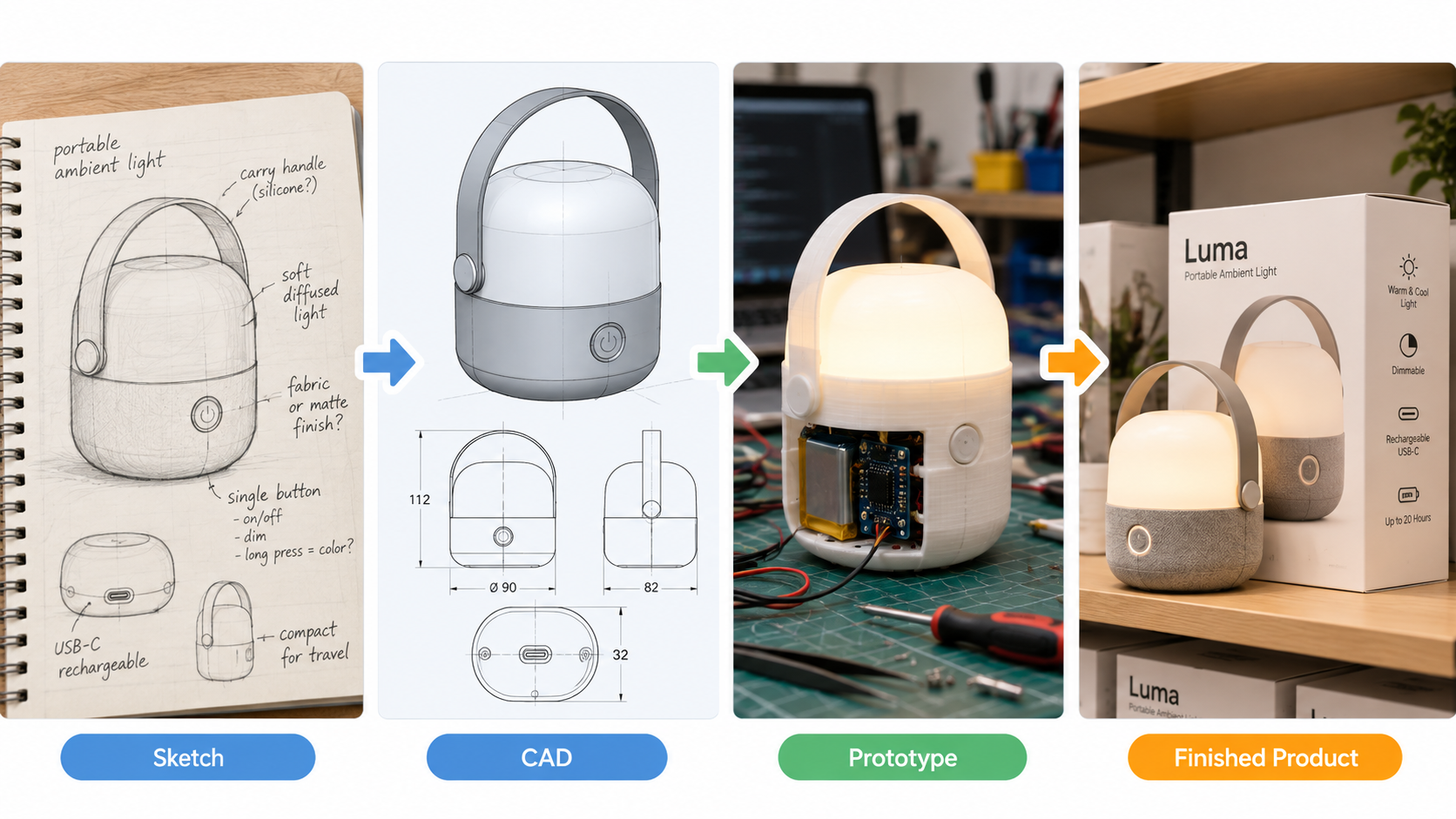
Idea → requirements → rough concept → component selection → CAD → prototype → testing → revision → refined prototype → production planning
Each stage answers a different question.
Each stage reduces uncertainty.
And each stage moves the product closer to something that can be built reliably.
At Jaeger Technology Group, that is often where we enter the process.
A customer may not have drawings.
They may not have CAD.
They may not know exactly how the product should be built.
That is okay.
If they understand the problem they are trying to solve, we can start from there.
About the Author: jaegertechgroup.com

STAY IN THE LOOP
Subscribe to our free newsletter.
Leave A Comment
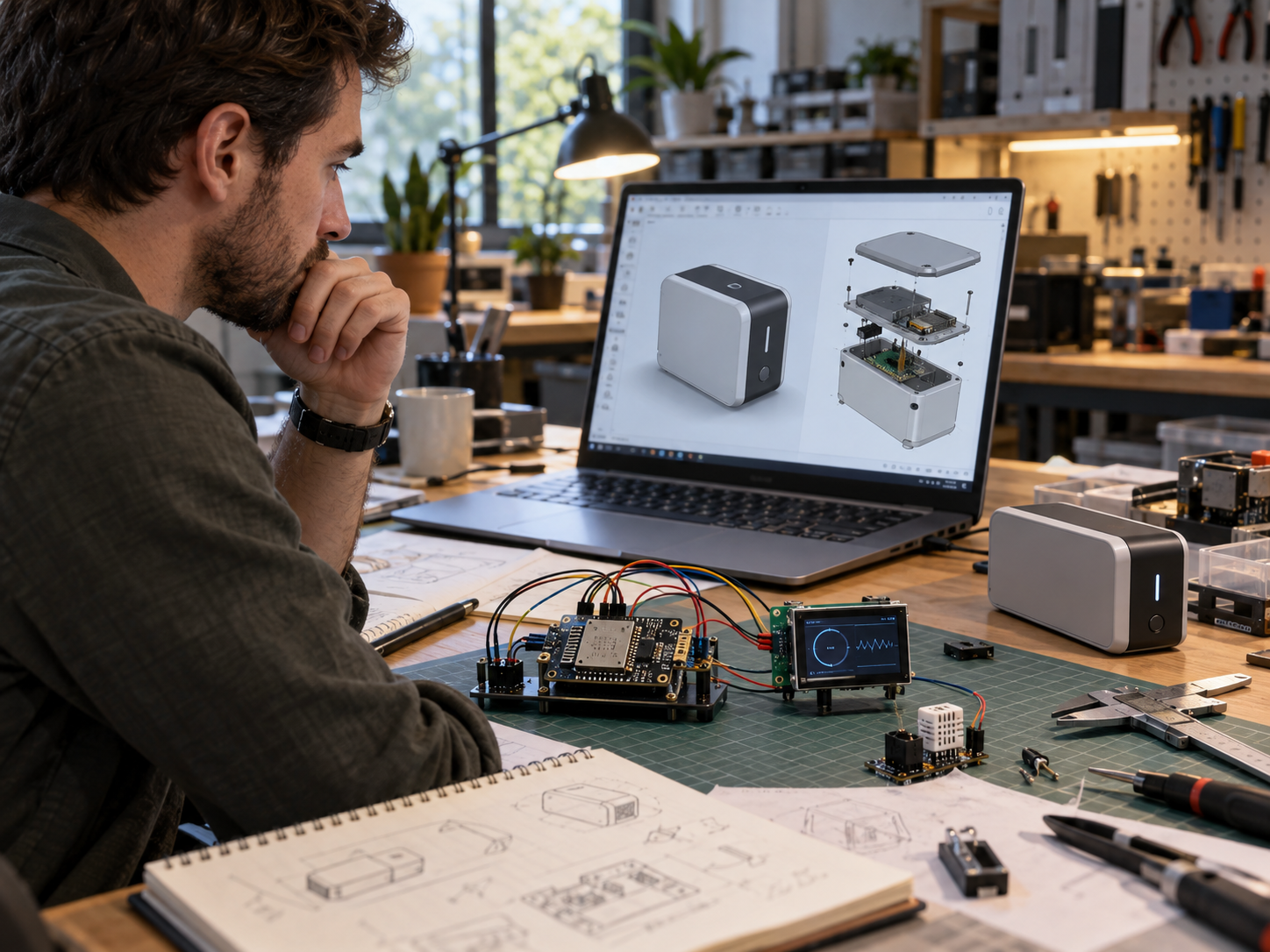
Beyond ESP32 and Raspberry Pi: Designing Electronics for Real Products Development boards are one of the best tools available for product development.
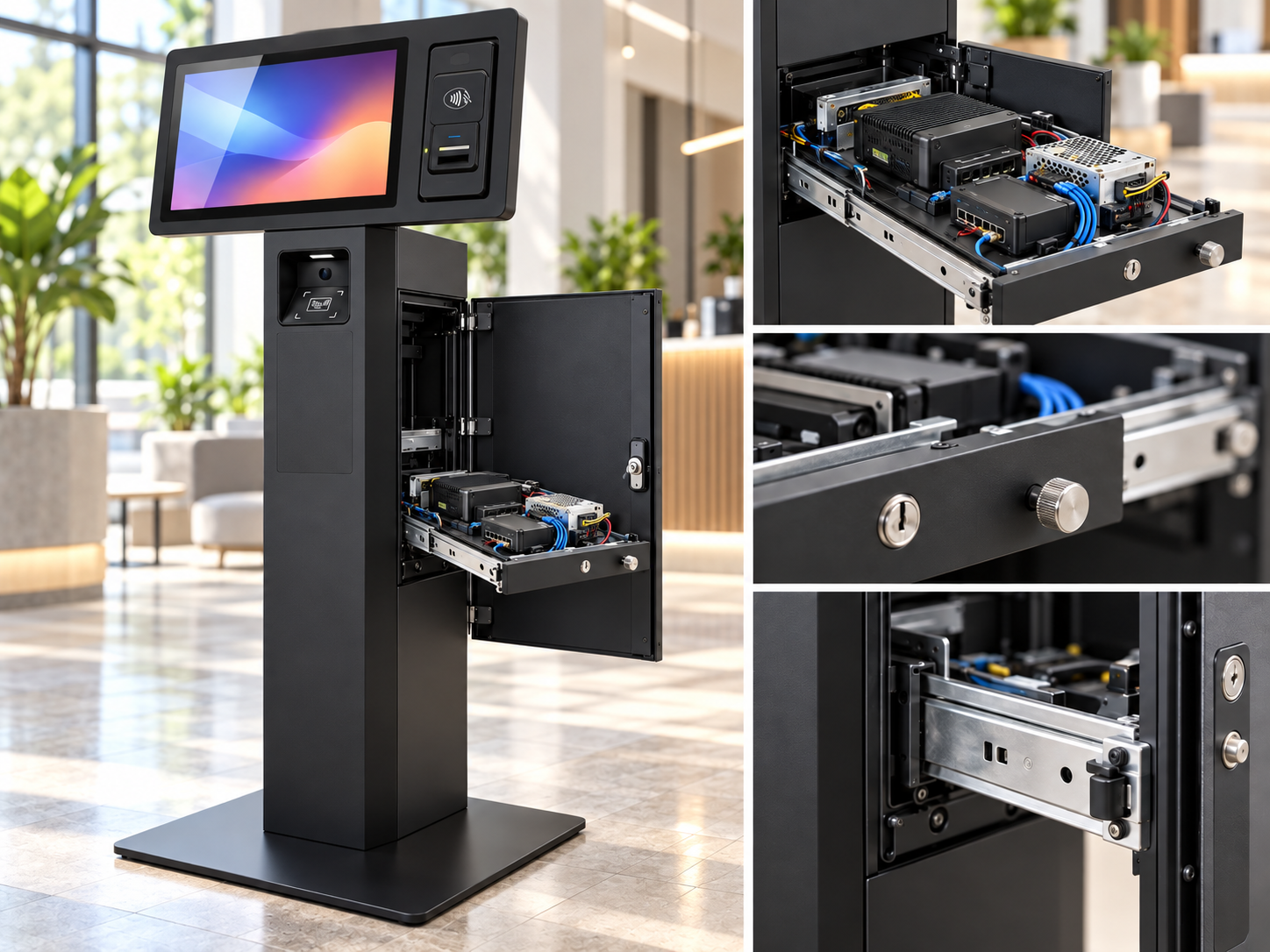
Designing Products for Serviceability, Maintenance, and Field Repair A product can work perfectly on the day it is delivered and still be
From Prototype to Small-Batch Production: What Changes After the First Part Works Getting the first prototype to work is a major milestone.
Designing a Custom Interactive Kiosk: From Concept to Production One of the more interesting projects we have worked on recently at Jaeger